In August 2019, Delaware became the first US state where shelters collectively saved at least 90% of the dogs and cats they took in. By 2024, three more states had joined the list: New Hampshire, Rhode Island, and Vermont (Best Friends Animal Society 2024 report). North Carolina is not on that list. Best Friends’ 2025 state rankings, released April 2026, place NC roughly 36,900 lives short of statewide no-kill, the third-largest absolute lifesaving gap of any state.
NC’s statewide cat and dog euthanasia rate climbed from 22% in 2021 to 27% in 2024 (WRAL Investigates’ November 2025 analysis of NC Department of Agriculture Animal Welfare Section data). More than 20,000 dogs and cats were killed in NC shelters in 2024. Wake County’s shelter is chronically full, often holding twice as many dogs as it should.
This is the capstone for the spring blog series. We have walked through the crisis, what other states have done, how to contact your NC rep, the breeder regulation gap, and the case for state-funded TNR. Here is what “no-kill” actually means, where NC stands, and the specific changes that close the gap.
TL;DR: A no-kill shelter saves at least 90% of the animals it takes in, with euthanasia reserved for medical or behavioral cases that cannot be rehabilitated (Best Friends Animal Society methodology; Maddie’s Fund 2000 definition). Nearly two out of three US shelters reached the no-kill threshold in 2024, and four states are statewide no-kill: Delaware, New Hampshire, Rhode Island, and Vermont (Best Friends 2024 report). NC is not one of them. NC’s statewide euthanasia rate climbed from 22% in 2021 to 27% in 2024, and more than 20,000 dogs and cats were killed in NC shelters in 2024 (WRAL Investigates, November 2025). The fix is not impossible. NC has counties already at the benchmark, and the state spay/neuter program received $636,000 in funding requests for 2024 against $322,000 in available dollars, a $314,000 shortfall the legislature could close in a single budget cycle.
What Is a No-Kill Shelter?
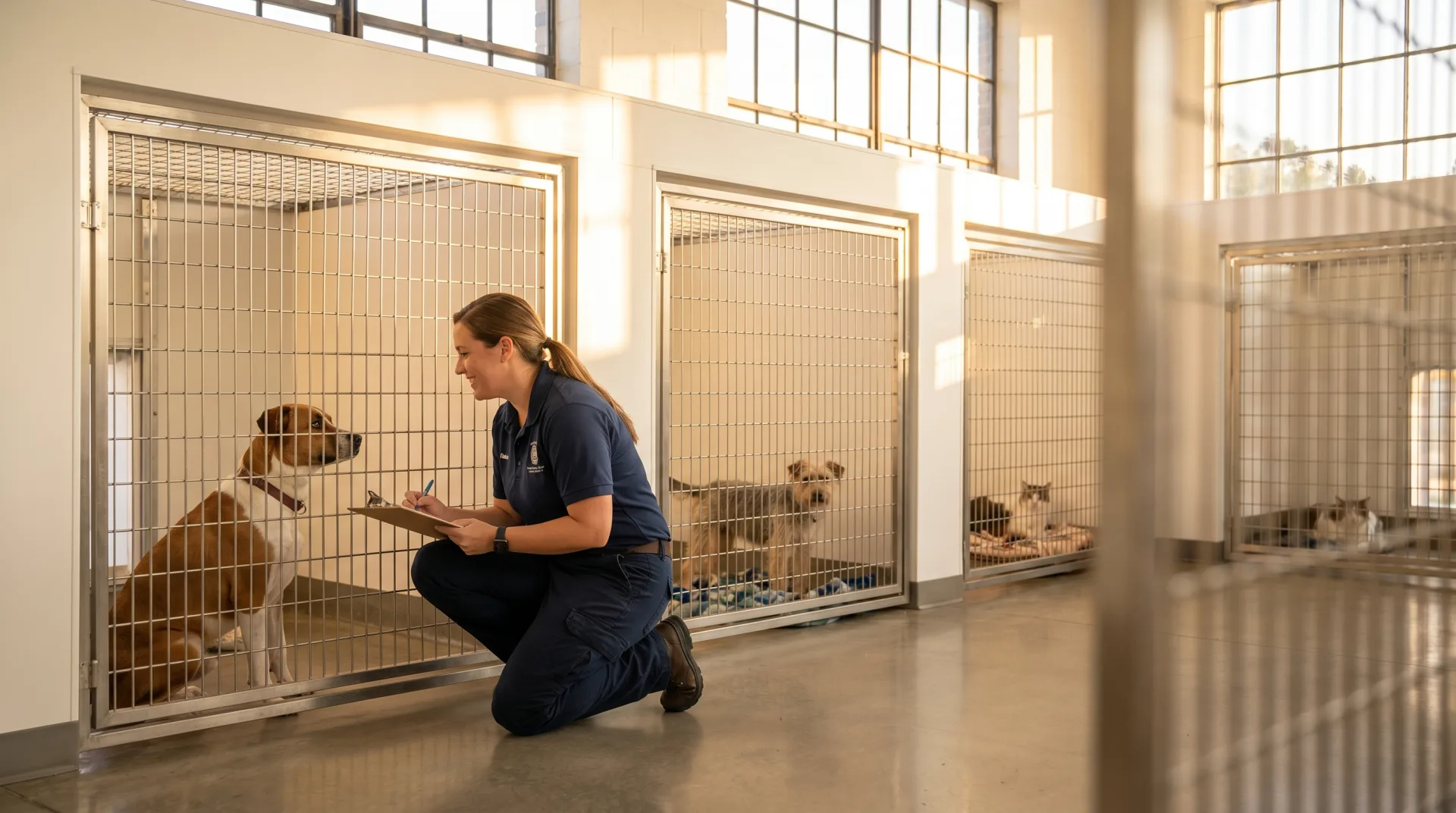
A no-kill shelter saves at least 90% of the animals it takes in. Euthanasia is reserved for medical or behavioral cases that cannot be rehabilitated. The 90% benchmark is not arbitrary. Best Friends Animal Society’s methodology page states it directly: “the number of pets who are suffering from irreparable medical or behavioral issues that compromise their quality of life and prevent them from being rehomed is not more than 10% of all dogs and cats entering shelters.” The threshold reflects the practical ceiling for what a shelter can save when it has the resources to try.
The working definition predates Best Friends by two decades. Maddie’s Fund formalized the term in 2000: “saving both healthy and treatable dogs and cats, with euthanasia reserved only for unhealthy and untreatable animals.” Best Friends operationalized that definition into the 90% save rate that animal welfare orgs and shelter networks now use as the standard benchmark. The save rate is calculated as live outcomes (adoptions, returns to owner, transfers to other shelters or rescues) divided by total outcomes.
What no-kill is not: a shelter that turns animals away. Most NC county shelters are open-admission, meaning they accept every animal that comes through the door. Open-admission shelters reaching the no-kill threshold is harder than limited-admission shelters reaching it, which is part of why the four current no-kill states are notable. They got there with mostly open-admission shelter networks. No-kill also does not mean zero euthanasia. It means euthanasia is reserved for the cases the threshold accounts for.
Where the No-Kill Movement Came From
The modern no-kill movement starts with Richard Avanzino at the San Francisco SPCA. Avanzino joined SF SPCA in 1976, when the city was killing roughly 29,000 animals per year. By 1989, the organization had ended its animal-control contract with the city and converted to a no-kill operation. In 1994, the SF SPCA and San Francisco Animal Care & Control signed the Adoption Pact, formally establishing San Francisco as the first no-kill city in the United States.
The framework spread through the 1990s and 2000s. Maddie’s Fund published the working definition in 2000. In 2016, Best Friends launched its No-Kill 2025 initiative, targeting national no-kill by the end of 2025.
The 2025 deadline did not arrive on schedule, but the trajectory is real. Delaware became the first no-kill state in August 2019. By 2024, three more had joined (NH, RI, VT). The national save rate hit 82% in 2024, up 11 points since 2016, and nearly two out of three US shelters reached the no-kill benchmark (Best Friends 2024 report). The movement that started with one city in 1994 now applies to most US shelters.
How NC Compares to the Rest of the Country
North Carolina is one of five states that together account for the largest absolute lifesaving gaps. Best Friends’ 2025 state rankings, released in April 2026, place NC third from the bottom by lifesaving gap, with about 36,900 more pets needing to be saved annually to reach statewide no-kill. The states with larger gaps are Texas (78,800) and California (54,400). Alabama (21,300) and Florida (20,000) round out the bottom five, both with smaller gaps than NC. A small number of high-volume states are pulling the national average down.
The national context is hopeful. Best Friends’ 2024 report shows just over 1,400 US shelters still below the no-kill threshold, and 49% of those are close, with 100 or fewer additional pets to be saved per year to cross the line. The remaining gap is concentrated in a handful of high-volume states. NC is one of them.
One bright spot inside the national numbers: cats. Best Friends’ 2024 report tracked 188,000 cats killed in US shelters in 2024, a 10.5% drop from 2023 and the lowest figure on record. Dogs went the other way: 237,000 dogs killed, a 6.2% increase year-over-year. The cat progress tracks community-cat sterilization. The dog regression tracks the post-pandemic adoption slowdown and shelter overcrowding.
Where NC Is Winning, Where NC Is Losing
NC’s progress is unevenly distributed. Several counties are at or near the no-kill benchmark; others are an order of magnitude worse. The 2024 county data tells two different stories about the same state. WRAL Investigates’ November 2025 analysis put a number on each NC county for the first time, and the spread is the single most important advocacy fact in this post: NC has counties that have already cracked it.
The strongest NC county performers in 2024: Anson County reported a 0% euthanasia rate, Stanly 3%, Macon 3% (WRAL Investigates). Separately, Rowan County Animal Services was recognized by Best Friends Animal Society as meeting the no-kill benchmark in 2024. Asheville Humane Society self-describes as going beyond a no-kill community and is the only open-admission shelter in Buncombe County. Brother Wolf, also in Asheville, was founded in 2007 specifically to build a no-kill community in Buncombe County. The model works in NC. It just is not statewide.
The weakest NC county performers in 2024: Nash County reported 105% (the county disputes the figure, citing data-reporting issues), Columbus 80%, Washington 74%. In the middle, Wake County reported 16% euthanasia, but Dr. Jennifer Federico, the county’s animal services director, told WRAL the shelter has “twice as many dogs on our adoption floor as we should have” and has been at or above capacity for two years. Charlotte-Mecklenburg Animal Care & Control, the state’s largest shelter system, partners with Best Friends Animal Society on lifesaving programs.
| NC County | 2024 Euthanasia Rate | Status |
|---|---|---|
| Anson | 0% | At benchmark |
| Stanly | 3% | At benchmark |
| Macon | 3% | At benchmark |
| Rowan | No-kill | Recognized by Best Friends, 2024 |
| Wake | 16% | Below threshold; chronically over capacity |
| Washington | 74% | Far from threshold |
| Columbus | 80% | Far from threshold |
| Nash | 105% | County disputes the figure |
Patricia Norris, the state’s animal welfare director, told WRAL the issue is not buildings. “It’s a reflection of the community. It’s a reflection of the economic realities of that community. You cannot build yourself out of this problem. You cannot warehouse yourself out of this problem.” The counties at 0% to 3% are not magically resourced. They are structurally configured to keep intake low and handle what they get without resorting to euthanasia.
Why NC’s Numbers Are Going the Wrong Direction
Three forces. First, intake outpacing capacity. Wake County’s adoption floor is at twice its target population for dogs and has been for two years. Second, slow recovery from the pandemic adoption slump that hit US shelters in 2020 to 2022 and never fully reversed. Third, a state spay/neuter program that is underfunded by roughly half what counties are actually requesting.
The funding gap is the most fixable of the three. The NC Spay/Neuter Program at NCDA&CS, funded by the “Animal Lovers” specialty license plate ($20 per plate sold) plus a state appropriation, received $636,000 in reimbursement requests for 2024 and was funded at $322,000. The $314,000 shortfall was reimbursement that NC counties had already requested to fund low-cost or free spay/neuter procedures, and it was denied for lack of state dollars (WRAL Investigates Orange County companion, November 2025). Counties wanted to do more spay/neuter. The state funded less than half of what they asked for.
The structural fix is the same on both sides of the cat-versus-dog split: more upstream sterilization, more foster capacity, and more stable funding for the shelters that handle the result.
What Would Get NC to No-Kill
Five changes. None are speculative. Each one is already in place somewhere in NC or in one of the four no-kill states. The path is not theoretical.
1. Fund the spay/neuter program at the level counties are actually requesting. Closing the $314,000 funding gap from 2024 would have funded several thousand additional procedures statewide (NCDA&CS NC Spay/Neuter Program). For the broader case, see our deep dive on low-cost spay and neuter options in NC.
2. Expand eligibility to community-cat TNR. The current program funds owned pets of low-income individuals only. Expanding eligibility is a one-section statutory amendment, covered in detail in our post on the case for state-funded community-cat TNR.
3. Publish a statewide shelter outcome dashboard. All four no-kill states publish annual statewide outcome data. NC collects the data but does not publish a public synthesis, which is why WRAL had to do it in November 2025. We flagged the reporting ask in NC’s breeder regulation gap and how to contact your NC rep.
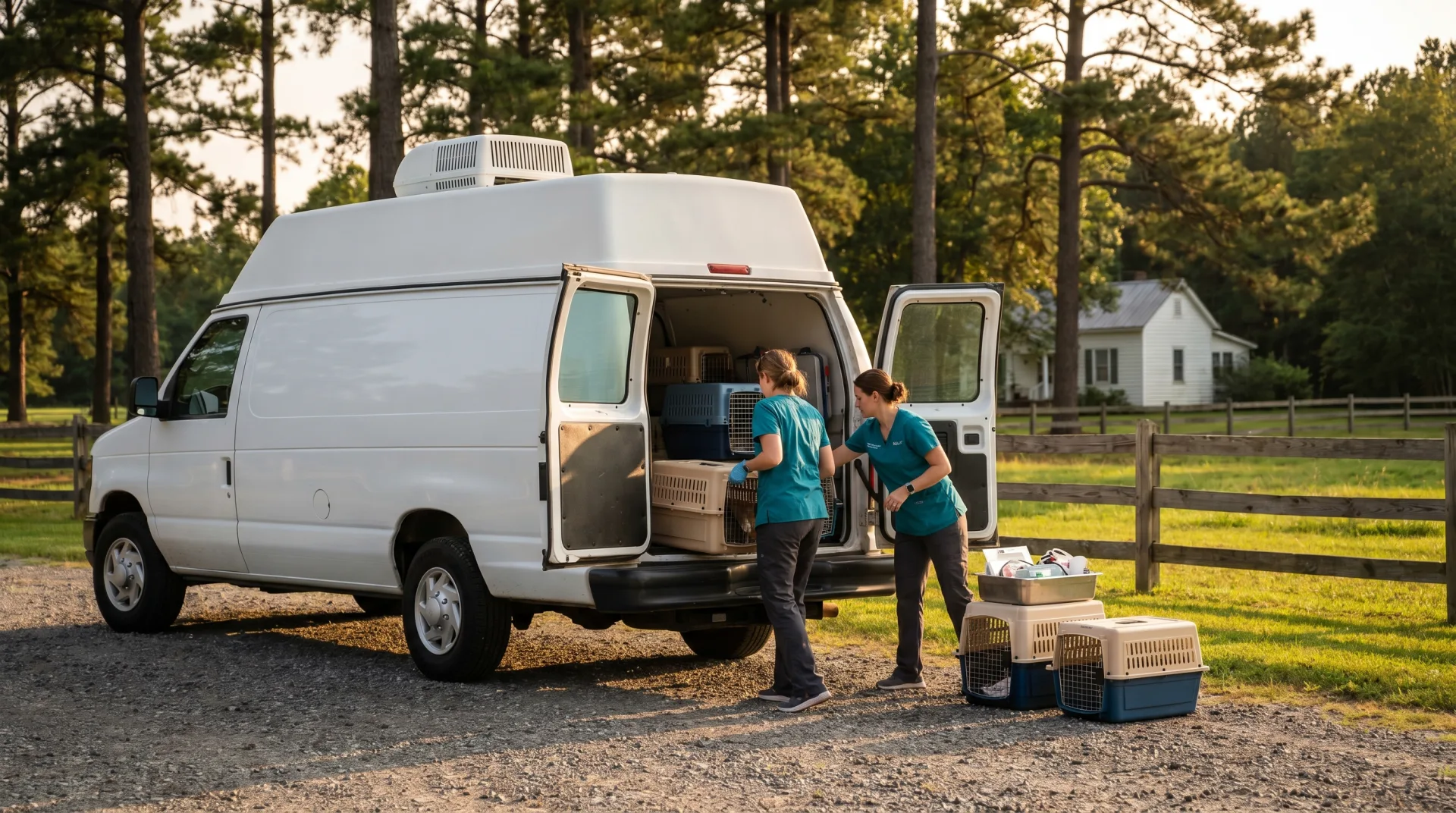
4. Replicate what Anson, Stanly, Macon, and Rowan counties already do. The state should fund a peer-county technical assistance program where high-performing shelters help neighbors replicate the model. This costs almost nothing and directly addresses the community-by-community gap Patricia Norris named.
5. Strengthen breeder oversight. Commercial breeder regulation drives shelter intake at the back end. Closing the gap reduces intake; reducing intake makes the 90% threshold reachable. Our analysis of NC’s breeder regulation gap covers the specific ask, paired with the front-end funding model in states that got it right on spay/neuter.
How You Can Help NC Get There
Three things you can do this week. We have built each of them into the site.
Email your NC state representative. Use our rep lookup tool to find your House and Senate members and auto-fill a letter template. Ask for full funding of the NC Spay/Neuter Program, eligibility expansion to community-cat TNR, and a public statewide shelter dashboard. Walkthrough: how to contact your NC rep.
Sign the petition. Signatures document the grassroots demand we bring to legislators. Sign the petition in under a minute.
Donate. Direct support funds the voucher program covered in our spay and neuter cost guide and the NC partner-vet network. Every voucher is a future shelter intake we prevent. Donate to NC Pet Project.
Frequently Asked Questions
Key Takeaways
- A no-kill shelter saves at least 90% of the animals it takes in (Best Friends Animal Society, Maddie’s Fund). Euthanasia is reserved for medical or behavioral cases that cannot be rehabilitated.
- Four states are statewide no-kill: Delaware, New Hampshire, Rhode Island, and Vermont. The national save rate is 82%, up 11 points since 2016. North Carolina is not on the list and ranks third from the bottom by absolute lifesaving gap (about 36,900 lives short, per Best Friends’ 2025 state rankings).
- NC’s statewide euthanasia rate climbed from 22% in 2021 to 27% in 2024, with more than 20,000 NC shelter dogs and cats killed in 2024 (WRAL Investigates analysis of NCDA&CS data).
- Four NC counties are at or near the benchmark: Anson 0%, Stanly 3%, Macon 3%, and Rowan recognized by Best Friends. The fix is not impossible; it is unevenly distributed.
- NC’s spay/neuter program received $636,000 in 2024 funding requests against $322,000 in available dollars. The $314,000 shortfall is the most fixable of the structural causes.
- Five-point path forward: fully fund the spay/neuter program, expand eligibility to community-cat TNR, publish a statewide shelter dashboard, replicate the high-performing counties through peer technical assistance, and close the breeder regulation gap.
The fix is concrete and the model already works in parts of NC. Sign the petition for state-funded reform, email your NC rep with the policy asks above, and donate to NC Pet Project to fund the voucher program that prevents future shelter intakes.
Your voice matters in Raleigh.
Contact your NC state representative and sign our petition to push for stronger animal welfare legislation in North Carolina.