A dog spay at a private North Carolina veterinarian typically costs $300 to $600, depending on the dog’s size and the clinic’s overhead model. For a household on SNAP or Medicaid, that’s closer to a month of rent than a routine procedure. It’s also one of the biggest reasons too many NC pets stay unaltered, and why NC shelters keep filling up.
The good news: the same surgery can be done for $20 to $150 in NC through a state program, a partner-vet voucher, or a verified nonprofit clinic. The not-so-good news: those programs are scattered across different agencies, eligibility rules, and county lines, and there’s no single statewide map. So we built one.
If you’ve read our guide on what spay and neuter actually costs or our complete Spay & Neuter 101 guide for NC pet owners, this post is the where-to-go follow-up. Here’s the 2026 directory.
TL;DR: A dog spay at a full-cost NC private vet typically costs $300 to $600. The same surgery can be done for $20 to $150 through the NC Department of Agriculture Spay/Neuter Program, an NC Pet Project voucher, or a verified nonprofit clinic. The state program funded 5,855 procedures and reimbursed more than $341,000 to participating counties in 2023 (NCDA&CS, 2025), but it only reaches counties that opt in. Eligibility is set at or below 100% of federal poverty guidelines, or households on SNAP, Medicaid, TANF, or other DHHS assistance. This guide lists the verified clinics, voucher programs, and mobile units operating across all 100 NC counties in 2026, plus the income thresholds and one-click steps to apply for an NCPP voucher.
How Much Does Spay/Neuter Actually Cost in North Carolina?
At a full-cost NC private veterinarian, expect roughly $300 to $600 for a dog spay and $200 to $500 for a dog neuter; cat spays run $200 to $400 and cat neuters $150 to $300. Through the NC state program, an NCPP voucher, or a verified nonprofit clinic, the same surgery typically costs $20 to $150.
Why is the spread so wide? High-quality, high-volume (HQHV) clinics specialize in this one procedure and operate at scale. The ASPCA Spay/Neuter Alliance in Asheville has performed more than 500,000 surgeries since 1994, and a peer-reviewed access-to-care paper documents about 150 ASPCA-network HQHV clinics nationally with more than six million combined surgeries (PMC, 2024). Volume drives the per-surgery cost down without compromising care.
Here’s the part most pet owners don’t realize: the cost barrier is a market gap, not a moral failing. A peer-reviewed access-to-care review found that 27.9% of US households experienced difficulty getting veterinary care between 2016 and 2018, with financial reasons most common (Bushby, Journal of Feline Medicine and Surgery, via PMC, 2020). PetSmart Charities estimates 50 million US pets lack basic veterinary care, including spay/neuter, exams, and vaccinations (PetSmart Charities, January 2023). The NC programs in this guide exist precisely to close that gap.
The NC State Spay/Neuter Program: Who Qualifies and How It Works
The North Carolina Department of Agriculture and Consumer Services (NCDA&CS) Spay/Neuter Program reimburses participating cities and counties for spay or neuter surgeries performed on owned dogs and cats from low-income households. In 2023, the program funded 5,855 procedures and reimbursed more than $341,000 to local governments (NCDA&CS Animal Welfare Section, February 2025). The applicant typically pays a nominal co-pay (commonly around $20); the state covers the rest by reimbursing the county.
The program is funded by the Animal Lovers “I Care” specialty license plate, with $20 from each plate sale and renewal flowing into the Spay/Neuter Fund (NCDA&CS Spay/Neuter Program). For 2026, the state reimburses participating cities and counties at $220.80 per dog spay, $177.50 per dog neuter, $148.17 per cat spay, and $120.11 per cat neuter (NCDA&CS Spay/Neuter Program FAQ, 2026). Those numbers matter because they tell you whether your county’s voucher actually covers a private-vet surgery or only a partner clinic with negotiated rates.
Eligibility is set at or below 100% of federal poverty guidelines, OR receipt of SNAP, Medicaid, TANF, or other DHHS-administered assistance (NCDA&CS FAQ, 2026). Owned dogs and cats are eligible. Feral and community cats are not, which is the funding gap we covered in detail in our post on why NC needs a state-funded TNR program.
One catch worth knowing about up front: the program runs through cities and counties that opt in, not directly to applicants or veterinarians. Whether the program reaches you depends on whether your county participates. If it doesn’t, the NC Pet Project voucher does, statewide.
NC Pet Project Vouchers: When the State Program Is Not Enough
The NCDA&CS program is the largest public funding source for NC spay/neuter, but it has two limits: it only operates in counties that opt in, and the eligibility threshold (100% of federal poverty guidelines) is strict. NC Pet Project vouchers fill both gaps. They cover all 100 NC counties, and the eligibility standard is built around real household budgets rather than the federal poverty line alone.
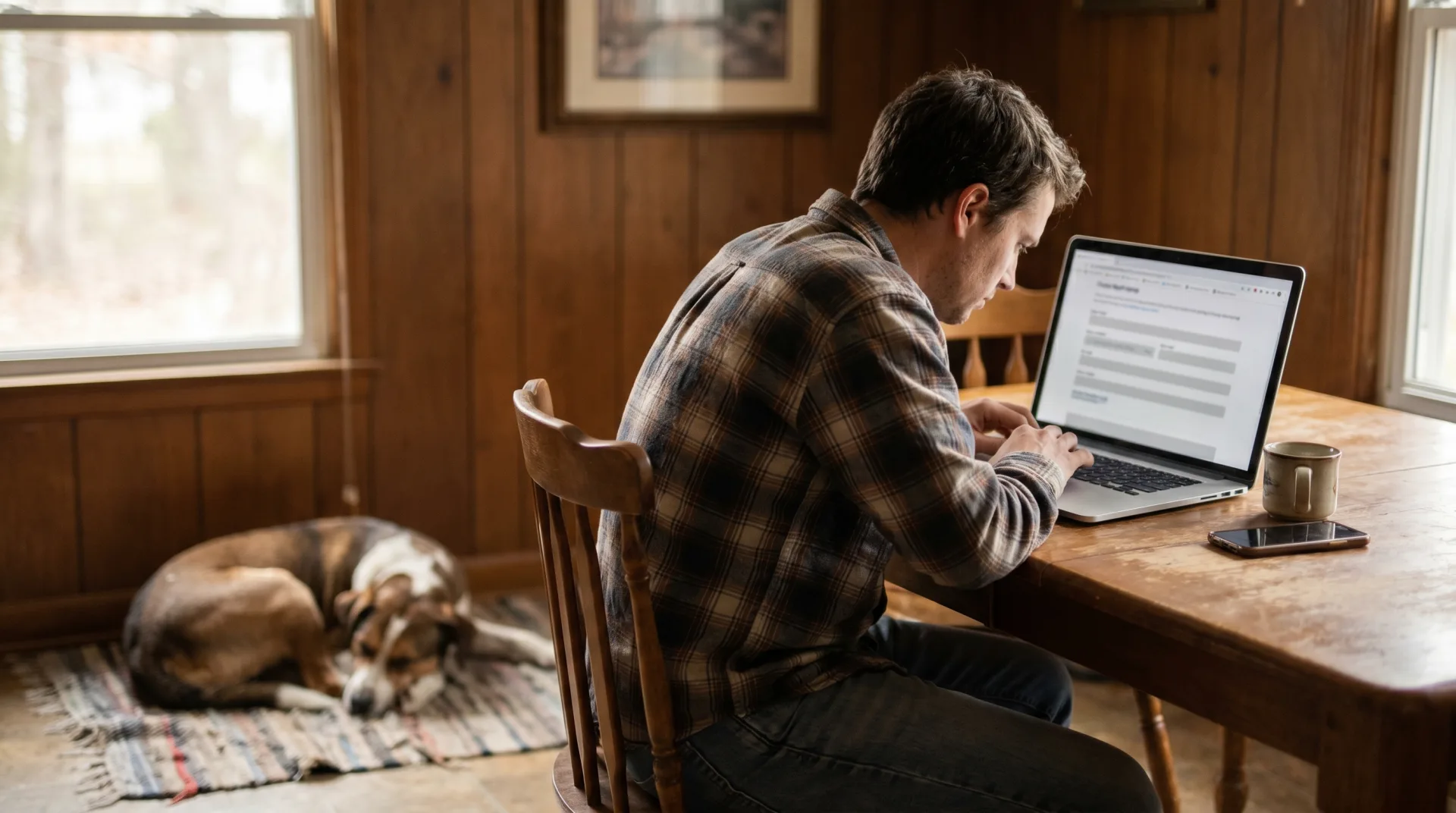
The application takes about 10 to 15 minutes. You upload proof of income or assistance program enrollment, basic pet info (species, sex, weight, age), and a phone number for surgery scheduling. The voucher routes you to a partner vet, and most surgeries are scheduled within a few weeks. Funding comes from donations, grants, and (we hope, soon) a dedicated NC specialty license plate, the model we walked through in our post on states that got it right on spay/neuter funding.
If your county doesn’t participate in the state program, or your income is just above the federal poverty line but you still can’t afford $300-plus at a private vet, the NCPP voucher is the route. Apply here.
Low-Cost Spay/Neuter Clinics by Region
North Carolina has roughly two dozen verified low-cost or HQHV spay/neuter clinics, plus several mobile units. They’re concentrated in the Triangle, Charlotte / Metrolina, the Mountains and Western NC, and the Triad. The Sandhills, Eastern NC, and Northwest are thinner. Here’s the verified 2026 directory, organized by region.
A few notes on how to read it. The “Services” column tells you whether a clinic does dogs, cats, or only one species, and whether it accepts community (feral) cats for free TNR. The “Price” column is the published 2026 rate sheet on each clinic’s website; ranges reflect dog size or anesthesia variations the clinic explicitly publishes. Where a clinic doesn’t post pricing publicly, we’ve noted “Call for current pricing” rather than guess. Most clinics adjust prices once or twice a year, so confirm the figure when you call to book. We also flag clinics with no income requirement separately; those are open-access HQHV clinics where anyone can show up regardless of income.
And one honest call-out before the table: not every NC county is well-served. Twenty-five of North Carolina’s 100 counties have no low-cost spay/neuter provider listed at all, and about 896,000 people live in them. We get into where those gaps are below the table, and what to do if you live in one. The state program (where your county participates) and the NC Pet Project voucher (statewide, no county-of-residence restriction) are the workarounds.
Prices verified from each clinic’s published pricing page or pricing sheet within 30 days of publication. Clinic pricing changes; confirm with the clinic before scheduling. For a fuller statewide cluster directory, see the United Spay Alliance NC list.
What about counties that don’t show up here? Twenty-five NC counties have no low-cost spay/neuter provider listed at all, which you can check county by county on our NC spay/neuter county coverage map. We’re calling those “spay deserts,” and they’re concentrated in the rural eastern coastal plain and the far northwest mountains. The state program (where the county participates), AnimalKind’s Spay Neuter Network referral resource, mobile clinics, and the NCPP voucher are the routes that work for those readers. The voucher, in particular, has no county-of-residence restriction.
| Region | Clinic / Program | Location | Services | Price (2026) |
|---|---|---|---|---|
| Triangle | SAFE Care Clinic (SAFE Haven for Cats) | Raleigh | Cats only, includes ferals | Female cat $100, male $90, feral $60 |
| Triangle | SPCA of Wake County Saving Lives Clinic | Raleigh | Dogs + cats | Dog spay $230-270, dog neuter $200-240, cat spay $120, cat neuter $90, feral $60 |
| Triangle | Operation Catnip-Raleigh | Raleigh (Wake) | Free TNR for community cats | Free |
| Triangle | Orange County Community Animal Clinic | Chapel Hill (Orange) | Dogs + cats, vaccines, microchipping; accepts vouchers | Dog neuter $120-175, dog spay $150-175, cat neuter $70, cat spay $85 |
| Charlotte / Metrolina | Humane Society of Charlotte | Charlotte | Dogs + cats | Dog spay $150 / neuter $125, cat spay $85 / neuter $75, TNVR $50 |
| Charlotte / Metrolina | Spay Neuter Clinic of the Carolinas | Charlotte | Dogs + cats, minor wellness | Call for current pricing |
| Charlotte / Metrolina | Stand For Animals Veterinary Clinic | Charlotte / Pineville / Mooresville | Dogs + cats, payment plans | Sliding-scale |
| Charlotte / Metrolina | Cabarrus Spay & Neuter Clinic | Cabarrus County | Dogs + cats | See clinic site for current rates |
| Charlotte / Metrolina | Gaston Low-Cost Spay & Neuter Clinic | Gastonia | Dogs + cats, no residency requirement | Call for current pricing |
| Mountains / WNC | ASPCA Spay/Neuter Alliance | Asheville | Dogs + cats, regional transport | Dog spay/neuter $65, cat spay $50, cat neuter $35; free community-cat surgeries |
| Mountains / WNC | Asheville Humane Paw It Forward voucher | Buncombe | Voucher to ASPCA Alliance | Fully covered for qualifying applicants |
| Triad | Forsyth Humane Society | Winston-Salem (Forsyth) | Voucher routing for those who cannot otherwise afford spay/neuter | Voucher-based; contact for current options |
| Sandhills | Spay Neuter Veterinary Clinic of the Sandhills | Fayetteville | Dogs + cats, HQHV | Call for current pricing |
| Statewide | AnimalKind Spay Neuter Network | Statewide referral resource | Searchable directory of reduced-cost services | Free directory; clinic prices vary |
| Statewide | Friends of Animals certificate program | National partner-vet network including NC clinics | Low-cost discount certificate | See FoA site for current certificate pricing |
| Statewide | NCDA&CS State Spay/Neuter Program | Statewide (county-administered) | Reimbursement to participating counties | Co-pay typically around $20 |
Mobile Spay/Neuter Clinics Serving Rural NC
Several NC mobile spay/neuter units serve counties without a fixed nonprofit clinic. They typically run on a monthly or quarterly route in partnership with county animal services or local rescues. For rural NC pet owners and community-cat caretakers, mobile units are often the only realistic option. They are also typically the cheapest path to a fixed pet outside of the state program.
Operators listed on the United Spay Alliance NC directory include:
- Brother Wolf Fido Fixers Mobile Unit (Buncombe and Western NC): partners with regional rescues for surgical days at varying locations.
- All Walks of Life Mobile Veterinary Service (Southern Wake, Johnston, Harnett, Lee).
- Asheville Humane Mobile Medical Unit (rural Buncombe pockets).
- Feline Hope Animal Shelter mobile clinics (Outer Banks / Kitty Hawk area, monthly).
- Feral Cat Assistance Program (Winston-Salem area).
How do you find a mobile clinic that serves your address? Three routes work. Start with the United Spay Alliance NC directory linked above, which lists current operators and rough service areas. Search the AnimalKind Spay Neuter Network directory for reduced-cost services in your county. And contact your county animal services office; rural counties often coordinate directly with mobile units, even when they don’t list them on their websites.
Eligibility at a Glance: Which Program Is Right for You?
Eligibility for NC’s low-cost spay/neuter programs depends on three things: where you live, your household income or assistance program enrollment, and whether your pet is owned or community/feral. The decision tree below routes most NC pet owners to the right program in under a minute.
Reading the table left-to-right answers the four questions that matter: where you live, what assistance programs you qualify for, whether your pet is owned, and whether you’re trying to fix a community cat. For most NC owned-pet households, the decision comes down to two routes: the state program (if your county participates) or the NC Pet Project voucher (if it doesn’t, or if your income doesn’t meet the federal poverty threshold).
Why does this matter so much? Because nationally, 88% of pets in underserved communities are unaltered, according to the Humane World for Animals (formerly HSUS) Pets for Life program (Humane World, Pets for Life, 2024). In communities where the cost barrier comes down, sterilization rates rise. The eligibility table above isn’t bureaucratic noise; it’s the routing layer between a $450 surgery and a $20 surgery.
| Program | Income Threshold | Assistance Programs Accepted | Counties Covered | Owned Pets | Community Cats |
|---|---|---|---|---|---|
| NCDA&CS State Program | ≤100% Federal Poverty Guidelines | SNAP, Medicaid, TANF, other DHHS assistance | Participating counties only | Yes | No |
| NC Pet Project Voucher | See voucher page for current threshold | Verified through application | All 100 NC counties | Yes | See application |
| Asheville Humane Paw It Forward | Income-qualifying | Verified at application | Buncombe | Yes | Limited |
| ASPCA Spay/Neuter Alliance | No income requirement | Open access | Buncombe + WNC partners | Yes | Yes (free) |
| Operation Catnip-Raleigh | No income requirement | Open access | Wake | No | Yes (free) |
| Friends of Animals certificate | No income requirement | Open access (pre-paid certificate) | Statewide partner-vet network | Yes | No |
How to Apply: Step-by-Step
Most NC low-cost spay/neuter applications take 10 to 15 minutes and ask for the same three things: proof of household income or assistance program enrollment, basic pet information (species, sex, weight, age), and a contact phone number for surgery scheduling. Here’s the sequence that works for most NC pet owners.
- Identify your route. Use the eligibility table above. For most readers, it’s either the state program (through your county) or the NCPP voucher.
- Gather documents. Most recent pay stub OR an SNAP, Medicaid, or TANF letter. ID with an NC address. That’s it.
- Apply. NC Pet Project: apply for a voucher in 10 minutes. State program: contact your county or city animal services for the local application form. They’ll tell you whether your county participates and what their specific intake process looks like.
- Schedule the surgery with the partner clinic. Confirm the co-pay amount and the day-of-surgery prep instructions. Most HQHV clinics ask for fasting after midnight the night before; some adjust for kittens or seniors. If you need a refresher on the timing question, our post on when to spay or neuter your pet walks through the WSAVA 2024 guidelines by species and breed.
- After surgery. Cone-of-shame compliance, restricted activity for 7 to 14 days, and a follow-up call to the clinic for any concerns. Cats are typically released same-day; dogs same-day or with overnight observation depending on the clinic. Recovery is usually uneventful.
For the broader cluster context, see our guide on what spay and neuter cost, the health case for getting it done, and the most common behavior questions about neutering.
Need broader context before scheduling? The complete spay and neuter guide for North Carolina pet owners covers what the surgery actually is, when to do it by breed size, the health and behavior effects, and the four NC paths to affordability.
Frequently Asked Questions
Key Takeaways
- A dog spay at a full-cost NC private vet typically costs $300 to $600 (midpoint ~$450). State and nonprofit programs cut the same surgery to $20 to $150.
- The NCDA&CS Spay/Neuter Program funded 5,855 surgeries and reimbursed more than $341,000 to participating counties in 2023, funded by Animal Lovers license plate revenue (NCDA&CS, February 2025).
- State program eligibility is set at or below 100% of federal poverty guidelines, OR receipt of SNAP, Medicaid, TANF, or other DHHS-administered assistance. Owned dogs and cats only.
- NC Pet Project vouchers cover the gap for residents in non-participating counties or households just above the federal poverty line. All 100 NC counties.
- NC has roughly two dozen verified low-cost or HQHV clinics, concentrated in the Triangle, Charlotte / Metrolina, the Mountains, and the Triad. Twenty-five counties remain spay deserts; mobile clinics and the NCPP voucher are the routes that work there.
- The application takes 10 to 15 minutes. Most readers can be on a clinic schedule within a few weeks.
The cost barrier is real, but the path around it is well-mapped. Apply for an NC Pet Project voucher. If you’re on SNAP, Medicaid, or TANF (or your income is at or below 100% of federal poverty guidelines), also contact your county animal services about the state program. Both routes can be combined depending on your county. And if you know an NC pet owner who’s been putting off spay/neuter because of cost, share this guide with them.
Need help with the cost of spay/neuter?
NC Pet Project offers spay/neuter vouchers for low-income pet owners across North Carolina. If you can't afford the surgery, we want to help.