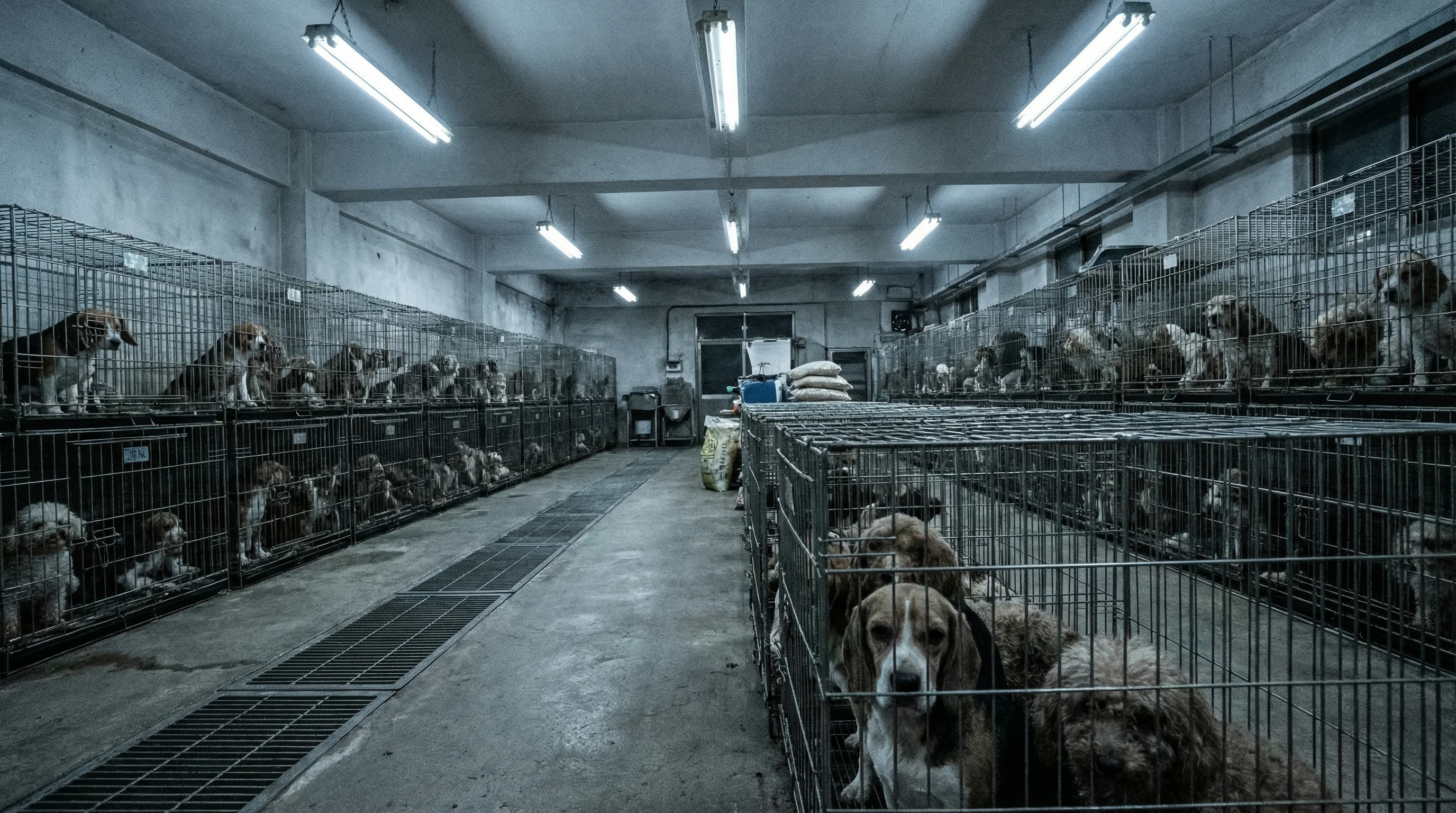
In February 2024, rescuers entered a property in Chatham County, North Carolina, and found 214 dogs. Ten were already dead, including three puppies. The surviving animals were living in their own waste in air thick with ammonia (Animal Rescue Corps, Feb 2024). Ten months later, a Davidson County couple was charged with 26 counts of animal cruelty after more than 100 dogs were found in unsanitary conditions (ABC 45, Dec 2024). Six months after that, the SPCA of Wake County pulled 101 dogs from a single Raleigh home where they’d been crammed “five or six to a cage, stacked one on top of another” (SPCA of Wake County, Jun 2025).
Three busts. Eighteen months. Nearly 500 dogs. And those are just the operations that got caught. North Carolina doesn’t routinely inspect breeders who sell directly to the public, ranks #34 out of 50 states for animal protection laws (Animal Legal Defense Fund, 2025), and has failed to pass a single comprehensive breeder regulation bill despite attempts in 2009, 2013, 2015, and 2017.
Here’s what the data actually shows about puppy mills in North Carolina, who’s profiting, who’s failing to act, and what you can do about it.
TL;DR: NC has no routine inspection of dog breeders selling directly to the public. Three major puppy mill busts in 18 months rescued nearly 500 dogs across Chatham, Davidson, and Wake counties. Nationally, the USDA documented over 680 breeder violations but took zero enforcement actions (ASPCA, Jan 2026). Sign the petition to demand stronger NC breeder laws.
How Big Is North Carolina’s Puppy Mill Problem?
North Carolina has just 29 USDA-licensed commercial dog breeding operations, compared to 885 in Missouri (UNC Media Hub, Dec 2024). That number sounds small. It’s misleading. The USDA only regulates breeders who sell wholesale to pet stores or brokers. Anyone in North Carolina who sells puppies directly to the public can do so with no federal oversight and, in most cases, no state oversight either.
Under North Carolina law, breeders must register as dealers with the state only if they breed the offspring of more than five female dogs or cats per year (NC General Statute 19A-23). Below that threshold? No license. No inspections. No oversight. A breeder with five females producing two litters each per year could sell dozens of puppies annually without ever appearing on the state’s radar.
The supply chain tells the rest of the story. A UNC Media Hub investigation found that NC pet stores source most of their puppies from the “Puppy Mill Belt,” a cluster of high-volume breeding states including Missouri, Oklahoma, Iowa, and Kansas. At least 22 members of a single Amish family were found supplying NC stores. Those puppies retail for $1,000 to $2,500 each in North Carolina shops (UNC Media Hub, Dec 2024). So even the puppy mills operating outside North Carolina’s borders feed directly into its pet stores, and NC law does nothing to regulate that pipeline.
Nationally, an estimated 10,000 puppy mills operate across the United States. Fewer than 3,000 are regulated by the USDA. An estimated 2.6 million puppies are sold from these facilities every year, and roughly 250,000 breeding dogs are currently living in USDA-licensed facilities alone (Humane Society, Jan 2025; ASPCA, Jan 2026).
What Have Recent NC Investigations Uncovered?
Three major puppy mill busts in North Carolina between February 2024 and June 2025 exposed hundreds of dogs living in filth, pain, and neglect. No single news outlet or advocacy organization has connected all three. Here’s the timeline.
February 2024, Chatham County. Animal Rescue Corps launched “Operation Carolina Torment” after a complaint. Inside a single property, they found 214 dogs in wire crates and makeshift pens. Ten dogs were dead. Three were puppies. Ammonia levels from accumulated urine were dangerously high. Many surviving dogs had untreated injuries and infections (Animal Rescue Corps).
December 2024, Davidson County. The county sheriff’s office found more than 100 dogs in unsanitary conditions at a breeding operation run by Roger and Robin McLean. Both were charged with a combined 26 counts of animal cruelty, later updated to 40 counts after 177 dogs were ultimately seized from the property (ABC 45).
June 2025, Wake County. The SPCA of Wake County removed 101 dogs from a single Raleigh home. Dogs were found five or six to a cage, with cages stacked on top of each other (SPCA of Wake County). This wasn’t in a rural outskirt. It was in Raleigh, the state capital.
These operations don’t get discovered through inspections. They get discovered through complaints, because North Carolina has no proactive inspection system for breeders selling directly to buyers. Without routine oversight, the only puppy mills that come to light are the ones so bad that someone calls for help. How many more are operating right now, just under the threshold of public notice?
Why Does the USDA Keep Approving Bad Breeders?
The USDA documented over 680 animal welfare violations at licensed breeding facilities between September 2024 and October 2025. The number of enforcement actions taken in response was zero. No fines. No license revocations. No dogs removed (ASPCA, Jan 2026). “Not a single commercial dog breeder lost their license or paid a single fine,” the ASPCA wrote in its January 2026 report, “and every suffering dog was left right where they were” (ASPCA). Reporting is still the only lever an individual has, and our guide to reporting animal cruelty or neglect in North Carolina covers which agency has jurisdiction over a breeding operation and what evidence a case needs.
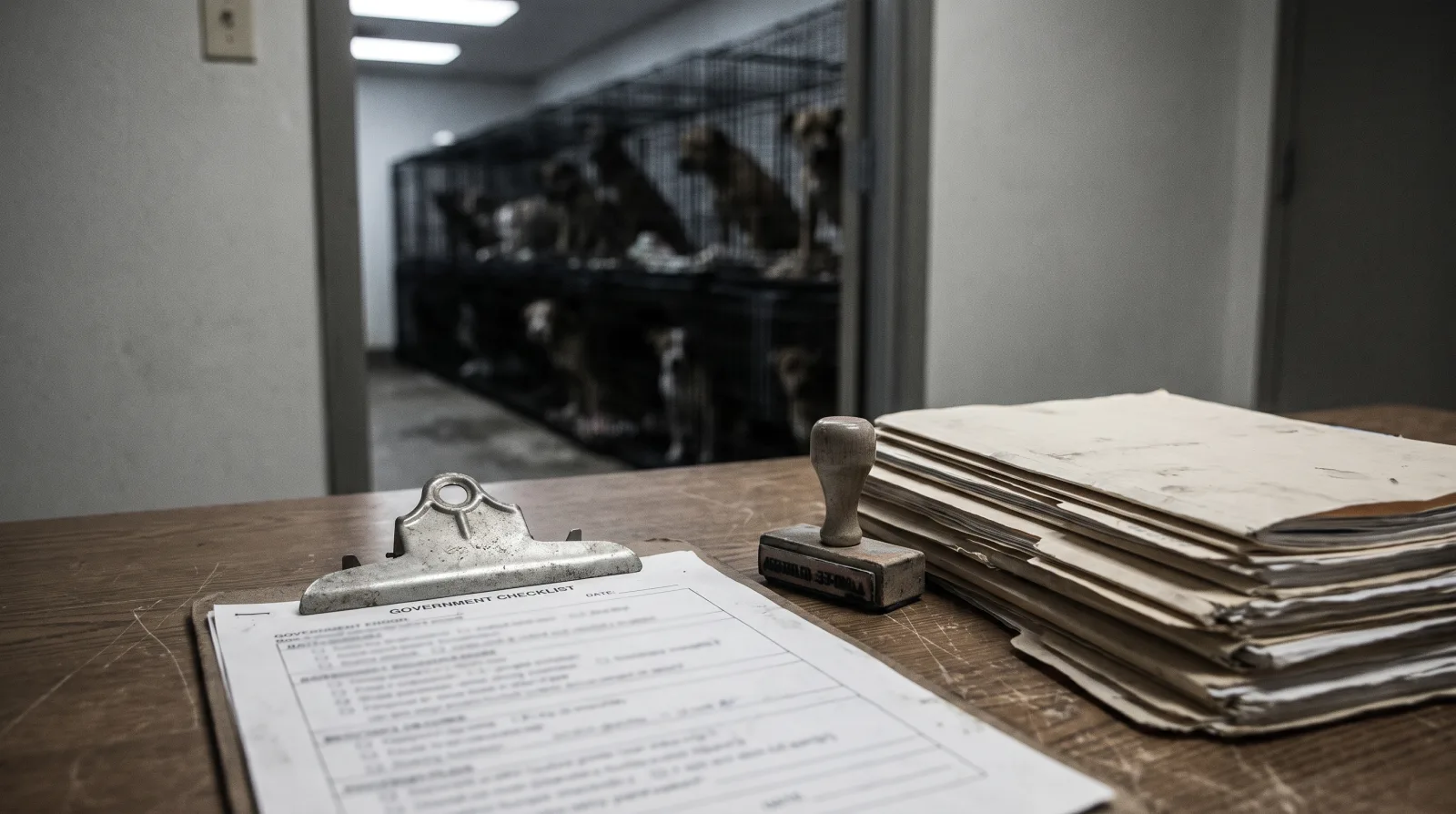
It gets worse. A USDA Office of Inspector General audit released in February 2025 found that 80% of inspected dog breeders had not fully corrected their violations during the review period. Sixty-nine percent of complaint cases were classified as “lower priority,” meaning they could sit for weeks or months before anyone followed up. The audit concluded that the USDA’s approach “fails to adequately find or address violations in a timely manner” (USDA OIG Report 33601-0001-22, Feb 2025).
One-third of all actively licensed commercial dog dealers went completely uninspected in 2025. And every single breeder who applied for a new license that year was approved, regardless of prior violations or criminal history (ASPCA, Jan 2026). A 100% approval rate.
If federal enforcement doesn’t work, state law is the last line of defense. That’s what makes North Carolina’s regulatory gaps so dangerous.
How Do NC’s Breeder Regulations Compare to Other States?
North Carolina ranks #34 out of 50 states for animal protection laws, near the bottom of the middle tier (Animal Legal Defense Fund, 2025). Virginia, Pennsylvania, and Missouri all require what NC doesn’t: routine, mandatory inspections of commercial breeding operations. Here’s how the four states compare.
| North Carolina | Virginia | Pennsylvania | Missouri | |
|---|---|---|---|---|
| License required? | Only if >5 breeding females/yr | Yes | Yes | Yes |
| Routine inspections? | None for direct-to-public | At least 2x/year | At least annually | At least annually |
| Breeding dog limit? | None | No cap | No cap | 50 intact dogs |
| Space/care standards? | Not specified | Yes | Yes | Yes |
The gap is stark. Virginia inspects its commercial breeders at least twice a year. Pennsylvania conducts annual inspections with specific space and veterinary care requirements. Missouri caps the number of intact breeding dogs at 50 per facility. North Carolina does none of these things for breeders who sell directly to buyers.
This isn’t for lack of trying. NC legislators introduced breeder regulation bills in 2009 (Senate Bill 460), 2013, and 2015 (House Bill 159, which actually passed the NC House before dying in a Senate committee). Each time, the bill failed. In July 2025, a different kind of bill nearly made things worse. HB 96 included a last-minute amendment that would have blocked local governments from regulating pet stores, effectively protecting the puppy mill supply chain. Governor Josh Stein vetoed it, stating plainly: “This bill would facilitate inhumane puppy mills in North Carolina” (Best Friends Animal Society; WUNC, Jul 2025).
Vetoing bad bills isn’t the same as passing good ones. NC still has no comprehensive breeder inspection law for direct-to-public sales. We’ll break down the specific policy gaps and what reform should look like in our post on NC's breeder regulation gap.
What Does This Have to Do With NC’s Shelter Crisis?
North Carolina euthanized more than 20,000 shelter animals in 2024, a 27% kill rate (WRAL Investigates, Nov 2025), more than three times the national average of 8% (ASPCA, 2024). Unregulated breeding is one of the forces feeding that pipeline. It isn’t the only cause. But it’s one of the causes that state law could directly address and currently doesn’t.
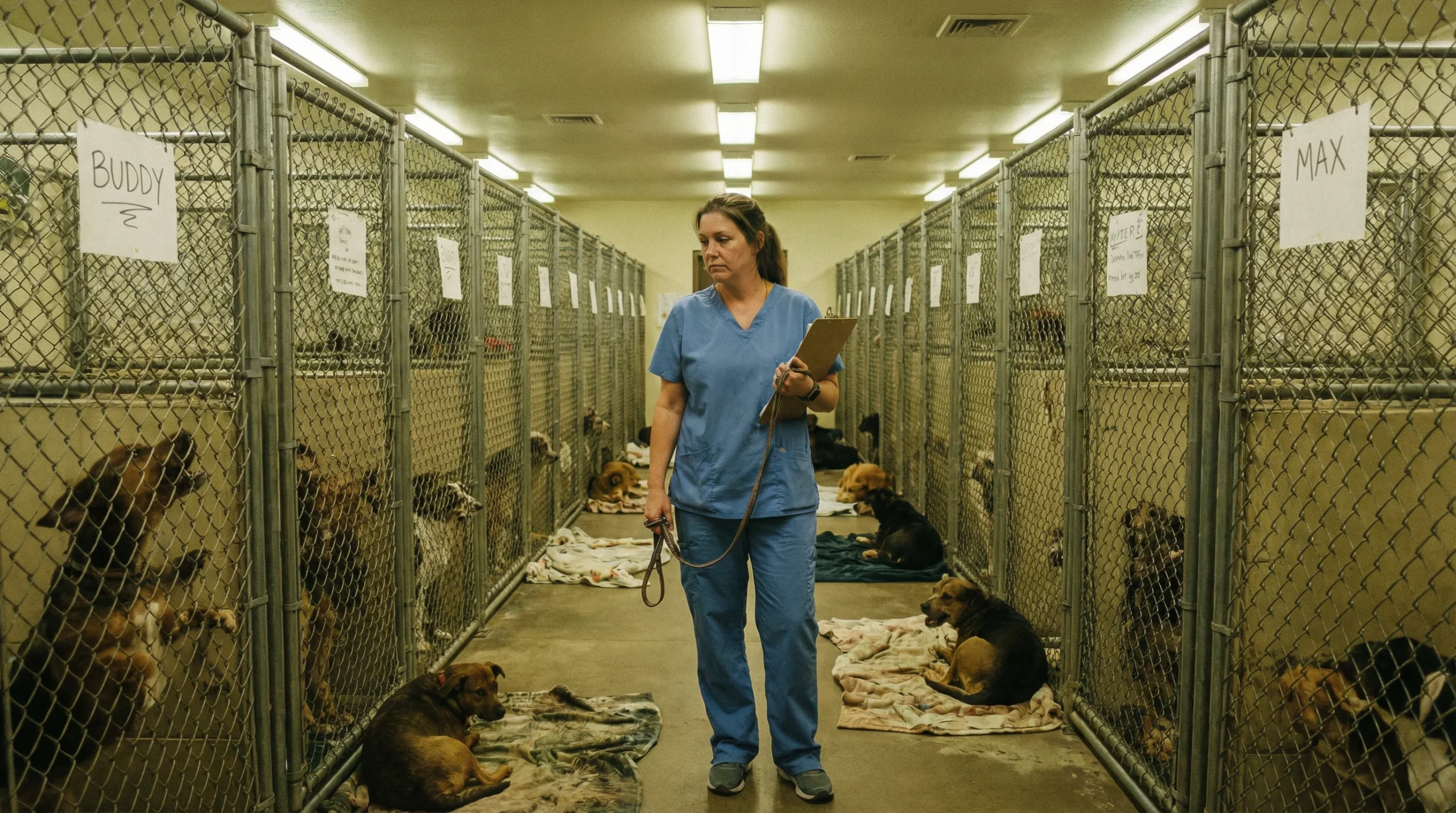
The connection works in two directions. Commercial breeders produce puppies for profit. The puppies that don’t sell, the breeding adults that age out, and the dogs that develop health problems get surrendered or abandoned. They end up in the same county shelters already stretched beyond capacity. Meanwhile, every puppy sold from a pet store or online breeder listing is one fewer family adopting from a shelter. If you are weighing that choice yourself, we walk through the real numbers on both sides in our honest guide to adopting versus buying your next dog in NC.
NC is one of just five states responsible for half of all shelter euthanasia cases nationwide. The same legislature that hasn’t been able to pass breeder regulations is also the one that controls shelter funding. These problems are not separate. They’re two symptoms of the same gap in state animal welfare policy.
For the full breakdown of NC’s shelter data by county, see our post on North Carolina’s pet overpopulation crisis.
What Can North Carolinians Do Right Now?
Governor Stein’s veto of HB 96 proved that pushback works. When enough people speak up, bad policy can be stopped. But stopping bad bills isn’t enough. North Carolina needs new legislation that mandates routine breeder inspections, lowers the licensing threshold, and creates real penalties for violations.
That only happens if NC lawmakers hear from their constituents. Right now, most of them don’t hear much on this issue at all. You can change that.
Sign the petition. Every signature adds weight to the case that North Carolinians want stronger animal welfare laws. Add your name here.
Email your NC state representative. Ask them to file a commercial breeder standards-of-care bill modeled on HB 159 (2015). It takes less than two minutes. Our rep lookup tool finds your legislators and gives you a ready-to-send email template. See our complete guide on how to contact your NC rep about animal welfare for specific talking points, and our breakdown of NC’s breeder regulation gap for the statutory detail.
Join the email list. NC Pet Project tracks legislative activity and sends action alerts when bills affecting animal welfare come up for a vote. Get on the list so you know when your voice matters most.
Frequently Asked Questions
Key Takeaways
- Three major NC puppy mill busts in 18 months rescued nearly 500 dogs from Chatham, Davidson, and Wake counties.
- NC doesn’t inspect dog breeders who sell directly to the public. The state ranks #34 for animal protection laws.
- The USDA documented over 680 breeder violations and took zero enforcement actions.
- Virginia inspects breeders at least twice a year. Pennsylvania inspects annually. NC inspects never.
- NC’s shelter euthanasia rate is 27%, more than 3x the national average. Unregulated breeding is part of why.
North Carolina can do better. Other states already have, and built funding programs NC should be copying. But nothing changes until lawmakers hear from the people they represent. Sign the petition, email your NC rep, and share this post with anyone who cares about animals in North Carolina.
Your voice matters in Raleigh.
Contact your NC state representative and sign our petition to push for stronger animal welfare legislation in North Carolina.