Americans gave a record $21.57 billion to environment and animal organizations in 2024, the most ever (Giving USA 2025). That’s a lot of generosity. The trouble is that a donation only helps as much as the organization behind it can put it to work, and most of us hand over money without ever checking.
Giving well isn’t about giving more. It’s about giving smarter. This guide walks through how to donate to animal welfare so your gift actually counts: how to confirm a charity is legitimate, where your dollar really goes, whether to give monthly or all at once, how to give supplies instead of cash, and whether any of it lowers your taxes. It also covers the North Carolina steps the national checklists skip.
- Before you give, run two free checks: confirm the charity is a 501(c)(3) on the IRS Tax Exempt Organization Search, and in NC confirm it’s licensed on the Secretary of State registry.
- Don’t judge a charity on overhead alone. The major watchdogs publicly abandoned that test back in 2013.
- Monthly recurring gifts are the most useful kind of donation. Recurring giving made up 31% of all online fundraising revenue in 2024 (M+R Benchmarks 2025).
- Supplies count too. Towels, blankets, and food are among the items shelters need most.
- Gifts to a qualified charity are tax-deductible if you itemize, and starting in 2026 even non-itemizers can deduct a limited amount of cash giving.

How Do You Know an Animal Charity Is Legitimate?
Before you give a single dollar, confirm two things. First, that the organization is a registered 501(c)(3), which you can check free on the IRS Tax Exempt Organization Search. Second, in North Carolina, that it’s licensed to ask for donations, which you verify on the NC Secretary of State’s charity registry. Both checks together take under two minutes.
The IRS tool is the national gatekeeper. Search by name, and it tells you whether the group is eligible to receive tax-deductible gifts and whether its tax-exempt status has ever been revoked. One caveat worth knowing: churches and some very small organizations may be legitimately exempt without appearing in the database, so a blank result isn’t always a red flag.
The North Carolina step is the one almost nobody tells you about. Unless they’re specifically exempt, charities that solicit donations in NC must register with the Secretary of State’s Charitable Solicitation Licensing division. You can look up any group on the state’s Search Our Registry tool, or just call the state’s donor line at 1-888-830-4989 and ask. A charity that solicits in NC but isn’t registered is a reason to pause.
Why does this matter so much for animal causes? Because heartstring appeals draw scammers. A fake “rescue” with sad photos and a payment link can look identical to the real thing. The two-minute verification below is your best protection, and it’s worth doing even for an organization a friend recommended. If you are vetting a rescue to adopt from rather than donate to, here is how to find a legitimate animal rescue in NC.
Where Does Your Donation Actually Go? (The Overhead Myth)
The old rule said to give only to charities that spend 90 cents of every dollar on programs. The watchdogs themselves threw that rule out. In 2013, Charity Navigator, GuideStar (now Candid), and the BBB Wise Giving Alliance jointly urged donors to stop judging charities on overhead alone, calling it “the overhead myth.”
A reasonable benchmark still exists. The BBB Wise Giving Alliance asks an accredited charity to spend at least 65% of its total expenses on programs and no more than 35% of related contributions on fundraising. That’s a useful floor. But a slightly higher overhead often means an organization is paying skilled staff, keeping the lights on, and actually measuring whether its work helps animals. Starving a charity of those things doesn’t make it more effective.
Look at what the biggest evaluator does now. Charity Navigator retired the single-ratio approach and rates organizations through its Encompass Rating System, which scores four areas it calls beacons: Impact & Measurement, Accountability & Finance, Leadership & Planning, and Culture & Compensation. Notice that finance is one of four, not the whole picture.
So which animal charities give the highest percentage to their cause? It’s the wrong question. A tiny all-volunteer rescue may post gorgeous “ratios” yet only save a handful of animals, while a larger group with real overhead spays thousands. Ask instead: does the charity show its results? A spay/neuter program that reports surgeries performed and intake reduced is telling you something a percentage never could.
Should You Give Monthly or All at Once?
If you can swing it, give monthly. Recurring gifts are the single most valuable kind of donation to a nonprofit because they’re predictable. Monthly giving made up 31% of all online fundraising revenue in 2024 and grew 5% over the prior year, the fastest-growing channel in the field (M+R Benchmarks, 2025).
Predictability is the whole point. When a rescue knows roughly what’s coming in each month, it can book a spay/neuter clinic, commit to a foster-supply budget, or pull one more dog off a transfer list, because the income to cover it is already pledged. A pile of cash in December is welcome, but a steady $15 a month it can plan around is worth more per dollar.
One-time gifts still matter, of course. Year-end giving, emergency medical cases, and matching campaigns all run on them. And recurring donors tend to stick around far longer than one-time givers, which means your small monthly pledge often does more good over time than a single larger gift you never repeat.
The donor math is friendlier too. Fifteen dollars a month barely registers on a budget, yet it adds up to $180 a year, and you can pause or stop anytime. If you’d like that to fund spay/neuter and foster supplies here in North Carolina, you can set up a monthly gift to NC Pet Project in a couple of clicks.
Giving Without Cash: In-Kind Donations Shelters Actually Need
You don’t need money to make a real difference. Shelters constantly run short on physical supplies, and some of the items they need most are the cheapest: clean towels and blankets, dry and canned pet food, cleaning supplies like bleach and laundry detergent, and durable goods like crates, carriers, and leashes. The catch is to check the shelter’s current wish list first.
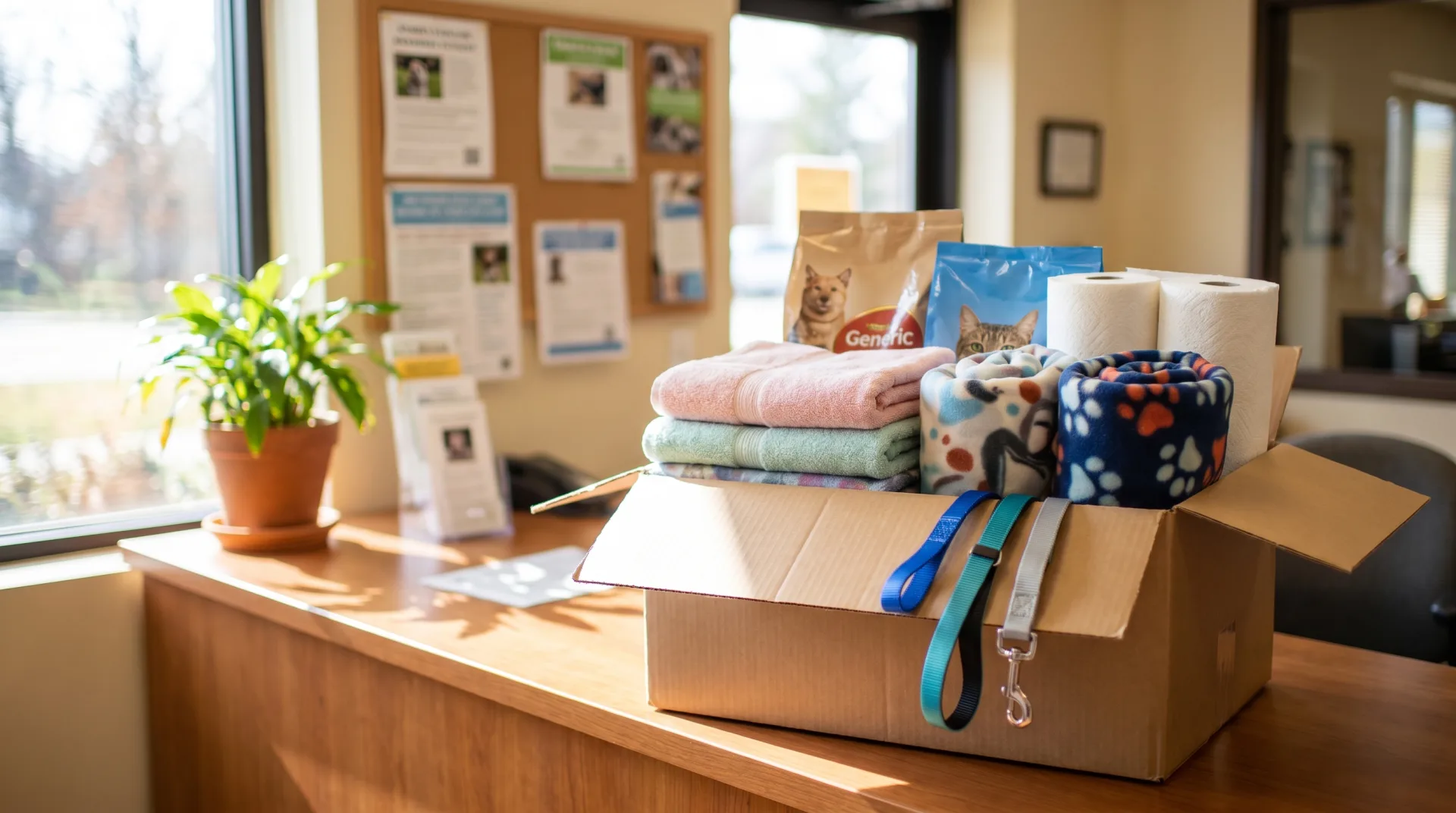
Why the wish list? An overcapacity shelter can’t store what it can’t use, and donated items have limits. Most shelters can’t accept opened or expired food, used bedding that’s torn or stuffed, opened medications, or rawhide. A quick look at the “ways to help” page, or a phone call, saves everyone the trouble of a donation that gets turned away.
Here’s a bonus most item-donation guides skip: those goods may be tax-deductible. The IRS generally lets you deduct donated property at its fair market value at the time you give it, the same $250 written-acknowledgment rule applies, and you’ll want an itemized receipt. We’ll get to the details in the next section.
Beyond a box of supplies, there are no-cash ways to give that cost you only a little time. Buy off a shelter’s Amazon or Chewy wish list and have it shipped straight to them. Run a small supply drive at work or church. Share a rescue’s adoptable-pet posts so animals move faster. Even naming a charity in your will is a gift. If you’d rather start hands-on, our guides to volunteering at an NC animal shelter and fostering a shelter pet show two more ways to help.
Are Donations to Animal Shelters Tax-Deductible?
Yes, donations to a qualified 501(c)(3) animal charity are tax-deductible, but only if you itemize deductions on Schedule A and the organization is IRS-qualified (verify it on TEOS). Keep a bank record or receipt for every gift, and get a written acknowledgment from the charity for any single donation of $250 or more (IRS Publication 526).
In plain terms, most people take the standard deduction and so get no tax break for giving. That’s been the catch for years. For those donors, giving has always been about impact, not the refund, and that’s a perfectly good reason on its own.
That changes in 2026. Under a new federal law, taxpayers who take the standard deduction can also deduct a limited amount of cash giving, up to $1,000 for single filers and $2,000 for married couples filing jointly, starting with the 2026 tax year (Tax Foundation, 2025). It applies to cash gifts to qualifying charities, not to donor-advised funds or private foundations. For the first time in years, a routine monthly gift to your local shelter can trim your taxes even if you don’t itemize.
What about that box of towels and food? Donated goods are deductible at fair market value if you itemize and give to a qualified charity, with the same $250 acknowledgment threshold for larger gifts (IRS Publication 561 covers how to value them). One honest caveat: this is general information, not tax advice. Rules shift, and your situation is your own, so check with a tax professional before you claim anything.
How to Give Locally: Donating to Animal Welfare in North Carolina
Giving locally keeps your money where the pressure is worst. North Carolina shelters take in hundreds of thousands of animals a year, and many county facilities run on tight municipal budgets, so a local gift, whether cash, supplies, or a monthly pledge, has visible, nearby impact. It funds spay/neuter and foster care in your own community, not a national ad campaign.
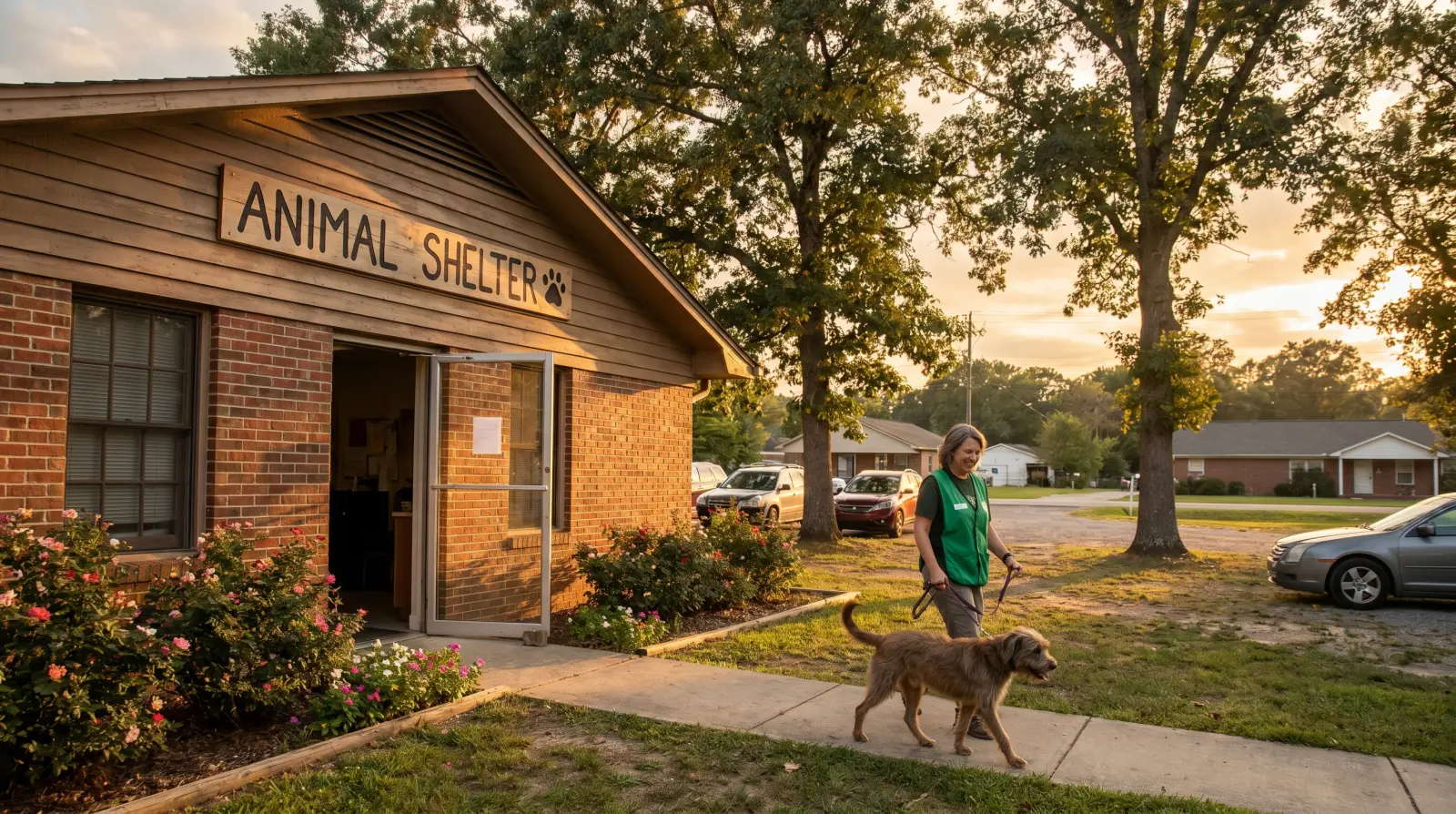
Where should that money go? You have a few good options across the state: your county animal services department, a regional humane society or SPCA, a breed- or species-specific rescue, or a statewide spay/neuter fund. To find the closest one, search “[your county] NC animal shelter donate” and then run it through the same checks from earlier, including the NC Secretary of State registry lookup. Vet a local rescue exactly as carefully as a national one.
The reason local giving moves the needle here is simple math. North Carolina still euthanizes more than 20,000 shelter animals a year, far above the national rate, largely because too many animals come in and not enough leave. Every dollar aimed at low-cost spay/neuter in NC reduces the next litter that would have entered an already-full shelter. That’s the upstream fix behind the numbers in our look at North Carolina’s pet overpopulation crisis.
Your donation to NC Pet Project funds spay/neuter vouchers and foster supplies across the state. Give once, or set up a monthly gift the team can plan around.
A 60-Second Pre-Gift Checklist
Pull all of it together and a smart donation takes about a minute of homework. Run this quick routine before any animal-welfare gift, and you’ll know your money is landing where it should.
- Confirm the 501(c)(3). Search the charity on the IRS Tax Exempt Organization Search to be sure it’s qualified and in good standing.
- Check the NC registry. Look the organization up on the NC Secretary of State’s charity registry, or call 1-888-830-4989.
- Judge impact, not overhead. Look for reported results, surgeries done, animals placed, intake reduced, rather than a single “cents per dollar” figure.
- Pick a form of giving. Monthly if you can, one-time if not, or in-kind supplies off the wish list.
- Keep your receipt. Save the record, and get a written acknowledgment for any gift of $250 or more.
You don’t have to be wealthy to be a good donor. A vetted local rescue, a steady small monthly gift, and a box of towels off the wish list will do more measurable good than a large check sent on impulse to a name you didn’t recognize.
Frequently Asked Questions
Make It Count
A gift that counts isn’t the biggest one. It’s the one you checked first, judged on results instead of a ratio, gave in the form that helps most, and kept a receipt for. That’s the whole difference between generosity that feels good and generosity that does good. None of it takes more than a few minutes.
North Carolina’s shelters are full right now, and the animals waiting in them don’t have time to spare. If you’re ready to help, donate to NC Pet Project to fund spay/neuter vouchers and foster supplies across the state, and give once or monthly. Want to push for the bigger fix too? Sign the petition for stronger state spay/neuter funding while you’re here.
Ready to make a difference?
NC Pet Project needs volunteers across all 100 North Carolina counties. Sign up to get involved in your community.