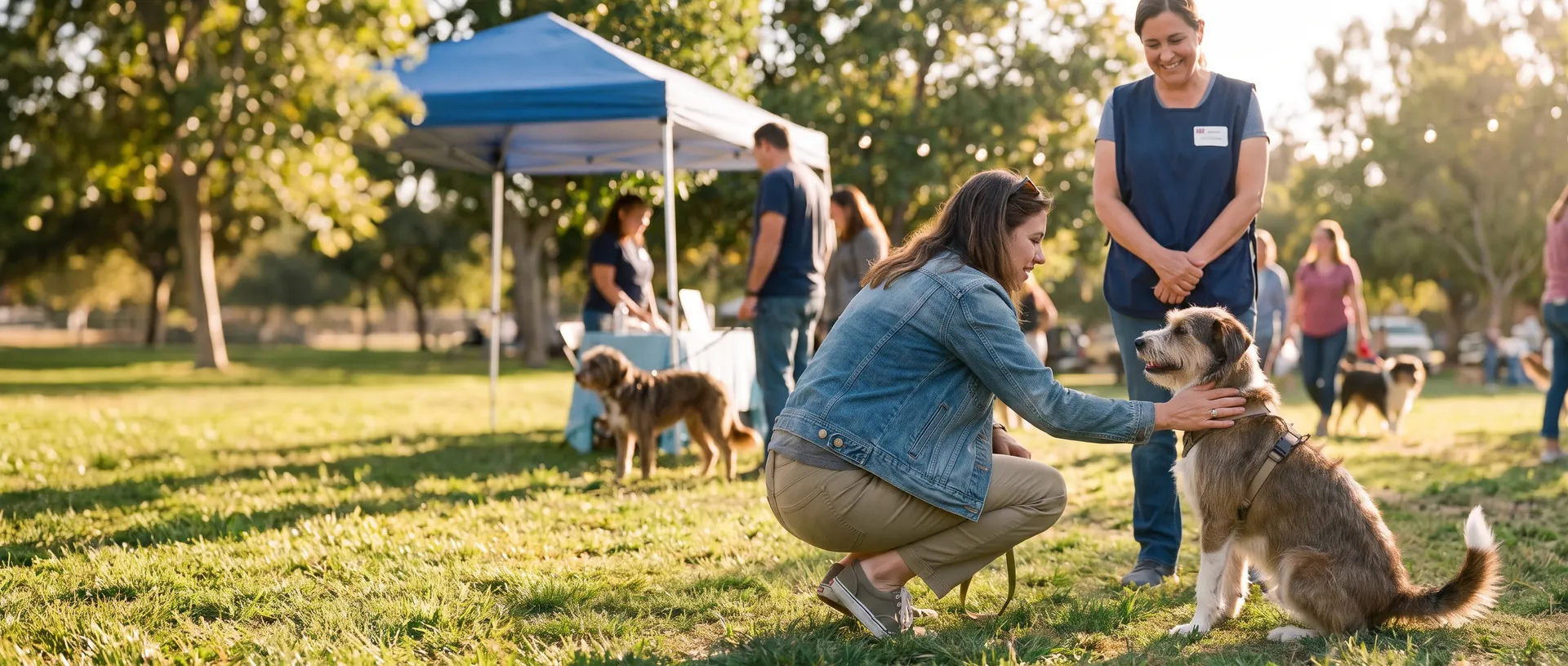
How to Find a Legitimate Animal Rescue in North Carolina (and Spot the Fakes)
Worried a rescue is a scam or a puppy mill front? How to vet an animal rescue in NC: two free checks, the green flags, the red flags, and where to find real ones.
Online pet scams are not a rare horror story. The Better Business Bureau’s Scam Tracker logged 2,278 pet-scam reports in 2024 with a median loss of $680, and another 1,632 reports through September 2025 (BBB, 2025 Puppy Scams update). And scams are only half the risk. Some groups that call themselves rescues are quietly reselling puppy-mill dogs.
The hard part is that a fake rescue and a real one can look identical online. Same sad photos, same urgent tone, same adopt-now button. Plenty of kind people set out to save an animal and end up funding the exact cruelty they meant to fight. The good news: you don’t need to be an expert to tell them apart.
This guide walks through how to find a legitimate animal rescue in North Carolina and spot the fakes: two free checks anyone can run, the green flags that signal a real rescue, the red flags that signal a scam, the puppy-mill-in-disguise tell, and where to find trustworthy NC rescues. Rescues for rabbits, guinea pigs and other small pets are on our rabbits and other pets page.
- Run two free checks first: confirm 501(c)(3) status on the IRS Tax Exempt Organization Search, and in NC confirm the group is licensed to solicit on the NC Secretary of State registry (donor line 1-888-830-4989).
- A rigorous adoption process is a green flag, not a hassle. Real rescues screen adopters, spay/neuter before adoption, use a contract, and take the animal back for life.
- Walk away from any “rescue” that wants payment by gift card, Zelle, Cash App, or wire, won’t let you meet the animal, or always has purebred puppies in stock.
- Some “rescues” are puppy mills in disguise. “Retail rescue” funnels mill-bred puppies through nonprofit fronts, sometimes with real 501(c)(3) paperwork.
- Start your NC search on Petfinder or Adopt-a-Pet, your county shelter, or a breed-specific rescue, then run the two checks before you fall in love with a photo.
What Makes an Animal Rescue “Legitimate”?
A legitimate animal rescue is a registered nonprofit, usually a 501(c)(3), that exists to place animals in good homes rather than to profit from selling them. You recognize one less by its paperwork than by how it operates: it screens adopters, spays/neuters and vets animals before placement, uses an adoption contract, charges a reasonable fee, and commits to take any animal back for life.

Legitimate rescues come in several shapes, and none of them is suspect just for being small. There are county and municipal animal shelters, long-established humane societies and SPCAs, independent 501(c)(3) rescues that often have no building and run entirely on a network of foster homes, and breed- or species-specific rescues that focus on, say, beagles or barn cats. A foster-based rescue with no street address can be every bit as real as a shelter with a parking lot.
Here’s the idea that frames everything below: registration is a floor, not a guarantee. A 501(c)(3) letter and a business license tell you a group filed the right forms, not that it treats animals well. That’s exactly why you check two things, the paperwork and the behavior. A real rescue passes both. Hold every group to that standard, NC Pet Project included.
Two Free Checks: Is the Rescue Actually Registered?
Before you adopt or send a dollar, run two free lookups that together take about two minutes. First, search the organization on the IRS Tax Exempt Organization Search to confirm it’s a 501(c)(3) in good standing. Second, in North Carolina, confirm it’s licensed to solicit donations on the NC Secretary of State’s “Search Our Registry,” or call the state donor line at 1-888-830-4989.
The IRS tool is the national gatekeeper. Search by name, and it shows whether the group is eligible to receive tax-deductible gifts and whether its exempt status was ever automatically revoked, which happens when an organization fails to file the required returns for three straight years (IRS). One caveat: churches and some very small groups can be legitimately exempt without appearing in the database, so a blank result isn’t automatically damning. Weigh it alongside the behavior checks below.
The North Carolina step is the one almost nobody mentions. Unless they’re specifically exempt, charities that solicit donations in NC must register with the Secretary of State’s Charitable Solicitation Licensing division. The state’s Search Our Registry tool shows each licensed group’s filings and most recent financials, and the donor hotline at 1-888-830-4989 will check for you. A group that solicits in NC but isn’t registered is a reason to pause.
Run both, but keep them in perspective. Registration confirms the paperwork, not the conditions inside. Plenty of bad actors hold valid documents, as the puppy-mill fronts later in this guide show. So treat these two checks as necessary, not sufficient. They clear the obvious frauds; the green and red flags do the rest.
Green Flags: What a Real Rescue Actually Does
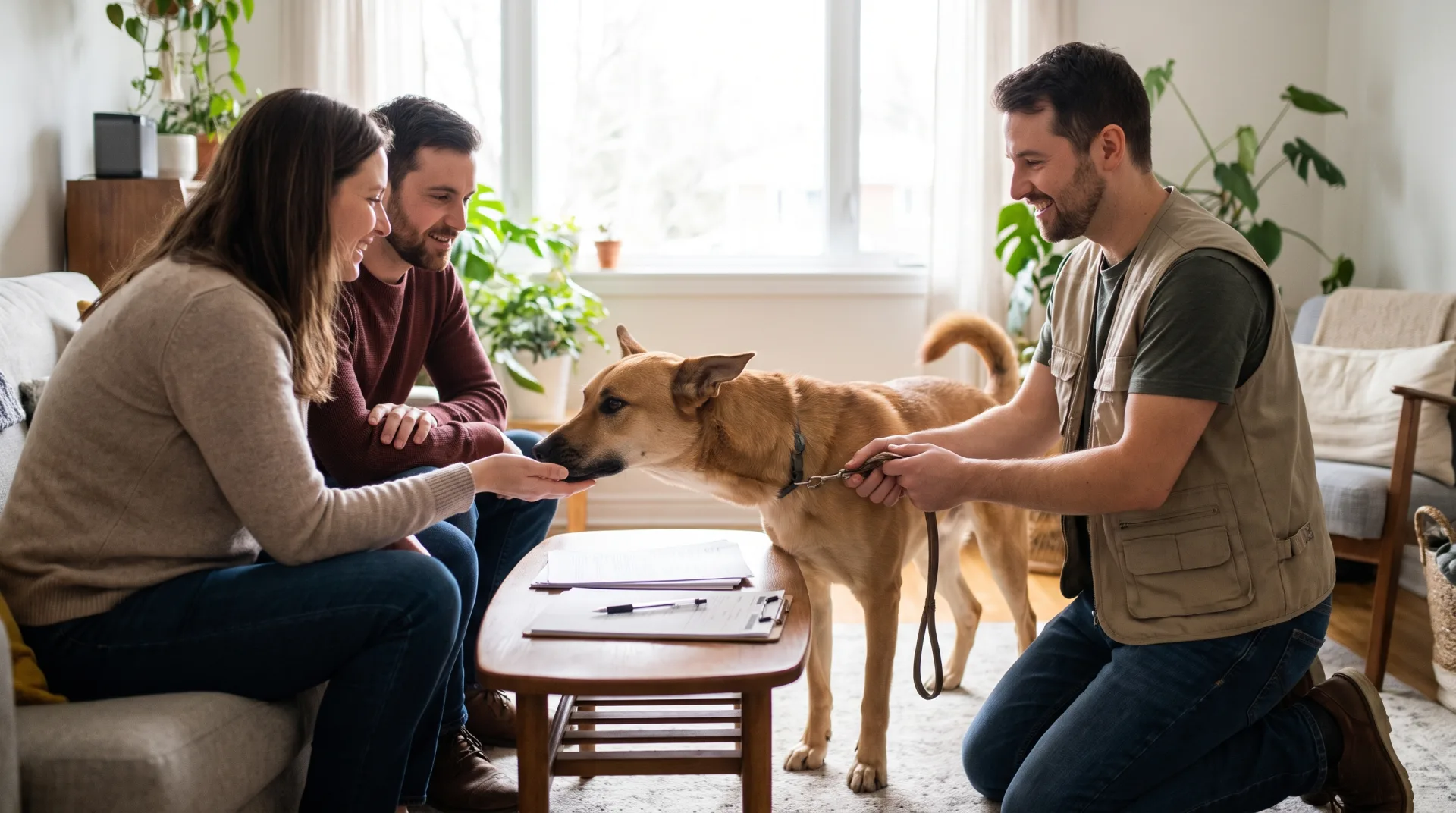
The clearest sign a rescue is real is that adopting from it takes some effort. Legitimate rescues make you apply, ask about your home and other pets, often check with your vet or arrange a home visit, spay/neuter and vet the animal before placement, have you sign a contract, charge a sensible fee, and promise to take the animal back if it ever doesn’t work out. If a “rescue” hands you a puppy with no questions asked, that ease is the warning sign.
That friction can feel annoying when you just want to bring a dog home. Reframe it: the hoops are the rescue protecting the animal and protecting you. A scammer or a mill optimizes for a fast sale, while a real rescue optimizes for a match that lasts. The Federal Trade Commission puts the behavior test plainly, advising that legitimate rescues, shelters, and breeders “encourage an in-person or video meeting,” and that if a group won’t let you visit, video chat, or even talk by phone, you should “move on to someone else” (FTC).
Here’s what a real rescue’s green flags look like in practice:
- A written adoption application and a real conversation about your household.
- A vet reference, a personal reference, or a home visit before approval.
- Animals already spayed/neutered, vaccinated, and microchipped, or with it scheduled and spelled out.
- A clear adoption contract you get to read.
- A reasonable, consistent fee that doesn’t spike for a “fancier” breed.
- A standing offer to take the animal back, for its whole life, if you ever can’t keep it.
- A chance to meet the animal in person or by video before you commit.
Reputable groups will also show their work. Ask any rescue for its paper trail: intake policies, behavior assessments, and veterinary records. A responsible rescue will already have spayed or neutered and vetted its animals, or have the surgery scheduled. The willingness to take an animal back for life is a hallmark of a responsible organization, the same lifetime commitment the ASPCA expects of responsible breeders, who should be able and willing to take back or rehome an animal at any time. If you’d like to see what that process feels like from the inside, our guide to fostering a pet in NC walks through it.
Red Flags: How to Spot a Fake Rescue or a Scam
Walk away if a “rescue” pressures you to pay with a gift card, Zelle, Cash App, wire transfer, or cryptocurrency; won’t let you meet the animal or visit; has no verifiable address; always seems to have purebred puppies available; prices animals like a sale; skips spay/neuter and applications; or follows up with surprise “shipping” or “treatment” fees. Those are the patterns behind thousands of pet scams every year.
Payment is the loudest tell. The FTC is blunt: “only scammers say you must pay with gift cards, a payment app, cryptocurrency, or a wire transfer service” because those methods are hard to claw back (FTC, 2024). A real rescue takes ordinary payment, and only after you’ve been approved. The scale is real, too: the BBB’s Scam Tracker logged 2,278 pet-scam reports in 2024 and 1,632 more through September 2025, with the money usually moving through an app like Zelle or Venmo (BBB).
There’s also a newer variant worth knowing: the staged rescue video. These are social-media accounts that post a steady stream of dramatic, last-minute “rescues” designed to harvest donations and engagement, then route you to an off-platform payment app. Be skeptical of any account whose whole feed is cliffhanger rescues and whose only ask is money sent by app to someone you can’t verify.
And don’t let a logo do your thinking. “But they have a website and a 501(c)(3)” isn’t the reassurance it sounds like, because, as the next section shows, paperwork can be faked or abused. The behavior pattern tells you more than the branding does.
When a “Rescue” Is Really a Puppy Mill
The hardest fake to catch is the one with real paperwork. “Retail rescue,” also called puppy laundering, is when commercial breeders or brokers funnel mill-bred puppies through groups that call themselves rescues, sometimes after obtaining genuine 501(c)(3) status, so the dogs can be sold as “rescues.” It’s often done to slip around local bans on selling puppies in pet stores. The IRS check won’t catch this one. The behavior will.
The ASPCA has described puppy laundering as funneling puppy-mill-bred puppies through “phony nonprofit organizations” so they can be falsely marketed to the public as adoptable rescues (ASPCA, 2019). The watchdog group Bailing Out Benji documents how some breeding operations get “rescue names and business licenses, even sometimes taking the additional step to become an official 501c3 charity,” then relabel commercially bred puppies as rescues, with litters split so half are sold as “rescues” and half as commercial puppies (Bailing Out Benji).
So how do you tell a laundering front from the real thing? Watch for a steady supply of young purebred or “designer” puppies, since real rescues mostly have adults, mixes, and a roster that rises and falls. Watch for “adoption fees” that climb with breed and demand, the way prices do. Be wary of vague or always-out-of-state intake stories, and of a pickup that happens in a parking lot or a pet store instead of a foster home or a facility you can visit.
And remember that even a real license is a floor, not proof. A February 2025 audit by the USDA’s Office of Inspector General found that 80% of the federally licensed dog breeders it inspected had not fully corrected their animal-welfare violations (USDA OIG audit via Humane World for Animals, 2025). A USDA license, like a 501(c)(3) letter, means a form was filed, not that the animals are well cared for. This is the consumer-facing side of a policy problem we cover in depth in North Carolina’s puppy mill problem, where weak state oversight lets the supply chain run. If that makes you angry, you can sign the petition for stronger NC breeder and retail-rescue oversight.
Where to Find Real Animal Rescues in North Carolina
Start with sources that already screen for legitimacy, then verify before you commit. Search Petfinder or Adopt-a-Pet, which list adoptable animals from registered shelters and rescues; check your county animal shelter; or look for a breed- or species-specific rescue. Once a particular animal catches your eye, run the two free checks and look for the green flags before you fall for the photo.
Across North Carolina, the legitimate options sort into a few categories. There are county and municipal animal services departments, the public shelters in nearly every NC county. There are regional humane societies and SPCAs. There are independent, foster-based 501(c)(3) rescues that operate without a building. And there are breed- and species-specific rescues, from hounds to barn cats. To find one near you, start with our list of the NC shelters and rescues whose adoption lists we read, or search “[your county] NC animal rescue” or “[breed] rescue North Carolina,” then verify what you find rather than trusting the first polished website.
One honest nuance about the big platforms: Petfinder and Adopt-a-Pet require an organization to register before it can list animals, but a listing is a starting point, not a full vetting, so verify any group yourself before adopting. Use them to find candidates, then do your own two checks. If you are still deciding between adopting and buying at all, our guide to adopting versus buying a dog in North Carolina lays out the cost, health and predictability evidence on both sides. Adopting from a real NC rescue is also the upstream fix for the state’s shelter crisis. Every adoption from a vetted rescue is one fewer animal stuck in an overcrowded county shelter, the problem we lay out in North Carolina’s pet overpopulation crisis and chip away at through low-cost spay/neuter in NC.
Once you’ve found a legitimate rescue, there are a dozen ways to help: adopt, foster, volunteer, or back the spay/neuter and foster programs that keep NC animals out of crowded shelters in the first place.
Your 60-Second Rescue Check
Pull it all together and vetting a rescue takes about a minute. Run this quick routine before you adopt from, foster through, or donate to any rescue, and you’ll know you’re dealing with the real thing.
- Confirm the 501(c)(3). Search the group on the IRS Tax Exempt Organization Search to be sure it’s qualified and in good standing.
- Check the NC registry. Look it up on the NC Secretary of State’s “Search Our Registry,” or call 1-888-830-4989.
- Confirm the green flags. Application, spay/neuter before adoption, a contract, a return-for-life policy, and a chance to meet the animal.
- Watch for red flags. Gift-card, Zelle, or wire payment; no visits; and a constant supply of purebred puppies.
- When in doubt, go through a shelter. Adopt through your county shelter or a Petfinder or Adopt-a-Pet-listed group, and ask to see the paper trail.
You don’t have to be suspicious of everyone. The vast majority of North Carolina rescues are the real thing, run by exhausted volunteers who would happily pass every test above. These checks simply keep your good intentions from accidentally funding a bad actor.
Frequently Asked Questions
Find the Real Ones
A legitimate rescue is one you’ve checked, on paper and in person. It’s registered as a 501(c)(3), it appears on the NC Secretary of State’s registry, its process makes you work a little, and its behavior matches its paperwork. The friction you feel filling out the application is the feature, not the bug. The real rescues will happily pass every test in this guide.
You don’t have to be an expert to avoid a fake. Two free lookups and a short list of green and red flags do most of the work. When you’re ready, get involved with a vetted NC rescue by adopting, fostering, volunteering, or giving. And if the puppy-mill fronts in this guide got under your skin, sign the petition for stronger oversight so fewer of them can hide behind a rescue’s name.