More than 20,000 dogs and cats were euthanized in North Carolina shelters in 2024. That’s a 27% kill rate, more than three times the national average of 8% (WRAL Investigates, Nov 2025). North Carolina ranks among just five states responsible for half of all shelter deaths nationwide. For the full national and NC numbers, updated with the latest datasets, see how many animals are euthanized each year.
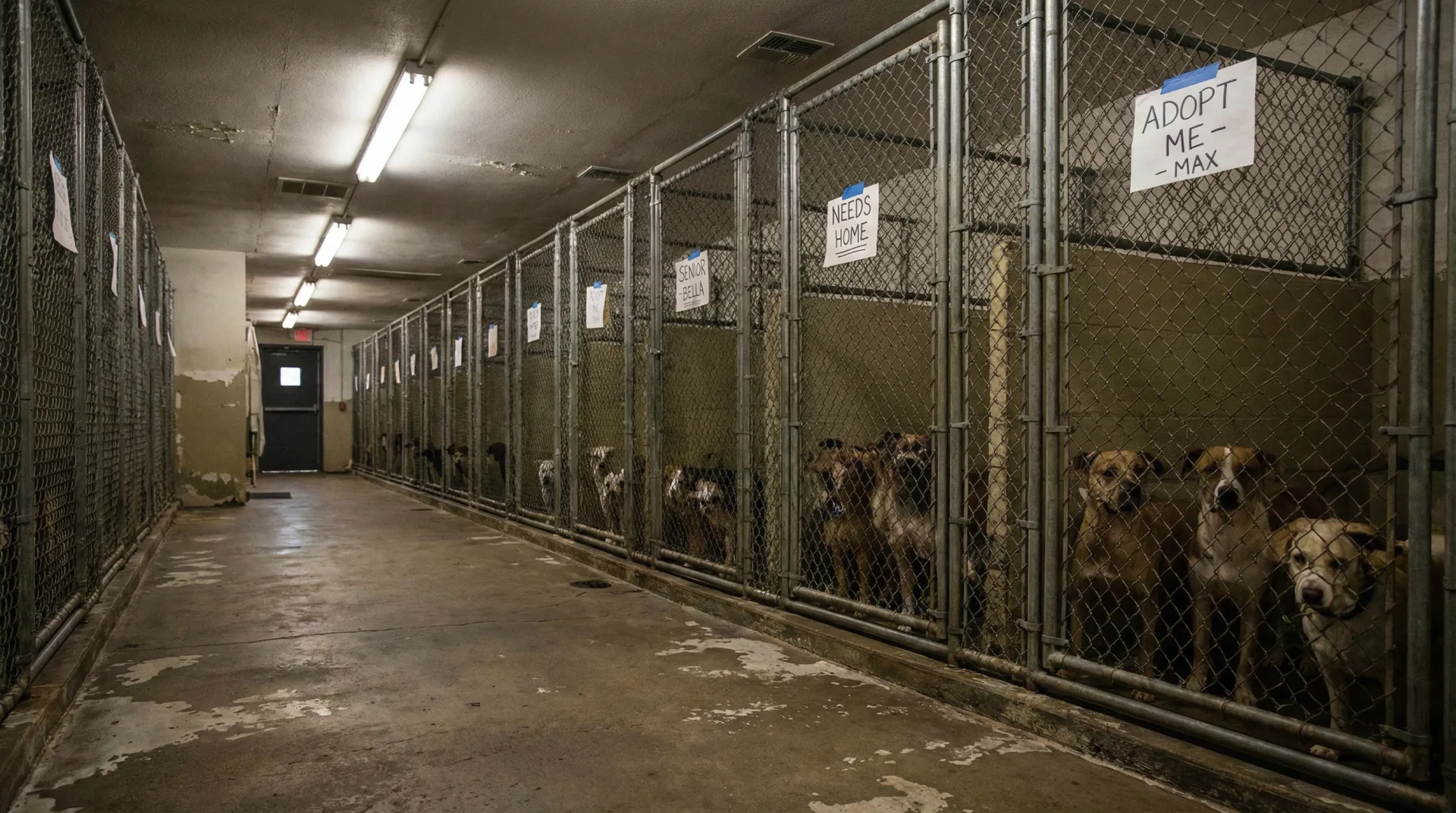
Here’s what makes those numbers even harder to accept: North Carolina was making real progress. The statewide euthanasia rate dropped from 66% in 2010 to a low of 22% in 2021. Then it started climbing again. The 2024 data from the NC Department of Agriculture tells a story of a system stretched beyond its limits, with massive county-by-county gaps in resources, adoption rates, and outcomes.
This article breaks down the data behind the crisis. Where are things worst? What’s driving the reversal? And what would it actually take to fix it?
TL;DR: NC shelters euthanized over 20,000 animals in 2024 at a 27% rate, more than 3x the national average of 8% (ASPCA, 2024). County euthanasia rates range from 0% (Anson) to 105% (Nash). Only 30% of NC shelters are no-kill. The state’s shelter support fund can’t keep up with demand. Sign the petition to push for change.
How Bad Is Animal Shelter Overcrowding in North Carolina?
North Carolina’s shelter euthanasia rate hit 27% in 2024, up from a historic low of 22% in 2021, according to data compiled by WRAL Investigates from the NC Department of Agriculture. That reversal erased three years of progress in a single year. In 2022, roughly 120,500 animals entered NC shelters, with more than 30,000 surrendered by their owners (WRAL / Shelter Animals Count).
The long-term trend still looks better than 2010, when two out of every three shelter animals in the state were killed. But the recent uptick signals real trouble. Shelter intake is rising while adoption rates plateau. Resources haven’t kept up.
What’s driving the reversal? A combination of factors. Post-pandemic pet surrenders have surged. Veterinary costs have climbed 10% or more since 2020, pushing fewer owners to spay or neuter. And the percentage of dogs arriving at shelters already altered dropped from 33.2% in 2019 to 22.3% in 2023 (Shelter Animals Count). Fewer altered animals coming in means more animals being born, and more animals filling already packed shelters. Owner surrenders are the one intake stream individual households can act on directly, and there is a playbook for it: see how to rehome a dog in NC before you surrender to a shelter.
According to the NC Department of Agriculture’s 2024 Public Animal Shelter Report, the state’s shelters collectively process tens of thousands of dogs and cats annually, with large urban counties like Mecklenburg (6,099 dogs, 3,164 cats) and Cumberland (4,476 dogs, 2,765 cats) bearing the heaviest intake burdens (NC DACS 2024 Report).
Why Do Some NC Counties Euthanize 100 Times More Than Others?
Nash County’s euthanasia rate in 2024 was 105%. Columbus County hit 80%. Washington County reached 74%. Meanwhile, Anson County recorded 0%, Stanly County 3%, and Macon County 3% (WRAL Investigates, citing NC DACS data). That’s not a typo. Within the same state, the difference between the best and worst performing shelters is not double or triple. It’s more than a hundredfold.
(Yes, a rate above 100% is possible. It means a shelter euthanized more animals than it took in during the reporting period, because some of those animals carried over from the prior year.)
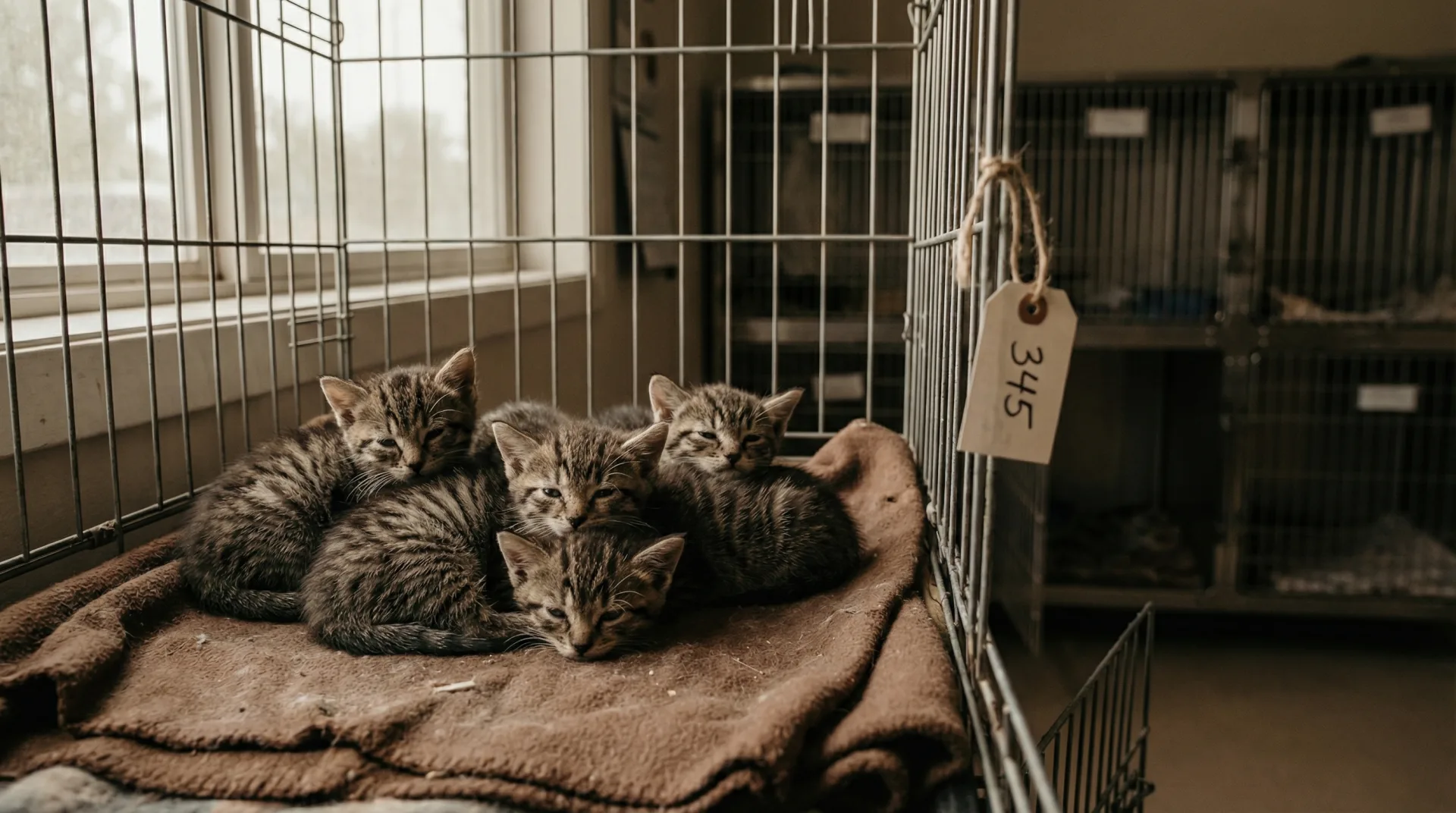
The Columbus County shelter’s numbers are staggering on their own. In 2024, 1,656 dogs entered. Only 124 were adopted. 1,223 were euthanized. For cats, 1,220 came in. Just 42 found homes. 1,067 were killed (NC DACS 2024 Report). That’s an adoption rate under 8% for dogs and under 4% for cats. In a single county.
Compare that to Anson County, which took in 553 dogs and adopted out 508 of them. Or Stanly County, where 377 of 379 cats found homes. These aren’t wealthier counties with bigger budgets. Anson County spends $423 per animal. What they do have are strong rescue partnerships, active foster networks, and transfer agreements with higher-demand shelters. Those relationships, not money alone, separate the counties saving animals from those killing them.
Want to see how your county is doing? Check the NC Pet Project supporter map to find shelters and organizations near you.
How Does North Carolina Compare to the Rest of the Country?
Nationally, 5.8 million dogs and cats entered shelters in 2024. Approximately 607,000 were euthanized, an 8% euthanasia rate (ASPCA, 2024). North Carolina’s 27% rate is more than triple that national average. As of 2021, NC had the second-highest shelter kill rate in the entire country (WRAL, citing Veterinarians.org data).
Four states have already achieved no-kill status: Vermont, New Hampshire, Delaware, and Rhode Island (Best Friends Animal Society, 2024). Their euthanasia rates hover around 3%. Only 36 of North Carolina’s approximately 120 shelters maintain no-kill policies, just 30% (UNC Media Hub, citing NC DACS data). The gap between where NC stands and where it could be is enormous.
There’s a bright spot worth mentioning. Best Friends’ 2024 report found that NC had 2,900 fewer animals killed compared to 2023, the second-largest improvement of any state behind only California. So progress is happening. It’s just not happening fast enough.
Curious where NC stands on the no-kill map? We’ll break that down fully in our upcoming post on >no-kill shelters in North Carolina.
Why Do Cats Bear the Heaviest Burden in NC Shelters?
In Johnston County, 809 dogs were euthanized in 2024. For cats, the number was 1,635, more than double (NC DACS 2024 Report). That pattern repeats across the state. In Wilkes County, 601 dogs were killed compared to 1,476 cats. In Columbus County, the numbers were 1,223 dogs and 1,067 cats. Cats consistently fare worse.
Why? Kitten season. Nationally, kittens account for 57% of all feline shelter intakes. Close to 250,000 kittens died in U.S. shelters in 2024, and over 43% of pre-adoption-age kittens with non-live outcomes died unassisted, meaning they were too young to survive without intervention that wasn’t available (Kitten Lady / Shelter Animals Count). Peak intake hits in May, when more than half of feline admissions are kittens under eight weeks old.
The spay/neuter gap makes this worse every year. From 2019 to 2023, the percentage of cats arriving at shelters already spayed or neutered dropped from 27.9% to 22.0% (Shelter Animals Count). Fewer altered cats in the community means more litters born outdoors. More litters mean more kittens flooding shelters during the spring and summer months. It’s a cycle that only breaks with accessible, affordable spay/neuter programs.
Trap-neuter-return (TNR) programs are one of the most effective tools for addressing feral and community cat populations. Want to learn how they work? >Read our complete TNR guide.
What Does This Crisis Cost North Carolina Taxpayers?
The cost per animal in NC shelters ranges from $70.16 in Cabarrus County to $1,327 in Haywood County, according to the NC Department of Agriculture’s 2024 Public Animal Shelter Report. Cumberland County alone spent $4,101,432 on shelter operations in 2024, working out to $544.61 per animal processed (NC DACS 2024 Report).
These aren’t just line items in a county budget. They represent a system spending millions of dollars to manage a problem that prevention would handle at a fraction of the cost. A single spay or neuter surgery costs $50 to $150 at a low-cost clinic. Processing, housing, and euthanizing an animal costs a county $160 to $1,300. The math isn’t complicated.
Yet the state’s own investment in prevention is a rounding error. North Carolina’s spay/neuter reimbursement program supported 5,855 procedures and distributed just $341,000 to county and town governments in 2023 (NC DACS Blog, Feb 2025). The Animal Shelter Support Fund received a $250,000 appropriation, but demand far exceeded supply. Twelve shelters received one-time grants, with a maximum award of $50,000 each (NC DACS). The state’s Animal Welfare Section oversees roughly 1,000 facilities with only 9 inspectors.
North Carolina is spending far more cleaning up the crisis than it would cost to prevent it, and the shelter bill is only part of the total. The bite injuries, rabies quarantines and laboratory testing that come with unsterilized free-roaming animals are covered in our breakdown of the public health cost of pet overpopulation. Your donation helps fund spay/neuter vouchers that bridge the gap the state can’t fill. New to giving? Our guide on how to donate to animal welfare shows how to make your gift count.
What Has Actually Worked in Other States?
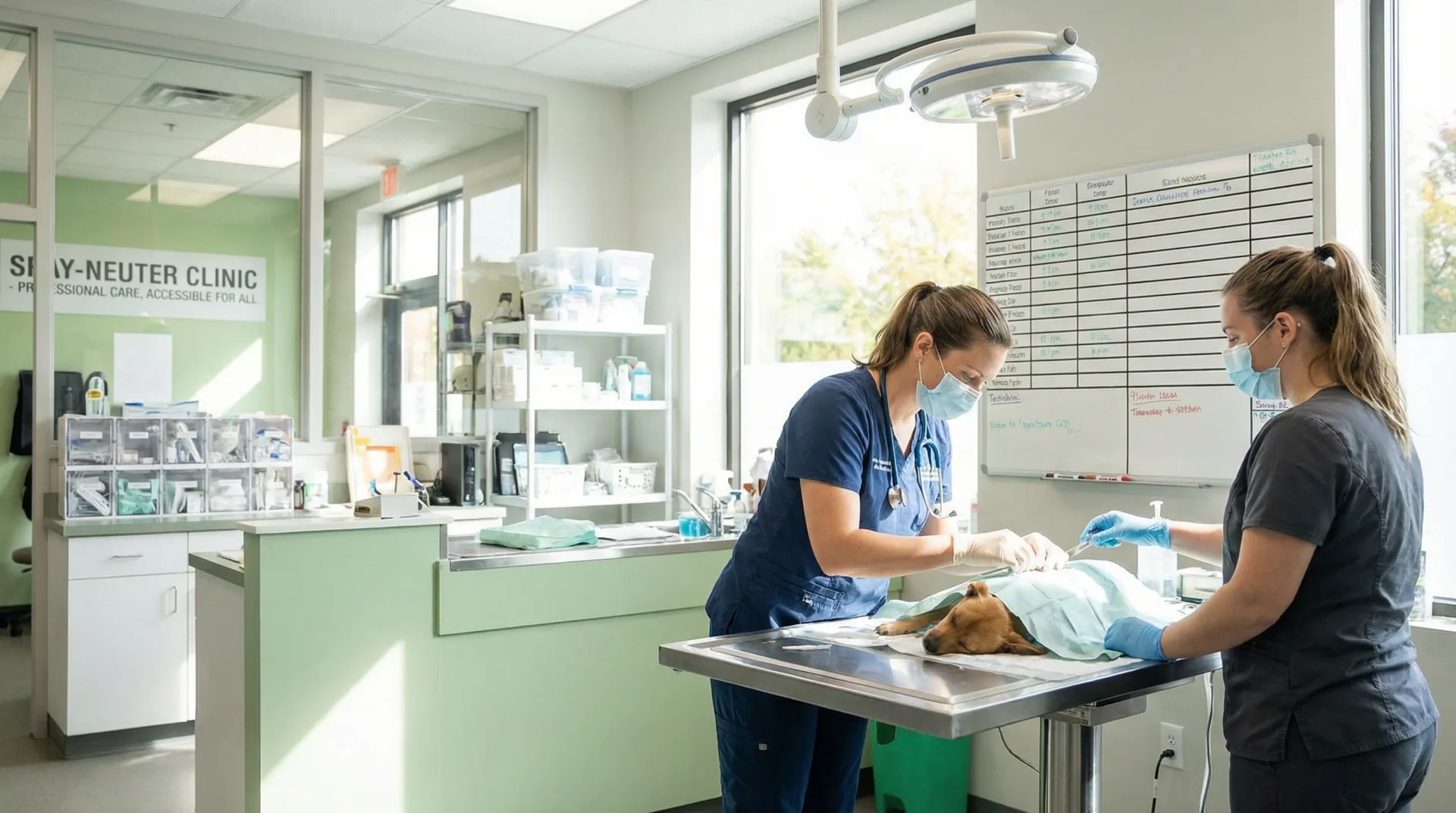
New Hampshire launched a publicly funded spay/neuter program in 1994. Over the next eight years, shelter euthanasia in the state dropped 77%, falling to the lowest rate in the nation at 2.2 per 1,000 residents. The program performed more than 34,000 surgeries, and over 70% of the state’s veterinarians participated (PubMed / Journal of the American Veterinary Medical Association, 2010). A peer-reviewed study attributed 80% of the decline to reduced shelter admissions, not just increased adoptions.
That’s the critical finding. You don’t solve shelter overcrowding by building more shelters or running more adoption events. You solve it by reducing the number of animals that need shelter in the first place. New Hampshire proved that a state-level investment in spay/neuter surgery pays for itself by shrinking the pipeline of animals entering the system. For a breakdown of how four states fund spay/neuter and what NC should copy, see our comparison of state spay/neuter programs that work.
North Carolina has no equivalent statewide program. The $341,000 in spay/neuter reimbursements the state distributed in 2023 barely scratches the surface for a state with 100 counties and 10.8 million people. Compare that to New Hampshire’s commitment of sustained annual funding for a state of 1.4 million. North Carolina would need to scale that approach significantly, but the evidence says it works.
Four states are now fully no-kill: Vermont, New Hampshire, Delaware, and Rhode Island (Best Friends, 2024). Each one got there by investing in prevention, building foster networks, and creating statewide coordination between shelters, rescues, and government. NC is making progress, with 2,900 fewer animals killed in 2024 compared to 2023. But without a funded statewide strategy, that progress remains fragile.
Ready to push your representatives to act? Use our NC rep lookup tool to send a message today, and see our step-by-step guide to contact your NC state representative about animal welfare for a ready-to-send template and specific talking points.
Frequently Asked Questions
What Happens Next Is Up to Us
The numbers in this article aren’t abstract. Each one represents a real animal in a real shelter in a real NC county. Twenty thousand of them didn’t make it out in 2024.
Here’s what the data tells us:
- NC’s 27% euthanasia rate is more than 3x the national average, and the trend is heading in the wrong direction.
- County-level outcomes vary wildly, from 0% to 105%, driven more by rescue partnerships and foster networks than by budget size alone.
- Prevention works and costs less. New Hampshire proved that a funded statewide spay/neuter program can cut euthanasia by 77%. NC spends far more on sheltering than it invests in prevention. The specific NC lever: expand the NC Spay/Neuter Program to include community-cat TNR.
This crisis won’t resolve on its own. But every signature, every dollar, and every fostered animal moves the needle. Sign the petition. Make a donation. Share this post with someone who needs to see these numbers.
Your voice matters in Raleigh.
Contact your NC state representative and sign our petition to push for stronger animal welfare legislation in North Carolina.