The best way to help feral cats is Trap-Neuter-Return: humanely trap them, get them spayed or neutered and vaccinated, and return them to their outdoor home, then provide steady food, water, and a dry shelter. Just as important is knowing when to step back, because true feral cats are happiest living outdoors, not being forced into a house.
If a few cats have started showing up in your yard, you don’t need a rescue background to make a real difference. A handful of low-cost, mostly weekend-scale steps can stabilize a colony, keep the cats healthy through a North Carolina winter, and stop the endless litters that fill our shelters.
This guide walks through exactly what to do: how to tell a stray from a feral cat, how to get them fixed in NC, how to feed them without creating new problems, how to build a warm winter shelter for a few dollars, when to socialize kittens versus leave them, and how to encourage cats to move along humanely if you’d rather they didn’t stay.
- First, tell what you’re dealing with. A cat that hides, stays silent, and avoids people is likely feral; one that approaches, meows, or lets you near is probably a lost or abandoned stray that may be rehomeable.
- A clipped left ear (an “ear-tip”) means the cat has already been spayed or neutered and vaccinated through TNR. Leave it be.
- Getting the cats fixed through Trap-Neuter-Return is the single most important thing you can do. It ends the litters and is the humane, effective standard. Here is how to start a TNR program in your community.
- For a winter shelter, insulate with straw, never blankets, towels, or hay, which soak up moisture and freeze.
- Kittens under about 8 weeks old socialize easily; adult ferals usually do not, and the kindest choice is a fixed, cared-for life outdoors.
- Trapping and removing cats backfires (the “vacuum effect”). A stabilized, sterilized colony is the only permanent fix.
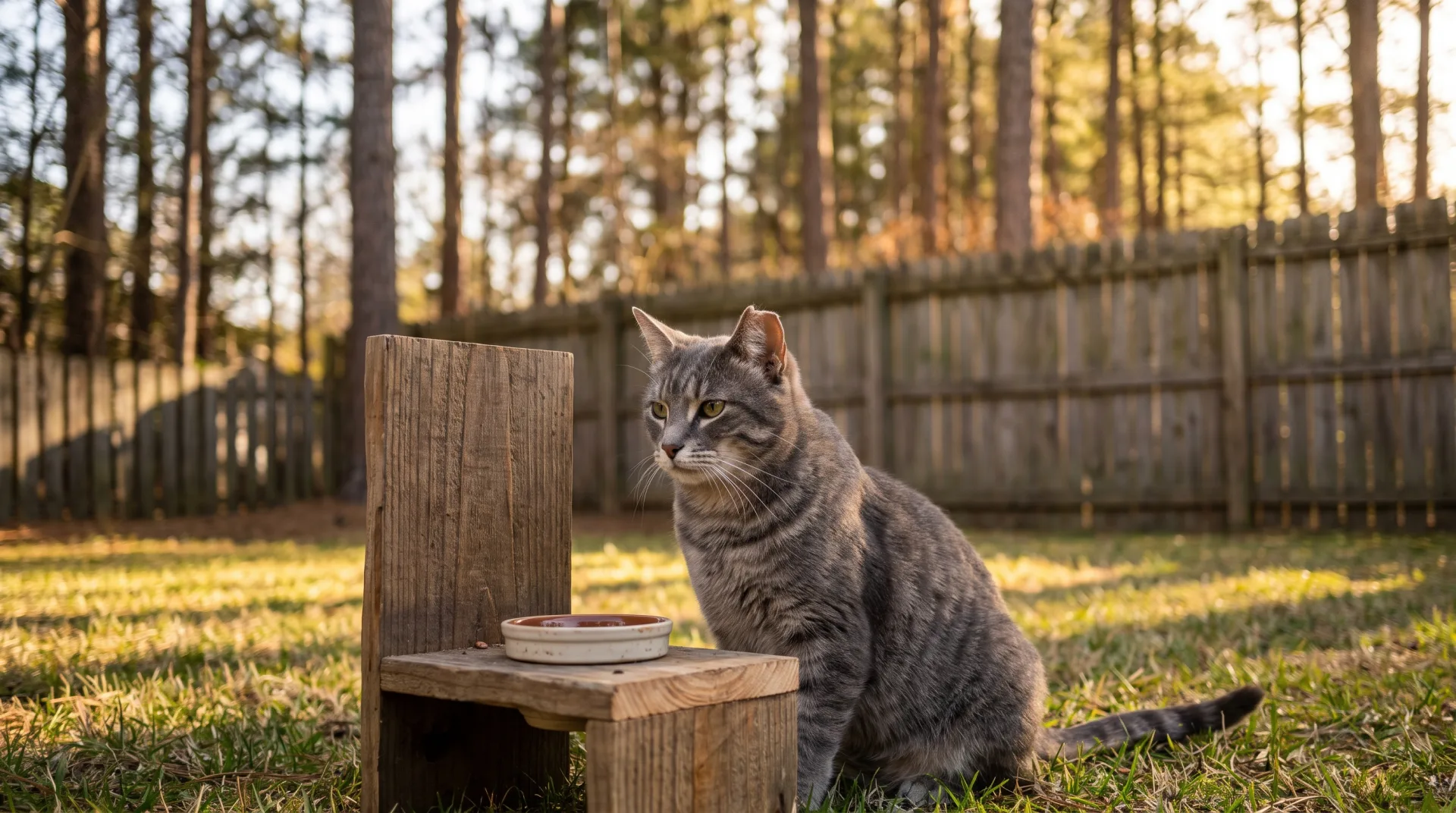
Stray, Feral, or Just Someone’s Outdoor Cat?
Before you do anything, figure out what you’re looking at, because the right help depends on it. A feral cat is unsocialized to people and lives outdoors by choice, hiding and staying silent around humans. A stray is a lost or abandoned pet that may approach you, meow, or seem to want contact, and it can often be rehomed. An owned outdoor cat is a third possibility worth ruling out.
The quickest tell is behavior over time. Feral cats keep their distance, move mostly at dawn and dusk, and won’t let you touch them even after weeks of feeding. Strays tend to make eye contact, vocalize, and inch closer at each meal. If a cat is friendly enough to approach, check for a collar, and ask a vet or shelter to scan it for a microchip before assuming it belongs to no one. For the full signal-by-signal breakdown, see our guide to the difference between feral and stray cats.
There’s one shortcut that saves everyone time: look at the left ear. If the tip is neatly clipped straight across, that cat has already been through Trap-Neuter-Return. An ear-tip is the universally recognized symbol that a cat has been spayed or neutered and vaccinated, and it’s simply the top 3/8 inch of the left ear, removed painlessly during surgery (Alley Cat Allies). An ear-tipped cat needs food, water, and shelter, not another trip to the clinic.
| Signal | Likely feral | Likely stray |
|---|---|---|
| Approaches people | No, keeps distance | Often, may seek contact |
| Vocalizes at you | Rarely, silent | Meows, makes eye contact |
| When it’s active | Dawn and dusk, wary | Daytime, visible |
| Body language | Crouched, tail low, tense | Upright, tail up, relaxed |
| Left ear | Tipped means already fixed | Usually intact |
Get Them Spayed, Neutered, and Vaccinated (TNR)
The single most important thing you can do for feral cats is get them fixed through Trap-Neuter-Return, or TNR. Cats are humanely trapped, spayed or neutered and vaccinated by a vet, ear-tipped, and returned to their territory. It ends the constant litters, calms fighting and spraying, and lets the colony age down over time instead of exploding.
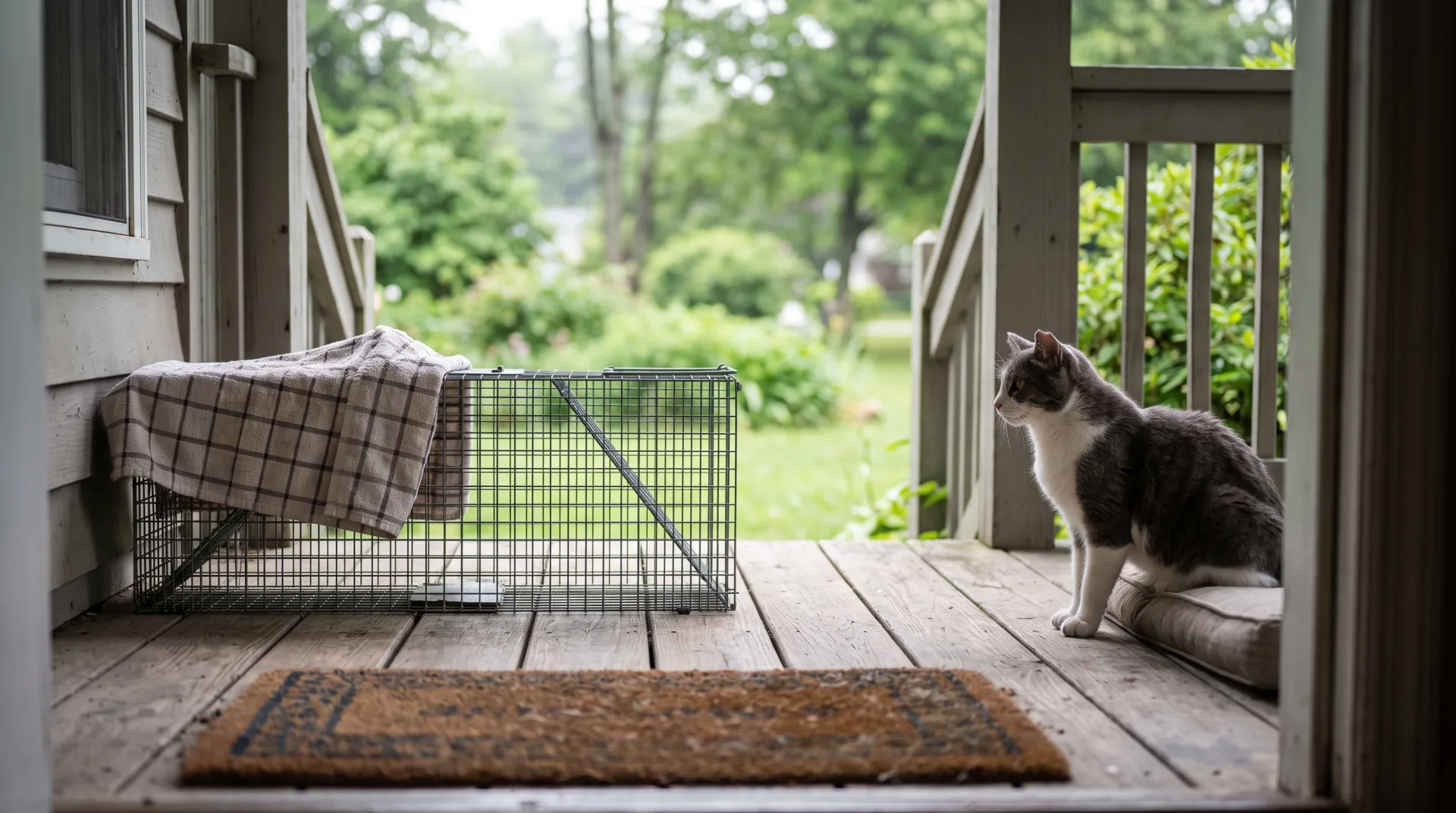
In practice, TNR is more approachable than it sounds. Most areas have a local TNR group or shelter that will loan you a humane box trap and coach you through it. You withhold food for a day so the cat is hungry, set the trap near the feeding spot, cover it with a towel to calm the cat once caught, and bring it to a spay/neuter appointment. Booking a low-cost or feral-friendly clinic ahead of time is the step that makes the whole thing work. Never relocate a healthy adult feral, since cats bond fiercely to their territory and try to return.
Here in North Carolina, finding an affordable clinic is the practical hurdle, and there are real options. Raleigh’s Safe Haven for Cats runs both a low-cost SAFE Care spay/neuter clinic and dedicated feral cat TNVR services, including a Wake County colony registry. Our own guide to low-cost spay/neuter in NC and the Get Help page point you toward clinics near you. One honest catch: North Carolina’s “Animal Lovers” license-plate program funds spay/neuter for owned pets, not community-cat TNR, which is a gap we dig into in our post on why NC needs a state-funded TNR program.
Feed Them the Right Way
Feeding feral cats helps them survive, but how you feed matters as much as whether you do. Put out food at the same time each day and pick up any leftovers once the cats have finished eating. A set schedule keeps the cats healthy, makes them far easier to trap for TNR, and prevents the overnight buffet that draws raccoons, opossums, ants, and neighbor complaints.
Keep it simple and consistent. A good-quality dry kibble works as the everyday base, with wet food added in cold weather for extra calories and moisture. Always leave fresh water in a heavy, wide bowl that won’t tip, and refresh it daily. In freezing weather, a heated bowl or simply swapping in warm water twice a day keeps water and wet food from turning to ice.
Set the feeding station a little apart from the sleeping shelter, slightly elevated and, if you can, under a cover or inside a storage bin turned on its side to keep rain off. Placing food away from where cats sleep keeps their beds clean and dry, and tucking the station out of open view lowers the odds of a passerby deciding the cats are a nuisance.
Build a Simple, Warm Winter Shelter
A feral cat shelter can be a weekend project that costs a few dollars and genuinely saves lives in a cold snap. The winning formula is small, dry, and insulated: a plastic storage tote with a cat-sized doorway, raised off the ground, packed with straw. Small matters, because a snug space traps the cat’s own body heat far better than a roomy one.
The most important detail is the bedding, and most people get it wrong. Insulate with straw, the dry golden stalks left after harvest, because it repels moisture and lets cats burrow in to stay warm. Never use blankets, towels, or hay: they soak up moisture like a sponge, then freeze, and a wet bed is worse than no bed at all (Alley Cat Allies). Pack the straw loosely to about the halfway point so the cat can nest down into it.
To finish the build, cut a doorway roughly six inches across, a few inches up from the floor so rain and straw stay in, and face it away from prevailing wind, ideally toward a wall. Add a layer of rigid foam board or a smaller tote inside the larger one for insulation, weigh down the lid so it can’t blow off, and raise the whole thing on bricks or a pallet to keep it off cold, wet ground. Skip a heat lamp or anything electrical near dry straw.
Should You Try to Tame Them? Kittens vs. Adults
This is where good intentions can go sideways, so here’s the honest answer: it depends almost entirely on age. Feral kittens caught young can often be socialized and adopted into homes. Adult feral cats usually cannot, and trying to force one indoors causes it real stress. For a healthy, fixed adult feral, the kindest life is the outdoor one it already knows, with you providing food and shelter.
The window is narrow. Kittens 8 weeks or younger can be socialized by almost anyone with daily handling, while those between about two and four months need more time and skill to grow comfortable around people (Alley Cat Allies). It gets harder every week, and by around four months most feral cats are best left as cared-for community cats rather than pushed toward indoor life. If kittens are still nursing, leave them with their mother until they’re weaned, then trap the whole family together. For the full found-kitten decision guide and why spring brings so many of them at once, see our guide to kitten season in NC.
With an adult you’re leaving outdoors, let trust build on the cat’s terms. Signs a feral cat is starting to trust you include eating while you’re in sight, a slow blink, or a tail held upright when you approach. That’s about as close as many ferals get, and that’s fine. A quiet, ear-tipped cat that takes food from your porch and sleeps in the shelter you built is a success story, not a failure to tame.
If You’d Rather the Cats Move On: Humane Deterrents
Maybe you don’t want a colony in your yard, and that’s a fair position. The important thing to know first is that trapping and removing cats does not work. Because a good habitat won’t stay empty, removing the resident cats just opens the door for new ones to move in and breed back to capacity. Humane deterrents plus TNR get you a calmer yard that actually stays that way.
That rebound has a name, the vacuum effect. As Alley Cat Allies explains, when cats are removed from their outdoor home it “creates a territorial opening, or vacuum, that will not remain empty,” and the new arrivals plus any remaining cats “reproduce at higher rates to fill the habitat” until the area fills back to capacity (Alley Cat Allies). Catch-and-remove is a treadmill. A sterilized colony that no longer breeds is the only approach that actually shrinks the number of cats over time.
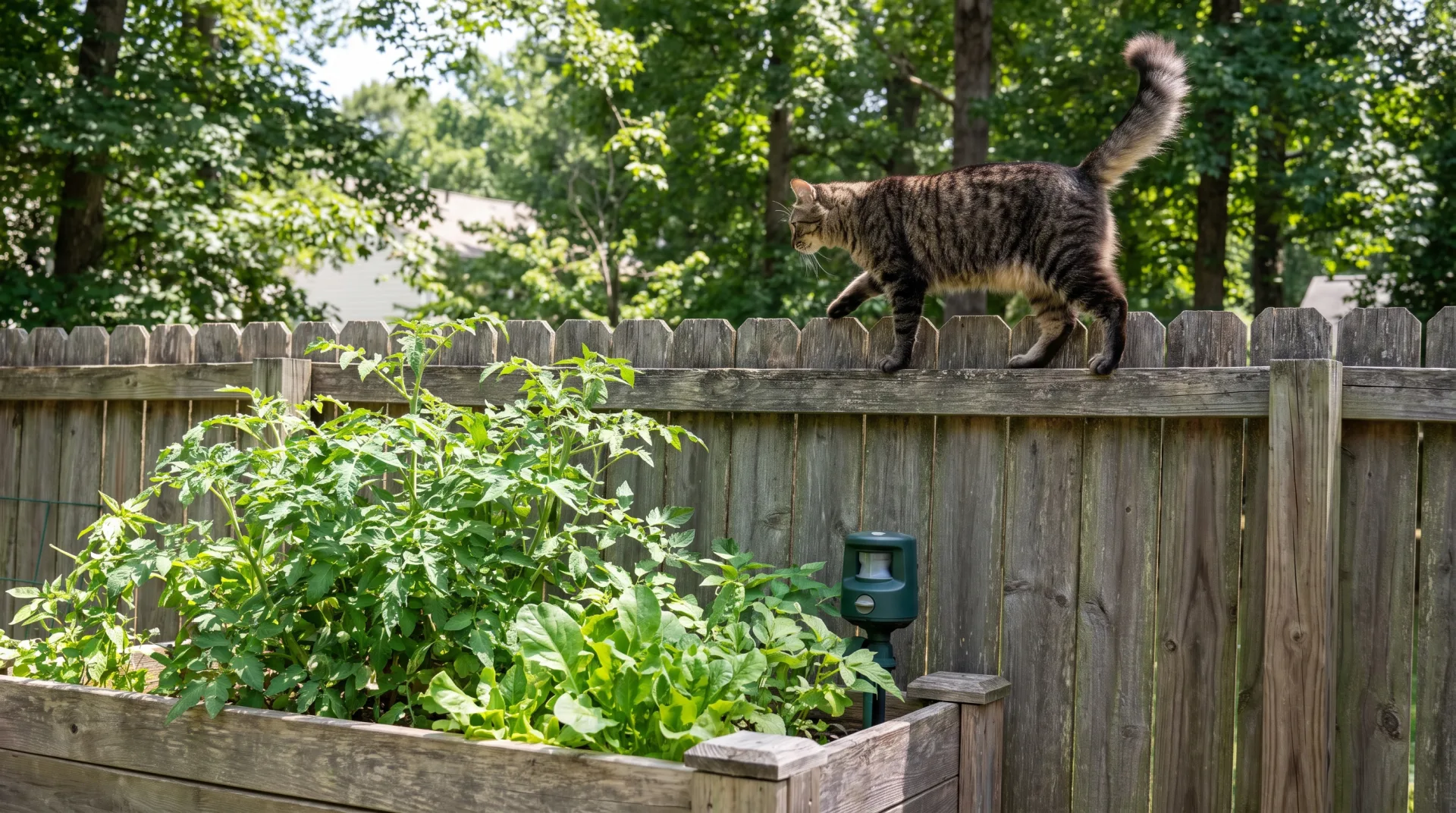
To steer cats away from specific spots without hurting them, make the area unwelcoming: motion-activated sprinklers, scent deterrents like citrus peels or coffee grounds in garden beds, ultrasonic devices, and cat-proof covers over sandbox-style soil. Remove the draws, too, by securing trash, closing off crawl spaces and sheds, and not leaving pet food out. Pair those with getting the local cats fixed, and the colony stabilizes, quiets down, and slowly gets smaller instead of larger.
Working With Neighbors, Landlords, and the Law
Helping community cats goes more smoothly when the people around you are on board. Before you set up feeding stations, it’s worth a quick check of local rules. North Carolina has no statewide ban on feeding stray or community cats, but individual cities, counties, and homeowners associations can set their own restrictions, so confirm your local ordinance and HOA rules first.
A little diplomacy prevents most conflicts. Let nearby neighbors know you’re caring for and, crucially, sterilizing the cats so the group won’t grow. Keep feeding tidy and out of sight, offer to help if a cat is bothering someone’s garden, and consider registering the colony with a local TNR group, such as the Wake County colony registry, so the cats are documented and managed. Framing it as “I’m reducing the cat population here” wins over far more skeptics than feeding quietly and hoping no one notices.
One more distinction worth making: if you genuinely can’t keep feeding or a cat is in danger, contact a local rescue or TNR group rather than dropping cats at a shelter, where unsocialized ferals often fare poorly. Your role as a caretaker is powerful precisely because it keeps cats out of that system.
How North Carolina Can Do Better, and How You Help
Everything above is what one caring person can do. The reason it matters so much is that the state hasn’t built a system to do it at scale. North Carolina shelters still euthanize tens of thousands of cats and dogs a year, a crisis we lay out in North Carolina’s pet overpopulation crisis, and community-cat TNR remains almost entirely volunteer-funded.
That’s the gap worth closing. States that fund spay/neuter and TNR see fewer cats in shelters and lower costs, the case we make in why NC needs a state-funded TNR program and in our look at states that got it right. Your yard-level work and a policy fix aren’t either/or; they’re the same goal at two scales.
Care for the cats in your neighborhood, then push for the systemic fix: sign the petition for state-funded community-cat TNR, email your NC representative, or support the spay/neuter programs that shrink the problem at its source.
Frequently Asked Questions
Start With the Cats in Front of You
Helping feral cats isn’t about rescuing every animal at once. It’s about the few in your yard: figure out whether they’re stray or feral, get them fixed so there are no more litters, and give them steady food and a dry, straw-lined shelter through the winter. Do that, and you’ve already changed the outcome for those cats and every kitten they won’t have.
When you’re ready to help beyond your own fence line, the next step is turning that care into lasting change. Sign the petition for state-funded TNR, read the case for why it saves North Carolina money as well as lives, and help make the humane option the standard one across the state.
Dealing with feral cats in your area?
NC Pet Project can help you get a TNR program started. We'll connect you with resources, training, and our volunteer network.