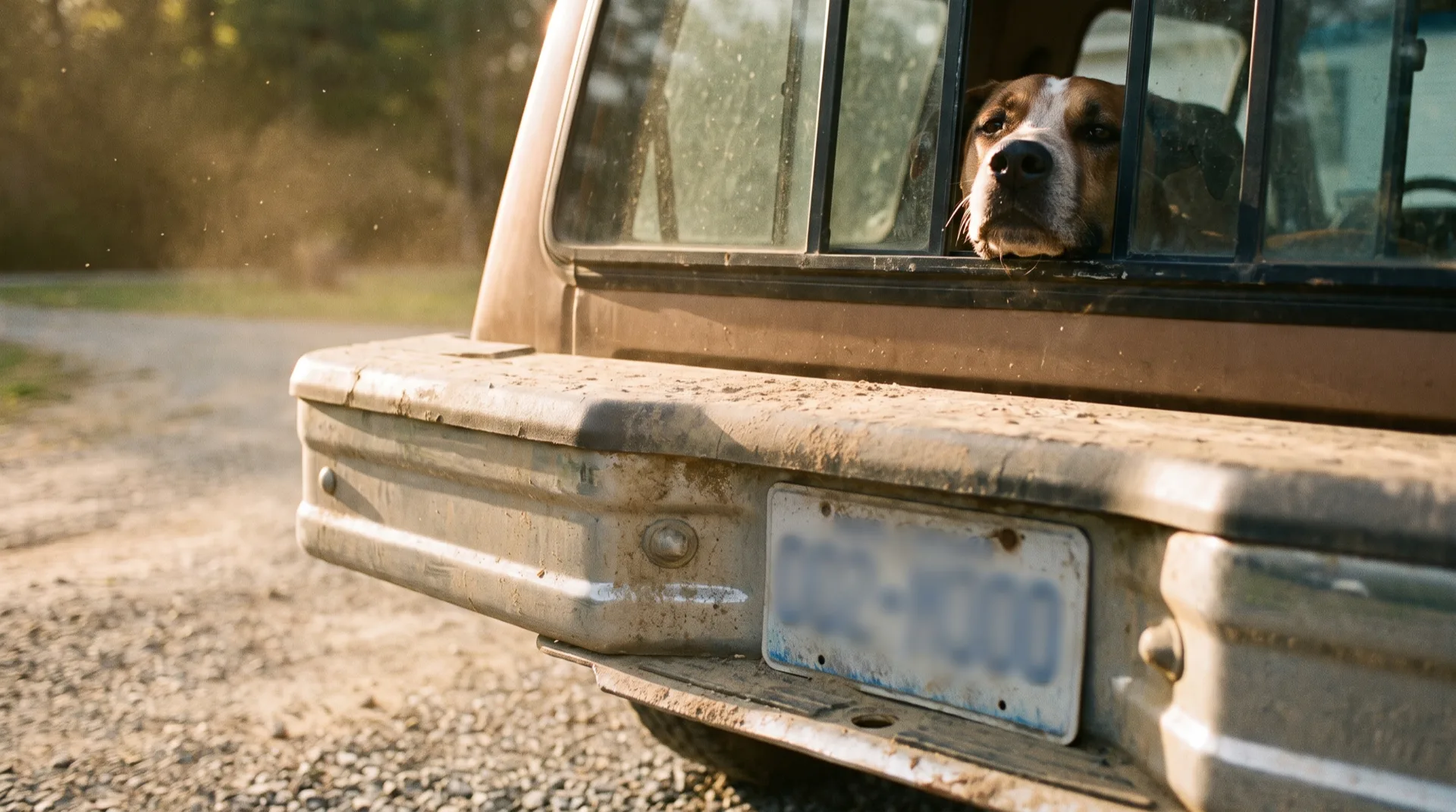
NC’s Spay/Neuter License Plate: What “I Care” Actually Funds
North Carolina's "I Care" Animal Lovers plate sends $20 a year to the state spay/neuter fund. It raised $122,228.33 in 2025. Here is the real math.
The short version: North Carolina already has a spay/neuter license plate. It is the “I Care” Animal Lovers plate, and $20 of its $30 annual fee goes into the state Spay/Neuter Account. In calendar year 2025 the plate sent $122,228.33 to that fund, which works out to roughly 6,100 plates in a state with more than 8.6 million registered vehicles. The plate is not a failure. It is simply far too small, and growing it is one of the few things an ordinary North Carolinian can do about shelter overcrowding without waiting for the legislature.
Online with your plate number and the last five digits of your title ($3 online fee), or at any NCDMV license plate agency.
People ask us regularly whether North Carolina should create a spay/neuter license plate like the ones Florida and Delaware use. It is a good question with a surprising answer: we already have one, most people have never heard of it, and it is carrying a load it was never sized for.
This post is the plain accounting. What the plate is, what it raised last year, what that money actually buys, how a brand new plate would have to be created under North Carolina law, and what it would realistically take for plate revenue to close the gap between what counties ask for and what the state can pay. If you are new to why sterilization matters so much, start with Spay and Neuter 101.
What Is the “I Care” Animal Lovers License Plate?
In the General Statutes it is called the Animal Lovers special registration plate. On the road it is sold as “I Care.” It is one of more than 100 specialty plates the NC Division of Motor Vehicles issues for causes and interest groups.
The money mechanics are set in two separate chapters of the law, which is part of why so few drivers understand what they are buying. Chapter 20 sets the fee. Chapter 19A decides where the animal share of that fee lands.
| The Animal Lovers plate at a glance | Detail |
|---|---|
| Statutory name | Animal Lovers special registration plate, sold as “I Care” |
| Additional annual fee | $30.00 on top of the regular registration fee (G.S. 20-79.7(a1)) |
| To the state Spay/Neuter Account | $20.00 per plate, per year (G.S. 19A-62(a)(2)) |
| Where the remaining $10 goes | The Special Registration Plate Account in the Highway Fund (G.S. 20-79.7(b)) |
| Who administers the animal money | NC Department of Agriculture and Consumer Services (G.S. 19A-61) |
| What it pays for | Direct costs of spay and neuter surgery, meaning anesthesia, medication and veterinary services, for pets owned by low-income residents (G.S. 19A-64(a)) |
| What it will not pay for | County administrative costs, facilities or equipment (G.S. 19A-64(a)) |
| Taken off the top | Up to 20% for the statewide education program and up to 20% for administering the program (G.S. 19A-62(b)) |
Two details in that table matter more than they look. The first is that the program is a reimbursement, not a grant. A county or city has to run a qualifying low-cost program, pay for the surgeries, then apply quarterly to be paid back. The second is that only direct surgical costs count. The staff time to screen applicants, verify income and process the paperwork comes out of the county’s own budget, which is a real reason some counties never participate at all.
The eligibility rules are tight by design. Under G.S. 19A-63, a low-income person is someone who qualifies for a state public assistance program or whose household income is under 100% of the federal poverty guidelines. The owner also has to show proof of rabies vaccination at the time of the procedure, or be vaccinated then and there. If you need a low-cost surgery for your own pet, our guide to low-cost spay and neuter in North Carolina and our county-by-county coverage directory show what is available near you.
How Much Money Does the Plate Actually Raise?
This is the number almost nobody has seen, because it lives in a memorandum the Department of Agriculture sends to animal shelters each December rather than in any press release.
In its December 30, 2025 memo to shelters, the NC Spay/Neuter Program coordinator listed every transfer into the account for the 2025 calendar year, broken out by source.
| Money into the NC Spay/Neuter Account, calendar year 2025 | Transfers | Total |
|---|---|---|
| “I Care” Animal Lovers license plate | $28,000.00 (Jan), $29,580.00 (Apr), $32,988.33 (Jul), $31,660.00 (Oct) | $122,228.33 |
| Legislative appropriation | $125,000.00 (Dec 2024, covering the start of 2025), $62,500.00 (Jul), $62,500.00 (Oct) | $250,000.00 |
| Combined | $372,228.33 |
So the plate is a third of the fund, and a legislative appropriation is the other two thirds. That is worth saying plainly, because the common description of North Carolina’s program as “plate funded” is now out of date. There is appropriated money in it. There is just not very much of anything.
For scale: the reporting public animal shelters in North Carolina spent $67.1 million handling animals in 2025. The entire prevention fund for the same year was $372,228.33, or about $1 for every $180 the state’s shelters spent on the animals who had already arrived.
Divide the plate’s $122,228.33 by the $20 statutory share and you get about 6,111 plate renewals. That is our arithmetic rather than a published count, and the transfers lag sales by a quarter, so treat it as an estimate. The Department reports dollars, not plates. But the order of magnitude is not in doubt, and it is the most important number in this entire post.
What Does $20 a Year Actually Buy?
Under G.S. 19A-64, the state caps what it will reimburse per procedure at 150% of the previous year’s average cost for that procedure type. The Department publishes those maximums each year. The final 2026 maximums are $220.80 for a dog spay, $177.50 for a dog neuter, $148.17 for a cat spay and $120.11 for a cat neuter (NC Department of Agriculture and Consumer Services).
Put the $20 plate share next to those caps and the relationship becomes concrete.
That is the honest scale of a $20 earmark. It is not nothing. Six thousand plates still paid for thousands of surgeries that would not otherwise have happened, and under the program’s rationing formula a disproportionate share of that money reaches the state’s most economically distressed counties. But a single plate renewal does not fund a sterilization. It funds roughly a tenth of one.
It also explains why the account empties every quarter. In the first half of 2026, counties documented $440,487.85 in eligible, rule-compliant reimbursement requests and the state was able to pay $156,745.86 of it. Roughly two dollars in every three of demonstrated demand went unfunded. We walk through those quarterly numbers county by county in our 2025 North Carolina shelter report.
Six Thousand Plates in a State With 8.6 Million Vehicles
Here is the part that should bother anyone who cares about this issue. North Carolina had 8,603,363 registered private and commercial motor vehicles in 2023, according to the Federal Highway Administration’s state motor vehicle registration tables published in November 2024. Set our estimated 6,100 Animal Lovers plates against that and the plate is on roughly one vehicle in 1,400. Put another way, if one additional vehicle in every thousand carried the plate, the plate’s contribution to the fund would more than double without a single vote being taken in Raleigh.
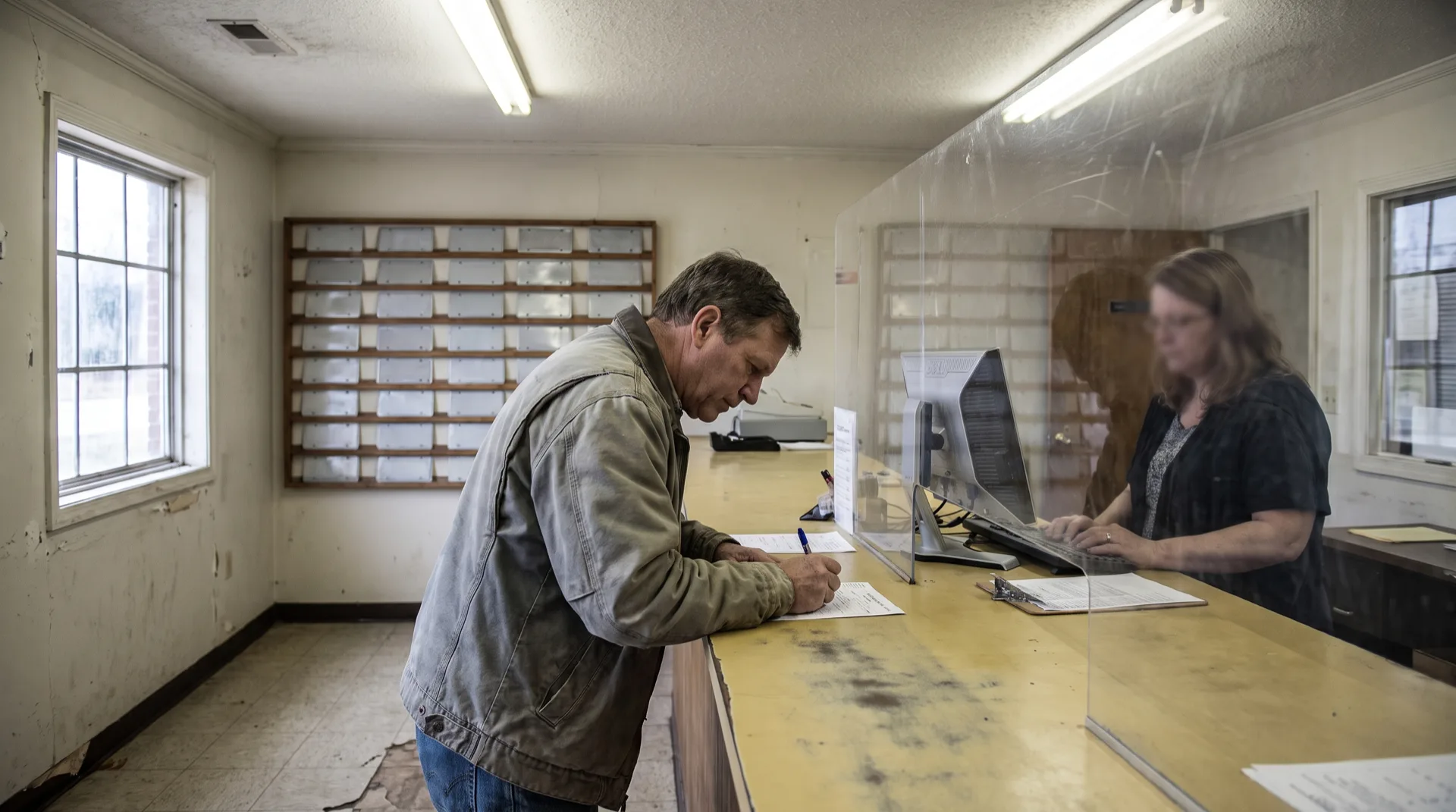
The barrier is not opposition. Nobody is campaigning against the Animal Lovers plate. The barrier is that the plate is invisible. It sits in a list of more than 100 options, next to college logos and fraternity crests and tournament plates, with nothing on the renewal notice explaining that this particular one reduces shelter intake in the buyer’s own county.
Specialty plates in North Carolina also have a history of quietly dying. Open G.S. 20-79.7 and read the fee table and you will find more than 90 plate categories marked “Expired July 1, 2016” sitting alongside the ones still sold. A plate that does not find enough buyers does not limp along. It gets switched off. That is the actual competitive environment the Animal Lovers plate lives in, and it is an argument for growing the plate we have rather than starting over with a new one.
What Would It Take to Create a New Spay/Neuter Plate?
Advocates sometimes propose designing a dedicated, better-marketed spay/neuter plate with a clearer name and a design people would actually choose. It is a legitimate idea, and North Carolina law lays out exactly how it would have to happen. The requirements are stricter than most people expect, and they are front-loaded, meaning the hardest work comes before anyone can buy anything.
| Creating a new NC special registration plate | Requirement | Authority |
|---|---|---|
| Paid applications, logo-only design | 300, collected before applying | G.S. 20-79.3A(a)(1) |
| Paid applications, full-background design | 500, collected before applying | G.S. 20-79.3A(a)(2) |
| Money submitted with the application | Number of paid applications multiplied by the proposed additional fee | G.S. 20-79.3A(b)(2) |
| Deadline to be considered that year | February 15, or the request waits for the next session | G.S. 20-79.3A(b) |
| Legislative sponsor | At least one sitting member of the General Assembly named on the application | NCDMV form MVR-27GPP |
| Approval | A bill authorizing the plate must become law | G.S. 20-79.3A(c), (d) |
| After approval | Final artwork and the purchaser list within 60 days | G.S. 20-79.3A(d) |
| Issuance | Within 180 days of the design and the minimum paid applications | G.S. 20-79.3A(f) |
| If the bill fails | DMV refunds the application fee | G.S. 20-79.3A(e) |
Read that sequence as a calendar and the problem becomes obvious. An organization has to find 300 or 500 people willing to pre-pay for a plate that does not exist yet, file by February 15, persuade a legislator to carry a bill, get that bill through both chambers in a session with no obligation to hear it, then deliver artwork within 60 days. Under Resolution 2026-6, the General Assembly’s remaining 2026 reconvened sessions, beginning October 26, may take up only vetoes, appointments, election-law matters and a short list of similar business. New policy bills are not on that list. That puts any new plate bill in the 2027 long session at the earliest, which means a February 15, 2027 application deadline and a plate on the road no sooner than late 2027.
Meanwhile, the plate that already exists needs no bill, no sponsor and no committee vote. A driver can add it at the next renewal. That asymmetry should shape where advocacy effort goes first.
Would More Plates Actually Close the Gap?
Partly. Not entirely. The useful way to answer it is to pick a target and work backward to a plate count, rather than argue about whether the plate is a good idea in the abstract. Here is the arithmetic, using the first half of 2026 doubled as a rough annual demand figure of $880,976 in eligible requests, and holding the $250,000 appropriation steady.
| Plates renewed each year | To the Spay/Neuter Account at $20 each | Share of annualized 2026 demand | With the $250,000 appropriation |
|---|---|---|---|
| About 6,100 (where we are now) | $122,228 | 13.9% | 42.3% |
| 15,000 | $300,000 | 34.1% | 62.4% |
| 31,550 | $631,000 | 71.6% | 100% |
| 44,050 | $881,000 | 100% | 128% |
Roughly 31,500 plates, about five times today’s number, would let the state pay every eligible reimbursement request counties currently file. That is a large increase in plate sales and a small number in absolute terms: fewer plates than many single NC counties have registered vehicles.
Two honest caveats belong with that table. First, up to 40% of the account can be taken off the top for the statewide education program and administration, so the dollars that reach counties are less than the dollars that come in. Second, and more important, “eligible requests filed” is not the same as “need.” Only 27 to 28 counties and municipalities drew on the fund at all in the first two quarters of 2026, out of 100 counties. The counties that never participate file nothing, so their need never shows up in the demand figure. Fully funding today’s requests would be a real achievement. It would not be the same as meeting the state’s actual need, which our analysis of what a funded TNR and sterilization program would save puts far higher.
This is why we do not argue that a license plate is the answer. It is one leg of a stool. The other legs are a larger dedicated appropriation and a funding structure that does not force cash-poor rural counties to front the money, which is the pattern we traced through other states in the programs North Carolina should be copying.
What You Can Do Before the 2027 Session
Three things, in order of how fast they work.
Put the plate on your own vehicle at your next renewal. The Animal Lovers plate can be ordered online through NCDMV, by mail or at a license plate agency. It costs $30 a year on top of regular registration, and $20 of that lands in the fund described above. If you own more than one vehicle, each one counts separately.
To order online, go to NCDMV’s custom plate page, sign in to myNCDMV, choose Vehicle Services, then Order a Special or Personalized Plate. You will need your current plate number and the last five digits of your vehicle’s title number. The online system adds a $3 fee plus 1.85 percent card processing, which the state does not keep. At a license plate agency there is no online fee.
Tell people the plate exists. The limiting factor here is awareness, not willingness. Most North Carolinians who would happily pay $30 to reduce shelter euthanasia have never been told they can. Your veterinarian’s waiting room, your neighborhood group and your county shelter’s volunteers are all places where that sentence has never been said out loud.
Ask your legislator for the appropriation, not just the plate. The 2027 long session is the next real opportunity to change the number in the budget line. Our guide to contacting your NC representative about animal welfare has the scripts and the lookup tool. The ask is specific: raise the recurring appropriation to the Spay/Neuter Account so counties stop being told that two thirds of their documented requests cannot be paid. If you want the state’s own shelter numbers to bring with you, they are in our county-by-county report, and you can add your name at our take action page.
Frequently Asked Questions
Yes. It is the Animal Lovers special registration plate, sold by NCDMV as the “I Care” plate. Under G.S. 20-79.7(a1) it carries a $30 annual fee on top of regular registration, and G.S. 19A-62(a)(2) directs $20 of that fee into the state Spay/Neuter Account administered by the NC Department of Agriculture and Consumer Services. The remaining $10 goes to the Special Registration Plate Account in the Highway Fund.
In calendar year 2025 the plate transferred $122,228.33 to the state Spay/Neuter Account, in four quarterly payments of $28,000.00, $29,580.00, $32,988.33 and $31,660.00, according to the Department of Agriculture’s December 30, 2025 memorandum to animal shelters. A legislative appropriation of $250,000.00 was transferred during the same period, for a combined $372,228.33.
The Department reports dollars rather than plate counts, so there is no published figure. Dividing the 2025 plate revenue of $122,228.33 by the $20 statutory share gives roughly 6,100 plate renewals. That is our estimate, and the quarterly transfers lag sales, so treat it as an order of magnitude. For context, North Carolina had 8,603,363 registered private and commercial motor vehicles in 2023 per Federal Highway Administration data published in November 2024.
Order it through NCDMV online, by mail or at a license plate agency, the same way as any other specialty plate. It can be added at renewal or at any point during a registration year. The fee is $30 annually in addition to regular registration. NCDMV notes that specialty plates are made in limited production and are subject to availability, and online orders through PayIt carry a $3 transaction fee plus a 1.85 percent card processing fee.
It reimburses counties and cities for the direct cost of spay and neuter surgery, meaning anesthesia, medication and veterinary services, for dogs and cats owned by low-income residents. Under G.S. 19A-63, a low-income person is someone who qualifies for a state public assistance program or whose household income is below 100% of the federal poverty guidelines. The fund does not cover county administrative costs, facilities or equipment, and proof of rabies vaccination is required at the time of the procedure.
Under G.S. 20-79.3A, an organization must first collect 300 paid applications for a logo-only design or 500 for a full-background design, submit them to NCDMV with a fee equal to the number of applications times the proposed additional fee by February 15, and name a sitting legislator willing to sponsor the bill. The General Assembly then has to pass a law authorizing the plate. After that, artwork and the purchaser list are due within 60 days and DMV issues the plate within 180 days. If the bill does not pass, the application fee is refunded.
Because demand is several times the size of the account. In the first half of 2026, North Carolina counties and municipalities filed $440,487.85 in eligible reimbursement requests and the state paid $156,745.86, about 36%. When requests exceed the balance, G.S. 19A-64 splits the available money fifty-fifty between the most economically distressed tier one counties and everyone else, then prorates within each group by sterilizations per thousand residents.
Sources
- North Carolina General Statutes, Chapter 19A, Article 5, Spay/Neuter Program (G.S. 19A-60 through 19A-66). ncleg.gov
- North Carolina General Statutes, G.S. 20-79.7, Fees for special registration plates and distribution of the fees. ncleg.gov
- North Carolina General Statutes, G.S. 20-79.3A, Requirements to establish a special registration plate. ncleg.gov
- NC Department of Agriculture and Consumer Services, memorandum to animal shelters in receipt of state or local funds, December 30, 2025, and the 2026 first and second quarter Spay/Neuter Fund reimbursement reports. ncagr.gov
- NC Department of Agriculture and Consumer Services, 2025 calendar year Public Animal Shelter Report, file replaced October 12, 2026. ncagr.gov
- NC Department of Agriculture and Consumer Services, Spay/Neuter Program FAQ, 2026 maximum reimbursement amounts. ncagr.gov
- NCDMV, Process to Establish a Special Registration Plate, and form MVR-27GPP. ncdot.gov
- NCDMV, License Plates, and Order Personalized and Specialized Plates. ncdot.gov
- North Carolina General Assembly, Resolution 2026-6 (Senate Joint Resolution 1091), adjourning the 2025 Regular Session to dates certain and limiting the matters that may be considered. ncleg.gov
- Federal Highway Administration, Highway Statistics, State Motor-Vehicle Registrations table MV-1, 2023 data published November 2024. fhwa.dot.gov