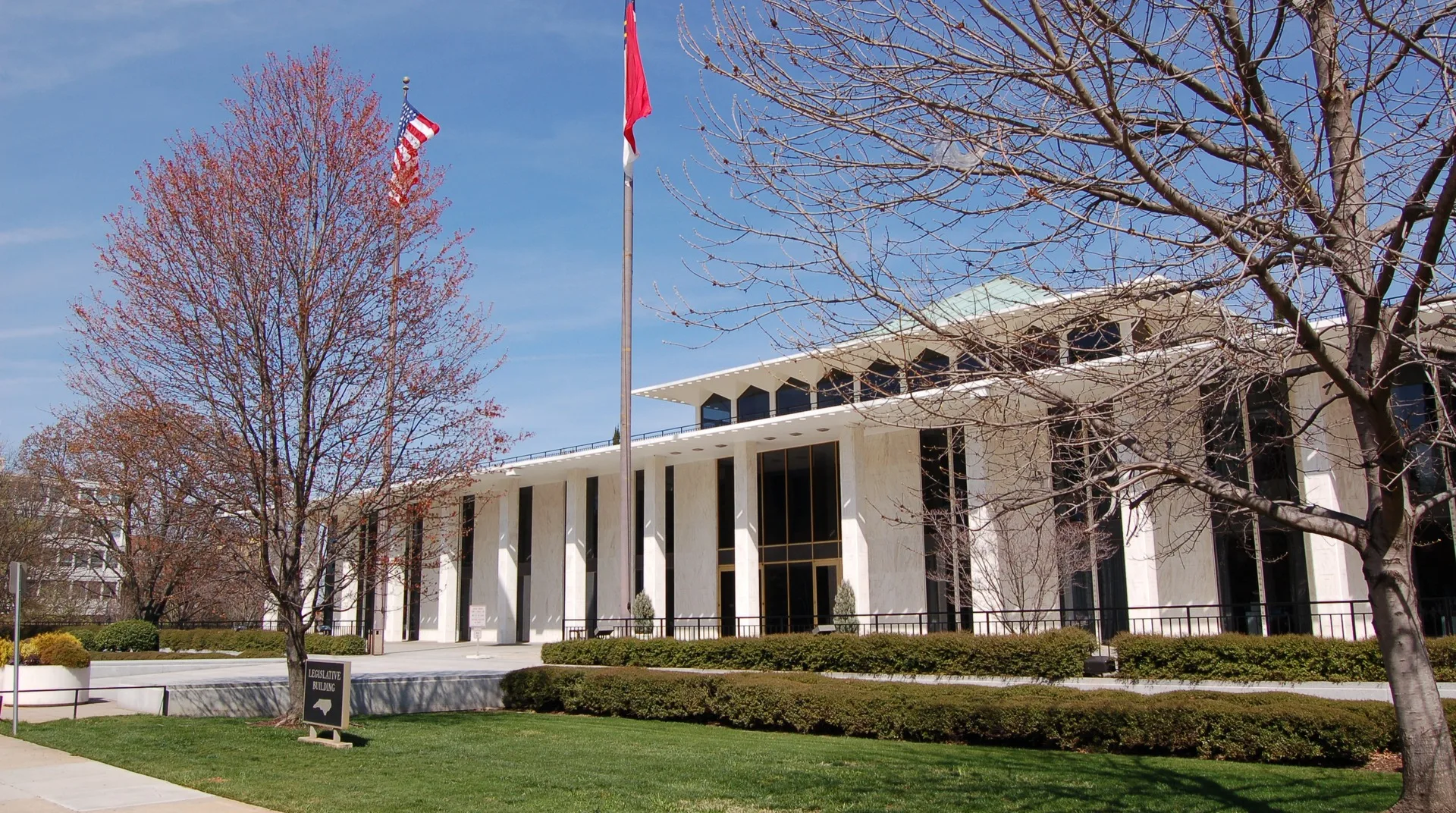
Why NC Keeps Coming Up Short on Spay/Neuter Funding, and What Happens When Lawmakers Return
NC's spay/neuter program paid 38% of eligible requests in 2025, down from about 100% in 2016 and 2017. Where bills stall, and what's next in 2027.
The short version: North Carolina already has a spay/neuter program in state law. Its biggest gap is money, and the only way to add much more is the state budget. In 2016 and 2017 the state paid about 100 percent of the spay/neuter costs it judged eligible for reimbursement. In 2025 it paid 38 percent, and in the first half of 2026 about 36 percent. Every stand-alone bill to change or fund the program that we found since 2015 stopped in its first committee, with no committee report on record. The next real chance starts when the 2027 legislative session opens on January 13, 2027. You can help by signing the petition, writing your two state lawmakers, and getting your county onto the petition's county leaderboard.
Here's a question I couldn't answer until recently, even after volunteering at the Wake County Animal Center: if everyone agrees that spaying and neutering pets keeps animals out of shelters, why does North Carolina keep coming up short on paying for it? Nobody in Raleigh argues for more litters of unwanted puppies and kittens. And yet the shelters stay full.
The answer is less mysterious and more fixable than I expected. North Carolina has had a spay/neuter program written into law since 2000. The problem is how much money flows into it, and the only place to add real new money is the state budget. So this isn't a story about a missing law. It's about a budget line that stayed small while the need grew, and four bills that tried to fix the program, one of them with new money, and never got a committee vote.
Spay/neuter isn't one side's issue. The lawmakers who have sponsored these bills come from both chambers, different regions and both parties, and getting this done in 2027 will take votes from across the state. This post is about a program, a budget line and a calendar.
Where NC's Spay/Neuter Money Comes From Today
The program lives in Chapter 19A, Article 5 of the General Statutes. The law's own findings say uncontrolled breeding "has led to unacceptable numbers of unwanted dogs, puppies and cats and kittens," most of which "are destroyed at great expense to local governments." It sets up a voluntary program in the NC Department of Agriculture and Consumer Services that pays counties and cities back for reduced-cost spay and neuter surgeries for pets of low-income owners.
That money sits in the Spay/Neuter Account. By law it holds $20 from each "I Care" Animal Lovers license plate, plus "any other funds available from appropriations by the General Assembly or from contributions and grants from public or private sources." The Department's FAQ says $250,000 a year is transferred in from its Animal Feed and Pet Food Branch, and its December 2025 memo to shelters lists that money as a legislative appropriation. In 2025 the account took in about $372,000 in all. The law lets the Department use up to 20 percent for a statewide education program and up to 20 percent to run the program before it pays counties. Our breakdown of the "I Care" plate and the fund walks through that math, so we won't repeat it here.
Up to 20 percent can go to education and up to 20 percent to running the program. The rest is paid out every quarter, and only counties and cities can apply. Full reimbursement isn't promised. When money runs short, a formula in the law splits it: half to the most economically distressed counties, half to everyone else, shared by how many surgeries each does per 1,000 residents.
Money runs short almost every quarter now. The Department's reports show what counties asked for, how much it judged eligible after its per-surgery caps, and what it actually paid. Measured against everything counties asked for in 2025, $682,056, the state paid about 37 cents on the dollar.
In 2017, counties and cities filed $417,671.84 in eligible requests and the state paid every cent, because $423,815.53 was available. By 2025, eligible requests had grown to $659,626.15 while the amount the state paid out fell to $250,954.08. That left $408,672.07 in eligible claims unpaid in one year. In the first half of 2026, eligible requests reached $440,487.85 and the state paid $156,745.86.
Requests went up while the pot went down. Only 26 or 27 counties and cities took part in each quarter of 2025. North Carolina has 100 counties. When a county gets back only a little over a third of its eligible costs, the program is harder to keep offering. Our map of spay/neuter coverage across NC shows how uneven access already is, and how spay/neuter saves NC money explains why it's a bargain next to shelter costs.
How a Bill Moves in Raleigh, and Where It Usually Stops
If the fix is more money, why not just pass a bill? Here's the path every bill takes in the General Assembly.
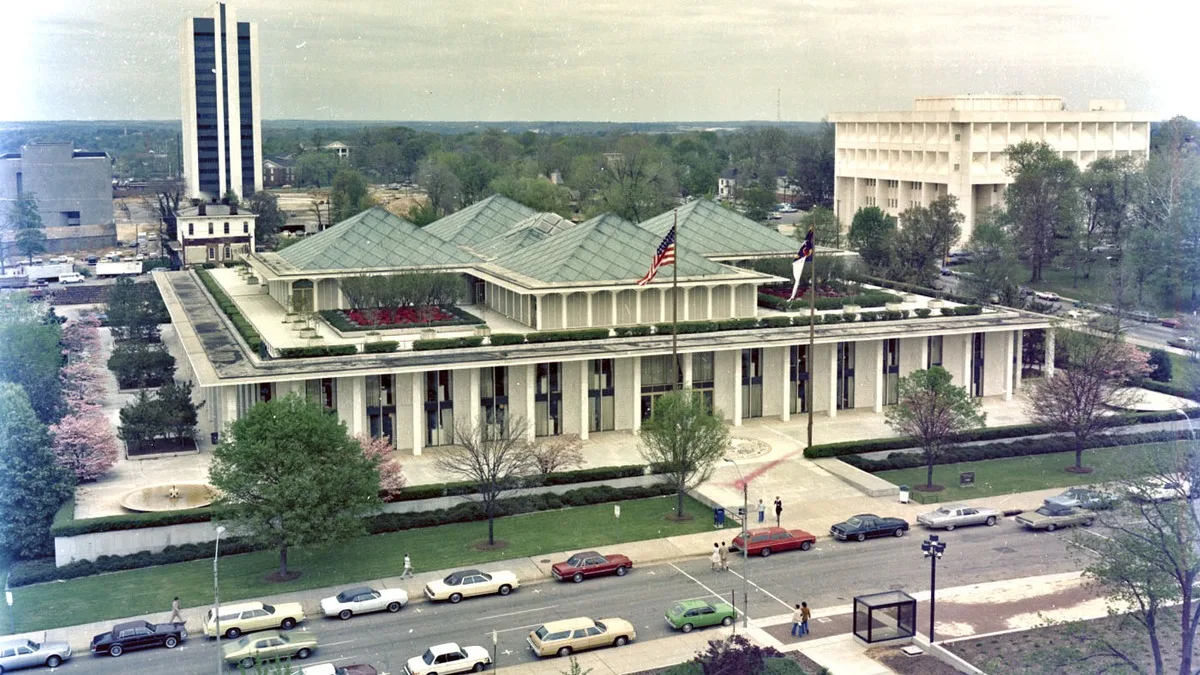
- Filing. A lawmaker files the bill and it gets a number, like H657 in the House or S573 in the Senate. On first reading it's sent to a committee, often Appropriations if it spends money, and marked to go next to the Rules committee "if favorable."
- Committee. This is where many bills stop, including every spay/neuter bill in the table below. If the committee takes it up and votes it out, the bill page shows "Reptd Fav." If nothing happens, the bill just sits. There's no vote against it and no public record of why.
- Rules and the floor. The Rules committee decides whether and when a bill reaches the floor. The state constitution says all bills "shall be read three times in each house."
- The other chamber. The bill starts over in the second chamber. If that chamber changes it, the first has to agree, or a conference committee works out a final version.
- The governor. The governor can sign it, veto it, or let it become law without signing. A veto can be overridden by three-fifths of the members present and voting in each chamber.
One more piece matters a lot. More money for the program doesn't need a new program law. It needs a line in the state budget, the one giant bill the leaders and budget writers of both chambers negotiate. A separate funding bill mostly puts a number on the table so it's considered when the budget is written. The 2026 budget, Session Law 2026-41, was signed on July 7, 2026. We searched its full text: the words spay and neuter don't appear, so it set aside no new money specifically for the program.
Where Each Bill Stalled
This table lists every stand-alone bill we found since 2015 that would have changed or funded the Spay/Neuter Program, plus two companion-animal bills still pending in the current session. Every date comes from the bill's own page on ncleg.gov, so you can check it yourself.
| Bill | What it would do | Where it stopped | Last action | Committee vote? |
|---|---|---|---|---|
| S730 (2015-16 session) | Raise the low-income cutoff from 100% to 300% of the federal poverty level and change how money is shared | Senate Agriculture/Environment/Natural Resources Committee; died when the session ended | April 26, 2016 | No |
| S856 (2015-16) | Same eligibility and sharing changes, plus more flexibility for clinics and vouchers | Senate Agriculture/Environment/Natural Resources Committee (Appropriations would have been next); died when the session ended | May 11, 2016 | No |
| H1147 (2019-20) | Raise the low-income cutoff from 100% to 300% of the federal poverty level | House Appropriations Committee; died when the session ended | May 18, 2020 | No |
| S764 (2021-22) | Put $3 million in one-time money into the Spay/Neuter Account for 2022-23 | Senate Appropriations/Base Budget Committee; died when the session ended | May 24, 2022 | No |
| H657, Duke's Rescue Act (2025-26) | Minimum standards of care and tethering rules for dogs and cats, plus $10,000 for public education | House Rules, Calendar, and Operations Committee | June 16, 2026 | Yes, reported favorably by House Judiciary 1 |
| S573 (2025-26) | Make failing to give adequate shelter or space a crime and require evaluation for convicted animal hoarders | Senate Rules and Operations Committee | March 26, 2025 | No |
The four bills aimed at the spay/neuter program never got past their first committee. Three, S730, S856 and H1147, would have raised the income limit so more families qualify. Today an owner qualifies only if they're on public assistance or earn under 100 percent of the federal poverty level. The fourth, S764, asked for $3 million. All four were filed in the second year of a two-year session, in 2016, 2020 and 2022. Filing early in 2027, the first year of a new session, gives a bill the most time.
H657 got further than any other bill in the table. It isn't a spay/neuter bill, but its primary sponsors come from both parties, and it shows a committee will act on companion-animal bills when there's support. It has been in House Rules since June 16, 2026. S573 has been in Senate Rules since March 26, 2025, more than 18 months with no recorded action.
One more detail matters. The legislature's adjournment resolution limits its few remaining 2026 meetings to veto overrides, appointments, election and constitutional matters, conference reports and a few other items. A regular bill sitting in committee isn't on that list. The current two-year session, which began in January 2025, ends for good on December 18, 2026, so any fix for spay/neuter funding starts fresh in 2027.
Is anyone opposing it? What the lobbying records show
When something popular doesn't pass, people assume someone powerful is blocking it. We checked. None of the groups named here is on record against spay/neuter funding. The NC Secretary of State's 2024 lobbying compilation report, the most recent full-year report we found, lists the American Kennel Club, a sporting dog association, the state veterinary association, the state Farm Bureau and animal welfare groups among the organizations paying lobbyists. It lists no bill numbers, so no dollar figure can be tied to any one bill. The one documented position we found on a current companion-animal bill is the Kennel Club's: it says that after objections from it and local clubs, H657 was amended to exempt dog events, training, grooming and vet exams. That's about tethering and shelter rules, not spay/neuter.
We found no documented position against spay/neuter funding by anyone, in the filings or on the groups' own sites. The record doesn't say why these bills sat. It does show a small, underfunded program that nobody is on record opposing, and that's a problem regular people can help fix.
Other states show how. Maryland pays for spay/neuter grants with a $100 yearly fee on each dog and cat food product registered for sale there. In its fiscal year ending June 30, 2025, the fee brought in $1,183,600, more than four times what NC paid counties in 2025, and the program has funded 140,590 surgeries since it began. Our post on states that got spay/neuter funding right compares New Hampshire, Florida, Texas and Delaware, and also touches on Maryland and Virginia.
The Calendar: From Now Through the 2027 Budget
Now through December 18, 2026. Lawmakers meet only in short, limited sessions starting October 26, November 16 and November 30, each limited to a short list of matters. Committees may still meet between sessions to review the state budget. Then the current two-year session ends on December 18. This is a good time to write your legislators while they're home.
November 3, 2026: the general election. All 170 seats in the General Assembly are on the ballot, 50 in the Senate and 120 in the House. Whoever wins will write the next budget, so find out who represents you and who's running in your district. We don't endorse anyone. Spay/neuter needs votes from both parties.
January 13, 2027: the new session opens. State law (G.S. 120-11.1) says the session begins at noon on the second Wednesday in January after the election, which in 2027 is January 13. That first day is for organizing only: electing leaders and adopting rules. Lawmakers return for regular business at noon on January 27, 2027, unless they set different dates.
The first weeks of the session: we deliver the petition. There's no deadline for a citizen petition. We'll hand ours over once the lawmakers who write the budget and lead the agriculture committees are named, so it reaches the people who decide this, along with each lawmaker's own district numbers.
Spring and summer 2027: the budget gets built. 2027 is a long session, when lawmakers write a new two-year state budget. That's when a spay/neuter funding request has its best shot, as its own bill or as a line in the budget.
What One Person Can Do at Each Step
Sign the petition today. Sign the NC Pet Project petition for low-cost spay/neuter in every county. It takes a minute and puts your county on the map we'll hand to lawmakers.
Need help paying for a spay or neuter now? Our low-cost spay/neuter guide explains the state program, who qualifies and how to apply, plus low-cost clinics by county.
Write your two state lawmakers. Everyone in North Carolina has one state senator and one state representative. Our email your legislators tool finds yours and gives you a short message to start from. Write now, and again after January 13. If your district elects someone new, write the new member then. Mention your county, and if you volunteer, foster or adopt, say so.
Get your county onto the leaderboard. The petition page has a county leaderboard. Share it with your shelter's volunteers, your vet's office and your neighbors. Lawmakers pay attention to their own districts.
Know your county's numbers. Our county-by-county shelter report shows what's happening where you live, and our guide to NC's pet overpopulation crisis gives the bigger picture. One local fact beats ten talking points.
Watch for the bill. When a spay/neuter funding bill is filed in 2027, we'll post its number and committee here and say plainly where it sits.
Frequently Asked Questions
Yes. G.S. 19A-60 through 19A-66 set up a voluntary Spay/Neuter Program in the NC Department of Agriculture and Consumer Services. It reimburses participating counties and cities for reduced-cost spay and neuter surgeries for pets of low-income owners and runs a public education program. Individuals, veterinarians and private groups can't apply directly.
The state Spay/Neuter Account gets $20 from each "I Care" Animal Lovers license plate, plus any money the General Assembly appropriates or that comes from grants and gifts. The Department of Agriculture says $250,000 a year is transferred in from its Animal Feed and Pet Food Branch; its December 2025 memo lists that money as a legislative appropriation. No fee on pet food or rabies tags goes to the account by law today; the old rabies tag share was repealed in 2010 (Session Law 2010-31).
In 2025, the state paid $250,954.08 of $659,626.15 in eligible requests, or 38 percent. In the first half of 2026 it paid $156,745.86 of $440,487.85, about 36 percent. In 2016 and 2017 it paid about 100 percent.
We found no stand-alone spay/neuter funding bill filed in the 2025-26 session, and the 2026 budget doesn't mention spay/neuter. The last one, S764 in 2022, asked for $3 million and never got a committee vote. The current two-year session ends on December 18, 2026, so the next chance is the 2027 session.
Under G.S. 120-11.1, it opens at noon on Wednesday, January 13, 2027, to elect leaders and adopt rules. Lawmakers come back for regular business at noon on Wednesday, January 27, 2027.
Your own state senator and state representative. Use our email your legislators tool to find them and send a short message, and sign the petition so your county is counted.
Sources
- N.C. Gen. Stat. Chapter 19A, Article 5, Spay/Neuter Program (G.S. 19A-60 to 19A-66). ncleg.gov
- N.C. Gen. Stat. § 120-11.1, Time of meeting. ncleg.gov
- North Carolina Constitution, Article II (Sections 2, 4 and 22). ncleg.gov
- Resolution 2026-6 (Senate Joint Resolution 1091), adjourning the 2025 Regular Session. ncleg.gov
- Session Law 2026-41 (Senate Bill 257), Current Operations Appropriations Act of 2026, and its bill history. ncleg.gov, bill page
- Bill pages: S730 (2015), S856 (2015), H1147 (2019), S764 (2021), H657 (2025), S573 (2025). ncleg.gov
- North Carolina General Assembly, House member list. ncleg.gov
- NC Department of Agriculture and Consumer Services, Spay/Neuter Program FAQs. ncagr.gov
- NC Department of Agriculture and Consumer Services, Spay/Neuter reimbursement reports, 2022 to 2026 Q2. ncagr.gov
- NC Department of Agriculture and Consumer Services, Spay/Neuter reimbursement reports, 2016 to 2021 (archived copy of the Department's "By the Numbers" page). web.archive.org
- NC State Board of Elections, Upcoming Election. ncsbe.gov
- NC Department of the Secretary of State, Lobbying Compilation Reports. sosnc.gov
- American Kennel Club, State Updates, July 2026. akc.org
- Maryland Department of Agriculture, Spay and Neuter Grants Program Annual Report, August 2025. mda.maryland.gov
- Maryland Department of Legislative Services, Fiscal and Policy Note, HB 191 (2022). mgaleg.maryland.gov
- Session Law 2010-31, section 11.4 (repealed the rabies tag share for the Spay/Neuter Account). ncleg.gov