Adopting a Senior Dog: What to Expect and Why It Matters
Thinking about adopting a senior dog in NC? Here's what to expect at the vet, what to budget for, how to settle an older dog in, and why seniors wait longest.
The short version: Adopting a senior dog means you know what you're getting: an adult size, a mostly formed personality and, often, a dog who already knows how to live in a house. In return, plan for more vet visits. The American Animal Hospital Association recommends bloodwork and a urine test every 6 to 12 months for senior pets. Older dogs also wait longer. On our 100-County Pet List on November 2, 2026, the typical senior dog had been listed for 125 days, about four times as long as the typical puppy. November is Adopt a Senior Pet Month, a good time to meet one.
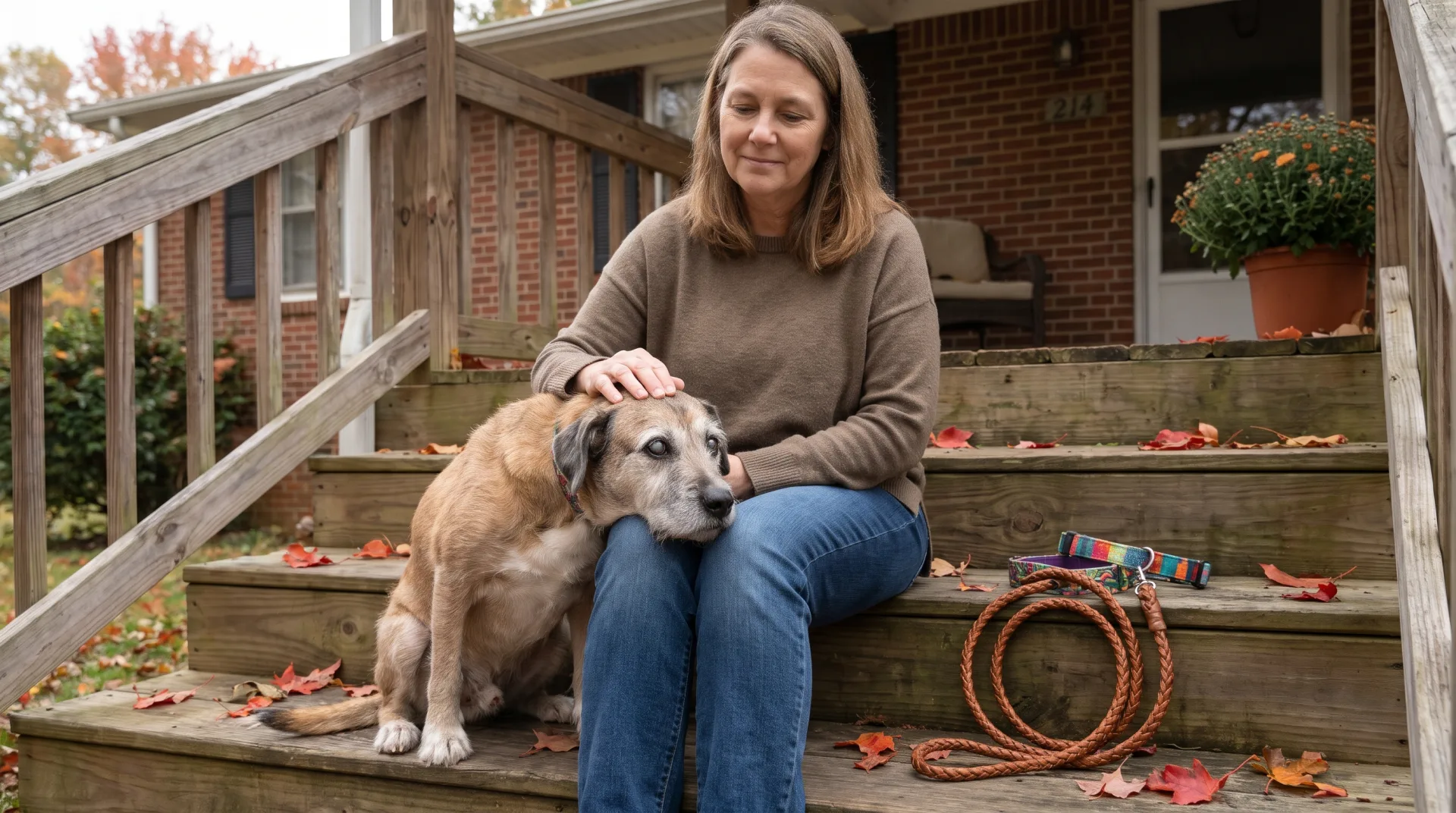
Puppies and young dogs get most of the attention at adoption time. That's understandable. But the gray-faced dogs in the back kennels, some of whom came in when an owner died, moved into assisted living or simply couldn't keep them, tend to wait the longest, as our own listing data below shows. This guide is for anyone wondering whether an older dog could be the right fit. It covers what "senior" actually means, what an older dog costs and needs, how to settle one into your home, and how to help if you can't adopt right now.
What Counts as a Senior Dog?
There's no single birthday that makes a dog a senior. The 2023 AAHA Senior Care Guidelines, published by the American Animal Hospital Association, say plainly that "there is no specific age for senior status," because of "the variability in aging based on species and breed." AAHA's earlier life stage guidelines define a senior dog as one in "the last 25% of estimated lifespan through end of life."
In practice, that means a giant breed can reach its senior years well before a small terrier does. A shelter's label is a rougher shortcut. Many shelters and rescues sort pets into broad age groups when they list them online, and on our own senior dogs page the "Senior" filter means 8 years and up, as each shelter or rescue reports it. A dog listed as 8 may have years of walks ahead of it. A dog listed as 13 may be ready for a soft bed and short strolls. Ask about the individual dog, not the label.
Shelter ages are often estimates, too. When a stray comes in without records, staff judge age from teeth, eyes, coat and body condition. If a dog's age matters to your decision, ask how the shelter arrived at it, and ask your own vet for a second opinion after adoption.
What does stay true across older dogs is the trade you're making. You give up the puppy years. In exchange, you usually skip house-training from scratch, chewed shoes and the guessing game about how big the dog will get or what its temperament will be. The table below sums up the differences people ask about most.
| What you're weighing | Senior dog | Puppy |
|---|---|---|
| Size and personality | Adult size is known and personality is mostly formed, though a dog may act differently at home than in a kennel | Still developing; adult size and temperament are a guess |
| Training | Often already house-trained and used to living indoors; ask the shelter | House-training, chewing and basic manners all start from zero |
| Energy | Usually calmer; daily walks and play still matter | High; needs supervision and lots of activity |
| Vet care | More checkups and lab work; AAHA suggests bloodwork every 6 to 12 months | Series of puppy vaccines, then spay or neuter |
| Time together | Fewer years, often very settled ones | Potentially many years |
| How long they wait on NC listings | Longest of any age group (125 days typical) | Shortest (30 days typical) |
Why Older Dogs Wait Longer in North Carolina
The ASPCA, which celebrates November as Adopt a Senior Pet Month, says senior pets "are often the last to be adopted from shelters, putting them at an increased risk for euthanasia." We wanted to check that against North Carolina, so we looked at our own data.
NC Pet Project's 100-County Pet List reads the public adoption listings of shelters and rescues across the state every night. On November 2, 2026, it held 5,307 dogs, and about 320 of them were listed as seniors, roughly 6 percent. For 2,005 of those dogs, the shelter or rescue's listing also shows the date the dog went up for adoption, which lets us measure how long each one has been waiting so far.
The pattern is clear. The typical puppy on the list had been waiting 30 days. The typical young dog, 46 days. The typical adult, 66 days. The typical senior dog had been waiting 125 days, more than four months, and more than half of those senior dogs (56 percent) had been listed for 90 days or longer. Compare that with puppies: only 12 percent of them had been waiting that long. Put simply, on the day we looked, half of the dated senior dogs had been waiting since June 30 or earlier, while half of the puppies had been listed for a month or less.
A word on what this snapshot can and can't show. It counts dogs who are still waiting, not how long dogs took to get adopted, and it only includes the shelters and rescues whose listings publish a date. Many county shelters don't publish one. So treat these numbers as a strong signal, not a statewide rate. Even so, the gap is large and it runs the same direction at every step: the older the dog, the longer the wait.
Longer waits matter because North Carolina shelters are full. Public shelters in the 65 counties that filed 2025 dog numbers with the state took in 75,521 dogs and euthanized 17,140 of them, according to the NC Department of Agriculture's 2025 shelter report (see our county-by-county breakdown). Every older dog that goes home opens a kennel for the next one.
What Care an Older Dog Needs, and What to Budget For
The honest answer is that a senior dog usually costs more at the vet than a young adult dog does, and you should budget for that before you fall in love with a face. The reason isn't that senior dogs are sick. Many are healthy. It's that vets watch older dogs more closely, because common age-related problems like kidney disease, arthritis, dental disease and thyroid trouble are easier to manage when they're caught early.
The AAHA guidelines recommend a medical workup for senior pets "once or twice a year," and they list the tests that usually go with it. For dogs, that includes a complete blood count, a chemistry panel and a urinalysis every 6 to 12 months, plus a yearly thyroid test and a yearly blood pressure check. Your vet will tailor this to your dog, but it's a fair picture of what a careful vet will suggest.
Dental care is the other big item. Older dogs often need a professional cleaning, sometimes with extractions, and that means anesthesia. The AAHA guidelines say that "advanced age alone is not a contraindication to general anesthesia," with precautions such as adjusted doses and pain relief afterward, so age by itself isn't a reason to skip needed dental work. Ask your vet for a written estimate before you schedule it.
Then there are the everyday costs that rise a little with age: joint supplements or prescription pain relief if your vet recommends them, softer bedding, a ramp or rugs for slippery floors, and sometimes a special diet. None of these are required for every senior, but it helps to know they may come up.
Two money tips before you adopt. First, ask the shelter or rescue for the dog's full medical record, including any bloodwork already done; it can save you from repeating tests. Second, if you're thinking about pet insurance, read the policy carefully. Policies can exclude preexisting conditions, and a model pet insurance law written by state insurance regulators calls for insurers to disclose that exclusion; each state decides whether to adopt it. An older dog is more likely to have a condition that would be left out. If cost is a worry, our Get Help page lists lower-cost care options around the state.
Your First Vet Visit After Adoption
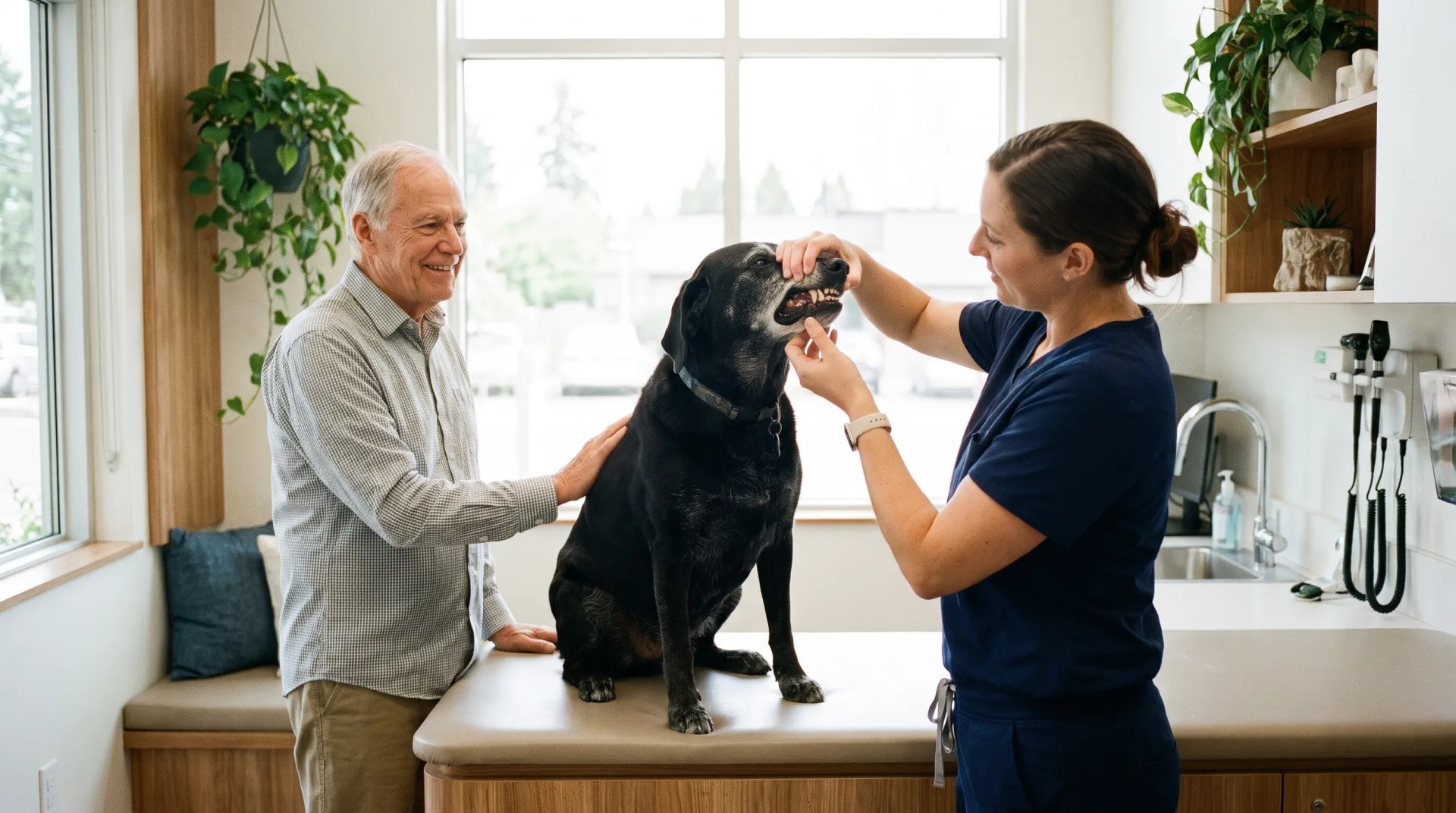
Book a checkup within the first couple of weeks, even if the shelter says the dog is healthy. Bring the shelter's records. This first visit isn't just about finding problems; it gives your vet a baseline, so that a change in weight, kidney values or mobility next year stands out.
It also helps to write down what you notice at home in the first days: how much the dog drinks, how often it needs to go out, whether it hesitates on stairs or struggles to get up, how it eats and whether it seems to hear and see well. The AAHA guidelines encourage vets to ask families exactly these questions, such as eating and drinking habits, exercise, movement, vision and hearing, because owners see things an exam room can't.
The table below lists the screening tests the 2023 AAHA guidelines recommend for senior dogs and how often. Your dog may not need all of them right away, and your vet may add others, but it's a useful checklist to bring to the appointment. If the shelter already ran some of these tests, bring the results; your vet may be able to use them as the baseline instead of starting over.
| Test | What it checks | How often |
|---|---|---|
| Complete blood count (CBC) | Red and white blood cells, platelets | Every 6 to 12 months |
| Chemistry panel | Kidney and liver values, blood sugar, electrolytes | Every 6 to 12 months |
| Urinalysis | Kidney function, urinary infection, sugar or protein in urine | Every 6 to 12 months |
| Thyroid (T4) | Thyroid hormone level | Yearly |
| Blood pressure | High blood pressure, which can affect kidneys, eyes and heart | Yearly |
| Heartworm and tick-borne disease tests | Common parasite infections | Yearly |
Settling an Older Dog Into Your Home
Older dogs are often easier to settle than younger ones, but they're also coming from a hard place. Many senior dogs in shelters lost the only home they ever knew. Expect a quiet, uncertain dog for the first days, and don't read too much into it. Give the dog time.
Start with the basics. Set up a soft bed in a calm corner, away from foot traffic. Put rugs or runners on slick floors so stiff hips don't slide. Keep food and water in the same place every day, and keep the routine simple: the same walk times, the same meal times, the same bedtime. Routine is how an older dog learns it's safe.
Go slow with introductions. If you have other pets, let them meet on neutral ground and keep early sessions short. An older dog may not want a young dog bouncing on it, and that's fine; give it a place to retreat. Children should learn to let the dog come to them and to leave it alone while it eats or sleeps.
Watch for house-training slips in the first week or two. Even a dog who was perfectly trained in its old home may have accidents in a new one, and older dogs sometimes need to go out more often. Take it out first thing in the morning, after meals, after naps and before bed, and praise it when it goes outside. If accidents keep happening, mention it to your vet, since frequent urination can be a medical sign worth checking.
| When | Focus on |
|---|---|
| Day 1 | A quiet arrival: show the dog its bed, water and the door it goes out of. Skip visitors. |
| Days 2 to 3 | Same meal, walk and bedtime every day. Frequent trips outside. |
| Days 4 to 7 | Short, calm introductions to other pets and family members. Note drinking, appetite and bathroom habits. |
| Week 2 | First vet checkup with the shelter's records. Add gentle new walks and short training games. |
Keep exercise regular but gentle. Most senior dogs still love a walk; they may just prefer two shorter ones to one long one. Let the dog take its time and sniff. Food puzzles and short training sessions help keep an older mind sharp, and yes, older dogs can learn new things. Keep sessions to a few minutes, use treats your vet is happy with, and stop while the dog is still having fun.
Questions to Ask Before You Adopt
A good shelter or rescue wants the placement to work as much as you do, and the staff or foster who knows the dog is your best source of information. Before you sign, ask the questions below. The answers will tell you whether this dog fits your home, your schedule and your budget, and they'll help you plan your first vet visit.
Don't be put off if the answer to some of these questions is "we don't know." Strays arrive without a history. That's where a foster's notes can help: a dog that's been in a foster home for even a few weeks comes with real observations about house manners, energy and how it gets along with other animals. On our senior dogs page, you can filter for dogs living in foster homes.
| Ask about | Why it matters |
|---|---|
| Why the dog came in | An owner who died or moved to care often means a dog used to a home routine |
| Medical records and recent bloodwork | Avoids repeat tests and tells you what to budget for |
| Known conditions and current medications | Ongoing costs, and conditions insurance may not cover |
| Dental health | A needed cleaning or extractions is a common early expense |
| How it does with dogs, cats and kids | Fit with your household |
| Mobility, stairs and car rides | Whether your home works as is or needs a ramp or rugs |
| Adoption fee and what it includes | Some shelters and rescues reduce fees for older pets; ask |
| Whether you can foster first | A trial period lets you both settle in |
Fostering and Other Ways to Help Senior Dogs
If you love the idea of an older dog but can't commit for the rest of its life, fostering is a way to help. A loud kennel is hard on any dog, and a few weeks in a quiet home can show the dog's true personality, which helps it get adopted. Ask the rescue what it covers; some pay vet costs for the dogs in their foster homes. Our guide to fostering pets in North Carolina explains how it works and how to sign up.
You can also help without bringing a dog home. Share a senior dog's listing with friends; one share can reach the right person. Volunteer to walk dogs at your county shelter, as our volunteering guide describes. And support the root fix: fewer unplanned litters mean fewer crowded shelters for every dog, young or old. That's why NC Pet Project is asking state lawmakers to fund low-cost spay and neuter. You can add your name to the petition.
Where to Find Senior Dogs for Adoption in NC
Start with our senior dogs for adoption page, which lists older dogs at shelters and rescues across North Carolina and links each one to the group that handles the adoption. You can sort by "waiting longest" to see who has been overlooked the most, or search near your ZIP code. If you're still deciding between adopting and buying, our guide Adopt or Buy? walks through that choice, and our no-kill shelter guide explains what that label does and doesn't mean.
Your county shelter is worth a visit, too, even if it doesn't post every dog online. Ask staff which dogs have been there longest. They'll know.
Frequently Asked Questions
There's no single age. The 2023 AAHA Senior Care Guidelines say there is no specific age for senior status, and AAHA's 2019 life stage guidelines define a senior dog as one in the last 25 percent of its estimated lifespan, so large and giant breeds become seniors sooner than small dogs. On our own senior dogs page, "senior" means 8 years and up, as each shelter or rescue reports it.
For many people, yes. You know the dog's adult size, its personality is mostly formed, and many older dogs are already house-trained and calmer than young dogs. The trade-offs are fewer years together and more vet care, including bloodwork every 6 to 12 months under AAHA's guidelines. Ask the shelter about the individual dog's health and history before you decide.
Our data says they do. On NC Pet Project's 100-County Pet List on November 2, 2026, the typical senior dog had been listed for 125 days, compared with 30 days for the typical puppy and 66 days for the typical adult dog. That snapshot covers only dogs still waiting whose listings show a date.
Costs vary by dog and by vet, so ask for estimates. Plan for a checkup soon after adoption, lab work every 6 to 12 months, yearly thyroid and blood pressure checks, and possibly a dental cleaning. Ask the shelter for the dog's records first, since recent bloodwork may not need repeating.
November. The ASPCA celebrates November as Adopt a Senior Pet Month to encourage people to consider older shelter animals, which it says are often the last to be adopted.
Sources
- Dhaliwal R, Boynton E, Carrera-Justiz S, et al. 2023 AAHA Senior Care Guidelines for Dogs and Cats. Journal of the American Animal Hospital Association. 2023;59(1):1-21 (PubMed record).
- ASPCA, This November, Open Your Heart to a Senior Pet (November 1, 2017).
- National Association of Insurance Commissioners, Pet Insurance Model Act (#633), Section 4.
- NC Department of Agriculture and Consumer Services, 2025 CY Public Animal Shelter Report (Excel, file replaced October 12, 2026), dog rows summed by NC Pet Project.
- NC Pet Project, 100-County Pet List, snapshot of November 2, 2026 (5,307 dogs listed; 2,005 with a listing date, 1,992 of them with an age group).