TL;DR: Adopt first. In 2025, North Carolina’s reporting county shelters took in 69,131 dogs and euthanized 15,770 of them, so the supply problem is real and local. Adoption also costs far less up front: Wake County charges $95 and Guilford charges $75, and both fees include the spay or neuter surgery, vaccines and a microchip, while the FTC notes purebred puppies from breeders “often cost thousands.” On health, the honest answer is more interesting than the slogan. A UC Davis study of 27,254 dogs found purebreds at higher risk for 10 of 24 inherited disorders, mixed breeds at higher risk for one, and no difference for the other 13. Where “adopt don’t shop” needs nuance: a genuinely responsible breeder who health-tests, screens buyers and takes dogs back for life is not the same as a puppy mill or an online broker, and North Carolina law barely distinguishes them.
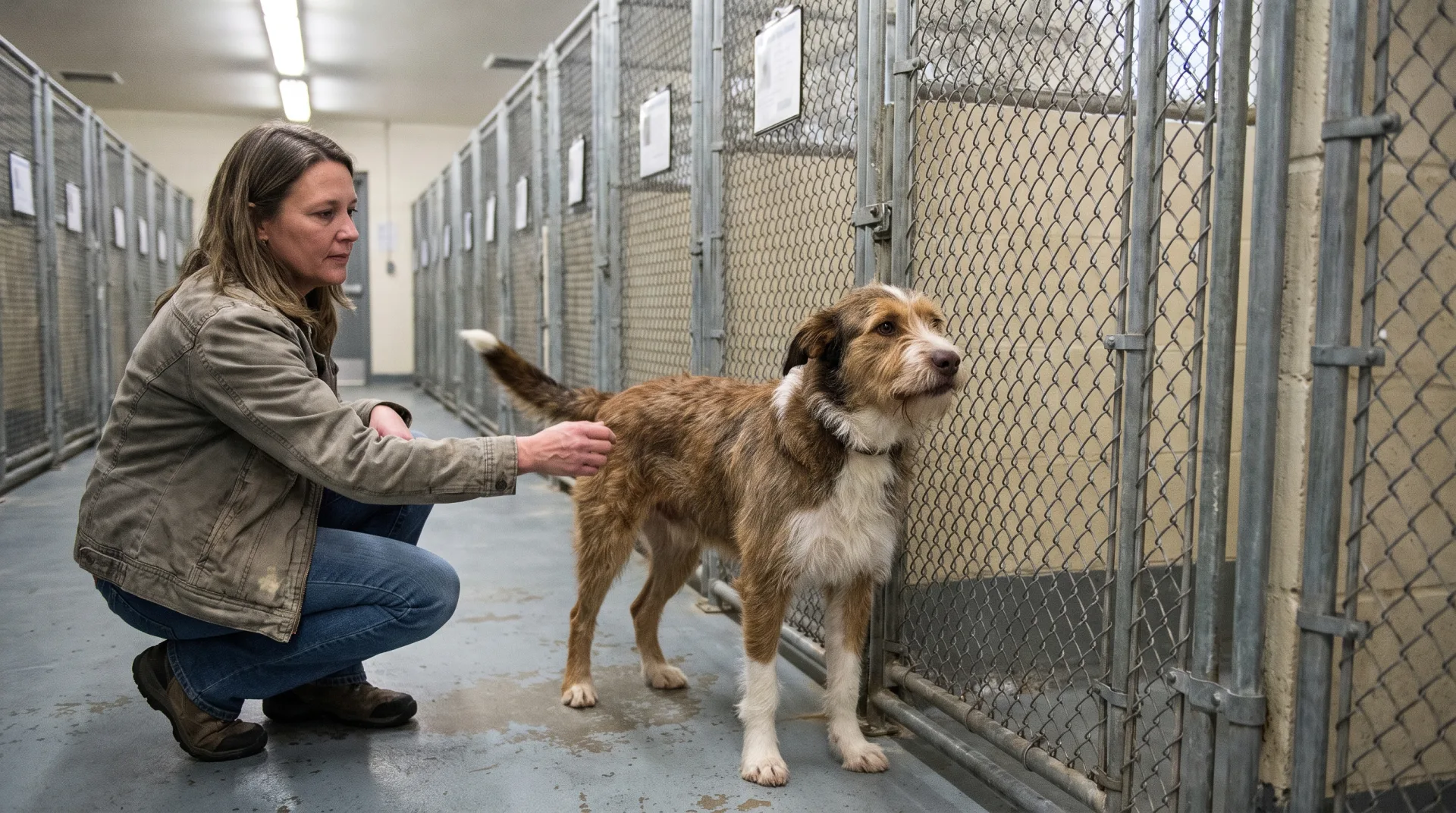
Most articles on this question have already decided the answer before the first paragraph. They open with a slogan, stack up the emotional case, and never once concede that a thoughtful person might have a real reason to want a specific breed from a specific breeder.
This is not that article. We run a spay and neuter program in North Carolina, so we are not neutral, and we will tell you plainly where we land. But you deserve the actual numbers, including the ones that complicate our side of it, because a decision you make on good information holds up and a decision you make on a hashtag does not.
The Short Answer, and Why It Is Not Just a Slogan
Adopt first. Not because buying a dog is a moral failure, but because North Carolina has a live, measurable surplus of dogs who already exist and already need homes, and because the shelter system is the part of the equation that runs out of room.
The North Carolina Department of Agriculture and Consumer Services collects an annual public animal shelter report from county and municipal facilities. The 2025 calendar-year file, as posted on July 27, 2026, covers 64 reporting counties and is still labeled preliminary. Four of the state’s larger systems, Wake, Forsyth, Catawba and Iredell, had not filed for 2025 when that version went up, so every number below is a floor, not a ceiling.
Across the counties that did report, shelters handled 69,131 dogs in 2025.
Nationally the picture is better than it used to be and still not good. The ASPCA, using Shelter Animals Count data, reports that 5.8 million dogs and cats entered US shelters and rescues in 2025, including 2.8 million dogs, and that roughly 320,000 dogs were euthanized that year. Best Friends Animal Society’s 2025 national data report puts total shelter deaths at about 396,000 dogs and cats against a national save rate of 82.5 percent, and notes that dog deaths fell 8.5 percent year over year, the first meaningful decline for dogs since 2020.
Read those two facts together and the argument becomes concrete rather than moral. Progress is real, the trend is good, and there are still tens of thousands of North Carolina dogs a year for whom adoption demand is the binding constraint. Every adopter who takes one of them is not making a symbolic gesture. They are removing one unit of pressure from a system that measures its overflow in euthanasia.
What Adopting a Dog in North Carolina Actually Costs
This is where the comparison gets lopsided in a way most people underestimate, because the adoption fee is not a price tag. It is a partial reimbursement for veterinary work already performed.
Take two of the state’s larger county shelters. Wake County Animal Services lists a $95 adoption fee for dogs, $45 for cats under five and $15 for cats five and older, and states that all dogs and cats are spayed or neutered before adoption. Guilford County Animal Services charges $75 for adult dogs, puppies, kittens and adult cats alike, and spells out what the fee covers: “age-appropriate vaccines, rabies vaccines, microchip, spay/neuter, full body checkup,” plus a month of flea and tick treatment.
| What you get | Included in an NC shelter adoption fee? | Why it matters |
|---|---|---|
| Spay or neuter surgery | Yes, and in NC it is done before the dog goes home | The single largest line item, and the one that decides whether this dog ever adds to the intake numbers above |
| Age-appropriate vaccines | Yes at Guilford; Wake starts the series and asks you to follow up with a vet within 7 days | Distemper and parvo protection is not optional, and parvo treatment costs many times what prevention does |
| Rabies vaccination | Yes at Guilford | North Carolina law requires owners to have dogs, cats and ferrets over four months of age vaccinated against rabies (G.S. 130A-185) |
| Microchip | Yes at Guilford and Wake | 12,157 NC shelter dogs were returned to their owners in 2025. Permanent ID is what makes that reunion possible if your dog ever gets out |
| Veterinary exam | Yes, a full body checkup at Guilford | Anything obvious has already been looked at by a person whose job is looking at dogs |
| Flea and tick treatment | One month included at Guilford | Small, but it is one less first-week errand |
| Fee | $95 dogs (Wake), $75 dogs (Guilford) | Both counties periodically waive or cut fees during capacity crises and promotional events |
Fees vary by county, and they change. Guilford ran $10 adoptions during the August 2026 Clear the Shelters campaign. Wake has repeatedly waived fees entirely when the shelter hit capacity. If cost is the thing standing between you and a dog, call your county shelter and ask what is running this month. Our county-by-county low-cost spay and neuter guide covers the same question for a dog you already own.
What Buying a Puppy Costs, and What That Price Does Not Buy
We are not going to quote you an average breeder price, because there is no honest one. Purchase prices swing by breed, region, bloodline and whether the seller is a hobby breeder, a show breeder or a broker with a website. The most reliable public statement on magnitude comes from the Federal Trade Commission, which warns in its consumer alerts that scam ads advertise “purebred puppies for a few hundred dollars when they often cost thousands.” Thousands is the right order of magnitude for a well-bred purebred puppy from a breeder who is doing the work.
Here is the part that changes the math. The purchase price, whatever it is, is a small share of what the dog will cost you. The ASPCA Pet Health Insurance Cost of Care tool, built on internal claims data for actual claims from January 2017 through December 2021, puts average annual veterinary spending for a five-year-old large mixed-breed dog in the 51 to 100 pound range at $791, rising to $1,775 in a year with at least one accident or illness visit, and reports that more than half of owners with a dog of that size and age spent between $830 and $5,248 a year. Food, boarding, grooming, training and supplies sit on top of that.
| Adopt from an NC county shelter | Buy from a breeder | |
|---|---|---|
| Up-front cost | $75 to $95 in Wake and Guilford, often waived during capacity events | Commonly in the thousands for a purebred puppy, per FTC consumer guidance |
| Spay or neuter | Already done, included | Your expense, usually at 6 to 12 months depending on breed and vet advice |
| Vaccines and microchip | Included or started | Partially done by a good breeder, the rest is yours |
| Known age | Estimated for strays, known for owner surrenders | Known to the day |
| Known history | Varies. Owner surrenders often come with detailed notes; strays come with none | Known, if the breeder is honest and keeps records |
| Annual cost after year one | Identical. ASPCA Cost of Care, 2017 to 2021 claims data: $791 average annual vet spend for a 5-year-old large mixed-breed dog, $1,775 in a year with an accident or illness visit | |
That last row is the one worth sitting with. Over a twelve-year life, the acquisition decision is a rounding error against the cost of care. Anyone choosing between a $95 dog and a $3,000 dog on price alone is optimizing the smallest variable in the problem.
There is a second reason the up-front gap is wider than it looks. A shelter adoption fee is money moving toward the problem. County shelters are funded out of local budgets, and adoption revenue offsets a fraction of what it costs to house, vaccinate and sterilize the animals already in the building. A purchase price is money moving toward producing more dogs. Both are legitimate private transactions. They just point in opposite directions with respect to the intake numbers in the chart above.
None of that settles the question by itself, because plenty of people can absorb a four-figure purchase price without blinking. It just clears the cost argument out of the way so the two arguments that actually decide most cases, health and predictability, can be examined on their own terms.
Are Shelter Dogs Less Healthy? What the Research Actually Says
Both sides of this argument overreach. Breeder advocates say purebreds are predictable and mixed breeds are a genetic lottery. Adoption advocates say mutts enjoy “hybrid vigor” and are simply healthier. The largest study to compare them directly does not support either slogan cleanly.
Researchers at the University of California, Davis reviewed records for more than 90,000 dogs seen at the university’s veterinary medical teaching hospital between 1995 and 2010, identifying 27,254 dogs with at least one of 24 inherited disorders. The results, published in the Journal of the American Veterinary Medical Association in June 2013, split three ways once the populations were matched for age, sex and bodyweight.
| Finding | Number of the 24 disorders | Examples named by the researchers |
|---|---|---|
| Higher risk in purebred dogs | 10 | Aortic stenosis, dilated cardiomyopathy, elbow dysplasia, epilepsy, hypothyroidism, intervertebral disk disease, early-onset cataracts, atopy or allergic dermatitis, bloat, portosystemic shunt |
| Higher risk in mixed-breed dogs | 1 | Ruptured cranial cruciate ligament |
| No significant difference | 13 | Includes hip dysplasia, several cancers, and other conditions in the study set |
Lead author Anita Oberbauer summarized it this way: “Overall, the study showed that the prevalence of these genetic disorders among purebred and mixed-breed dogs depends on the specific condition.”
The fair reading is that mixed-breed ancestry is a modest hedge against a specific set of breed-concentrated conditions, not a health guarantee, and that purebred does not mean fragile. It also means the health argument for buying rests entirely on the breeder actually screening for the conditions their breed carries. A purebred puppy from a breeder who does no health testing gets you the breed’s risk profile with none of the mitigation. That is the worst cell in the table.
One caveat belongs on this study, and we would rather state it than have you find it later. The records came from a university veterinary teaching hospital, which sees a referral population sicker and more complicated than the average family dog, and the data run through 2010. It remains the largest direct head-to-head comparison of its kind, and no subsequent work has overturned the basic three-way split, but it is a snapshot of one referral caseload rather than a census of American dogs.
“But I Want to Know What I’m Getting”
This is the most legitimate concern people raise, and it deserves a better answer than being told it is selfish. If you have small children, a reactive resident dog, a landlord with a weight limit, or a working requirement like scent detection or livestock guarding, predictability is not a luxury. It is a safety and success factor.
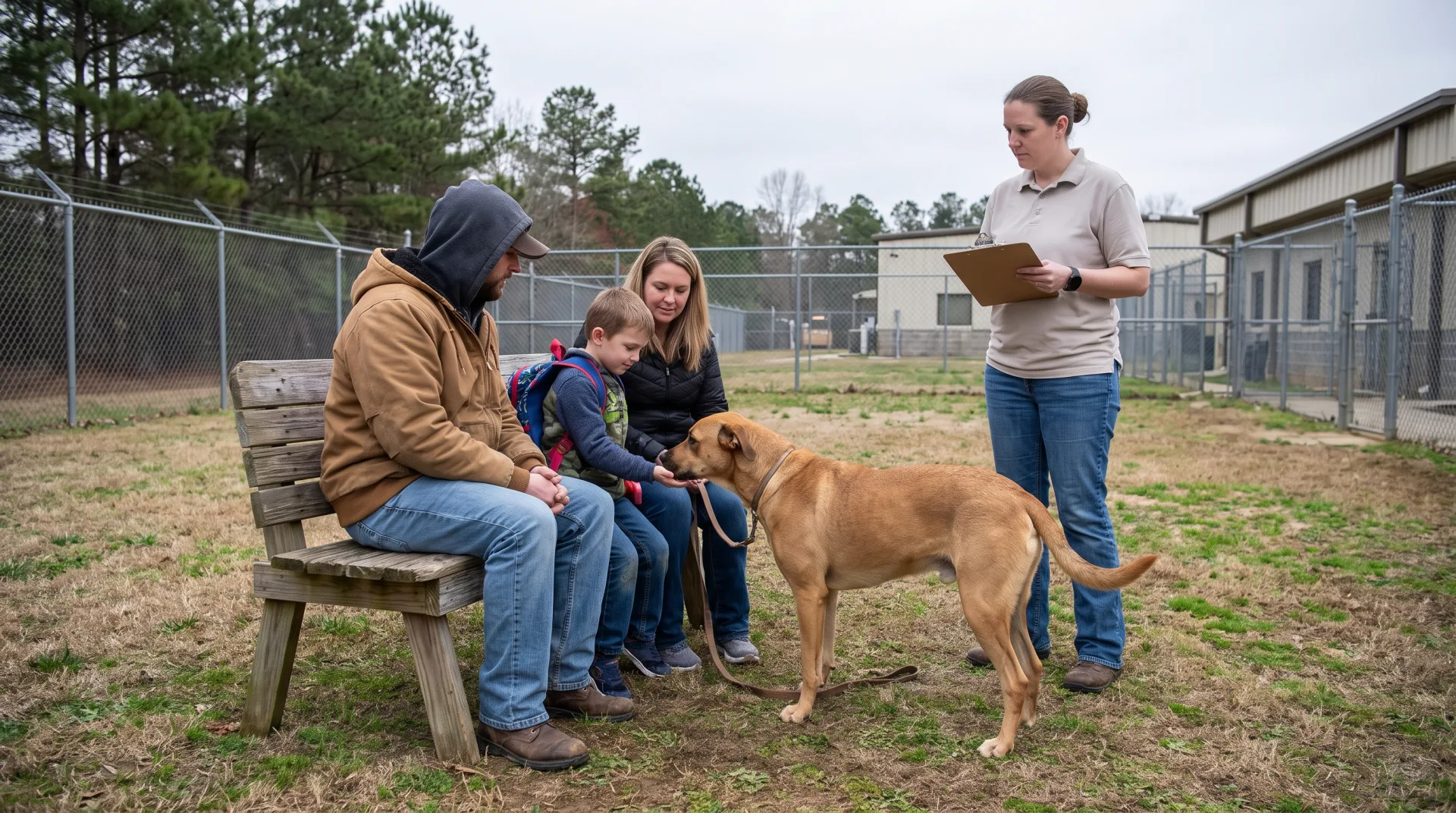
Two things are worth knowing. First, a puppy of any origin is the least predictable option available, because adult temperament and adult size are both still forming. A breeder can tell you the statistical tendencies of the line. They cannot tell you who this individual dog becomes at three. Buying a puppy trades one kind of uncertainty for another.
Second, adult shelter dogs are frequently the most predictable dogs in the conversation, and this is the fact the slogan war buries. An adult dog’s size is fixed, coat is fixed, energy level is established, and a shelter that does behavior evaluations and foster placements can often tell you how the dog does with cats, with kids, in a crate and on a leash, because someone has watched. Ask the shelter directly: has this dog been in foster care? What did the foster report? Breed-specific rescues exist across North Carolina for nearly every popular breed, and they place adults whose traits are already visible.
If you want a specific breed, start with breed rescue and shelter listings before you conclude the dog is not out there. Our guide to finding a legitimate animal rescue in North Carolina covers how to verify a rescue is real before you hand over money or a deposit.
Where “Adopt Don’t Shop” Needs Nuance
Here is our honest concession. “Adopt don’t shop” collapses two very different sellers into one villain. A breeder who produces two litters a year, screens both parents through OFA databases, keeps the puppies in the house until eight weeks, interrogates buyers about their work schedules, and writes a contract requiring the dog to come back to them at any age for any reason is not the operation filling North Carolina shelters. A commercial kennel shipping puppies to brokers and pet stores is.
The American Kennel Club’s own guidance on responsible breeders describes hip X-rays and thyroid blood work, DNA and genetic testing, participation in OFA health databases, breeding to the breed standard rather than for novelty traits like “teacup” sizing, letting buyers meet the dam interacting with her litter, screening buyers about lifestyle and household, and requiring a contract with a return-to-breeder clause covering the dog “no matter how old the dog, no matter what the reason.”
| Signal | Responsible breeder | Mill, broker or scam |
|---|---|---|
| Health testing | Shows you OFA results for sire and dam, and often prior generations | “Vet checked” and nothing more, or a health certificate you never see |
| Seeing the mother | Invites you to meet the dam with her puppies on the premises | Meets you in a parking lot, ships the puppy, or says the dam is “at another property” |
| Screening you | Asks about your schedule, your yard, your other pets, your training plan | Asks only whether your payment cleared |
| Number of breeds | One, occasionally two, with deep knowledge of each | A website menu of six or more breeds, always with puppies available |
| Taking the dog back | Contract requires return to the breeder for the dog’s whole life | No contract, or a contract with no return clause |
| Timing | You wait for a litter, sometimes months | Immediate availability, pressure to decide today |
Now the uncomfortable part for North Carolina. Our state law barely distinguishes those two columns. Under G.S. 19A-23, someone who “breeds and raises on his own premises no more than the offspring of five canine or feline females per year” is not a dealer at all and falls outside the registration scheme entirely, and there is no statewide inspection requirement for breeders selling directly to the public. Federal USDA licensing under the Animal Welfare Act reaches wholesale breeders selling to pet stores and brokers, not direct-to-public sellers. We wrote up the full statutory picture in North Carolina’s breeder regulation gap, and the enforcement consequences in our investigation of NC puppy mills.
The practical upshot for a buyer: in North Carolina, no license, registration or inspection record tells you which column a seller is in. You have to do the verification yourself, in person, before money moves.
The Channel That Does the Most Damage: Buying Online
If there is one place where the adoption argument becomes unambiguous, it is the internet puppy market. This is where mills, brokers and outright fraud all converge, and it is the channel a first-time buyer is most likely to land in after a single search.
The Federal Trade Commission’s December 2024 consumer alert on pet scams is blunt about the pattern. Scam listings advertise purebred puppies far below market price, push urgency so you act “before they’ve gone to other homes,” and demand payment methods that cannot be reversed.
| FTC red flag | What it actually means |
|---|---|
| A purebred puppy for a few hundred dollars | The FTC names this explicitly. Real purebred puppies “often cost thousands.” A bargain price is the bait |
| Pressure to decide immediately | Urgency exists to stop you from verifying anything |
| Payment by gift card, payment app, crypto or wire transfer | The FTC’s position is categorical: “Only scammers say you must pay with gift cards, a payment app, cryptocurrency, or a wire transfer service like Western Union or MoneyGram since it’s hard to get your money back” |
| Escalating fees after you pay | Once the first payment clears, new charges appear for crating, shipping, insurance or vet paperwork |
| Seller avoids live contact | No video call, no visit, no dam on camera. There may be no puppy at all |
The FTC’s own advice is worth quoting because of who is saying it. Search the seller’s name alongside “review,” “scam” or “complaint,” insist on a reversible payment method, and then this: “Consider a local rescue or animal shelter. Animals of all breeds and ages are waiting to be adopted.” That is a federal consumer protection agency, not an animal welfare group, pointing people toward shelters as the fraud-resistant option.
One more detail worth naming, because it catches careful people too. A polished website is not evidence of anything. Mills and brokers buy the same templates, stock photography and testimonial widgets that legitimate breeders use, and a business address in another state is impossible to verify from your kitchen table. The only checks that actually separate the columns are physical and contractual: you stood in the room, you saw the mother with the litter, and you read a contract that binds the seller to take the dog back. Everything else is marketing that anyone can buy.
Five Honest Questions Before You Decide
Slogans are for bumper stickers. A decision this long-lived deserves five specific answers, and four of the five are questions you put to the seller rather than to yourself. Work through them in order, because the first two determine whether you are shopping at all, and the last three are the ones that separate a seller worth your money from one who is counting on you not asking.
| Question | If yes | If no |
|---|---|---|
| 1. Do I need a specific working capability or breed-specific trait? | Start with breed rescue, then a health-testing breeder you can visit. Predictability is a real requirement, not an excuse | An adult shelter dog whose traits you can observe is the lower-risk choice |
| 2. Am I set on a puppy specifically? | Understand you are buying maximum uncertainty either way. NC shelters had 69,131 dogs come through in 2025, and plenty were puppies | Adopt an adult. Size, coat and energy are already settled |
| 3. Can I visit the animal in person before paying? | Good. Do it, and meet the mother if you are buying | Walk away. This is the single strongest fraud and mill indicator the FTC names |
| 4. Will the seller show me health testing results? | Ask for OFA records for both parents, not a verbal assurance | You are paying a premium price for an unmitigated breed risk profile |
| 5. Will this seller take the dog back at any point in its life? | That is the clause that keeps dogs out of shelters. Get it in writing | Then the shelter system is the seller’s fallback plan, funded by your county |
Question five is the one we care about most, because it is the hinge between the private transaction and the public cost. A breeder who takes dogs back for life is running a closed loop. A seller who does not is quietly assuming that when the dog does not work out, somebody else’s county budget absorbs it. In 2025, the 57 North Carolina shelter facilities that reported the figure carried a combined $63.2 million in total operating expenses, and across the 56 facilities reporting a cost per animal the median was $377 per animal handled.
If You Adopt in North Carolina, Start Here
The mechanics are simpler than people expect, and the first two weeks matter more than the paperwork.
Search county shelters first, then breed rescue. Every county animal shelter in North Carolina posts adoptable animals, and most use a searchable listing. If you want a particular breed or size, call and ask what is coming available, since dogs in behavior evaluation or foster care are often not listed yet.
Ask the three questions that actually predict fit. Has this dog been in foster care, and what did the foster say? How does the dog do with cats, children and other dogs, and how was that assessed? What is the return policy if it does not work out? Reputable shelters welcome all three.
Plan for decompression. Shelters commonly describe a “3-3-3” pattern, roughly three days of overwhelm, three weeks of learning your routine, and three months before the dog is fully settled and showing their real personality. The Humane Society of North Texas and many other shelters publish versions of it. Treat it as a useful expectation-setter rather than a research finding, because every dog is different and the individual history matters more than the framework.
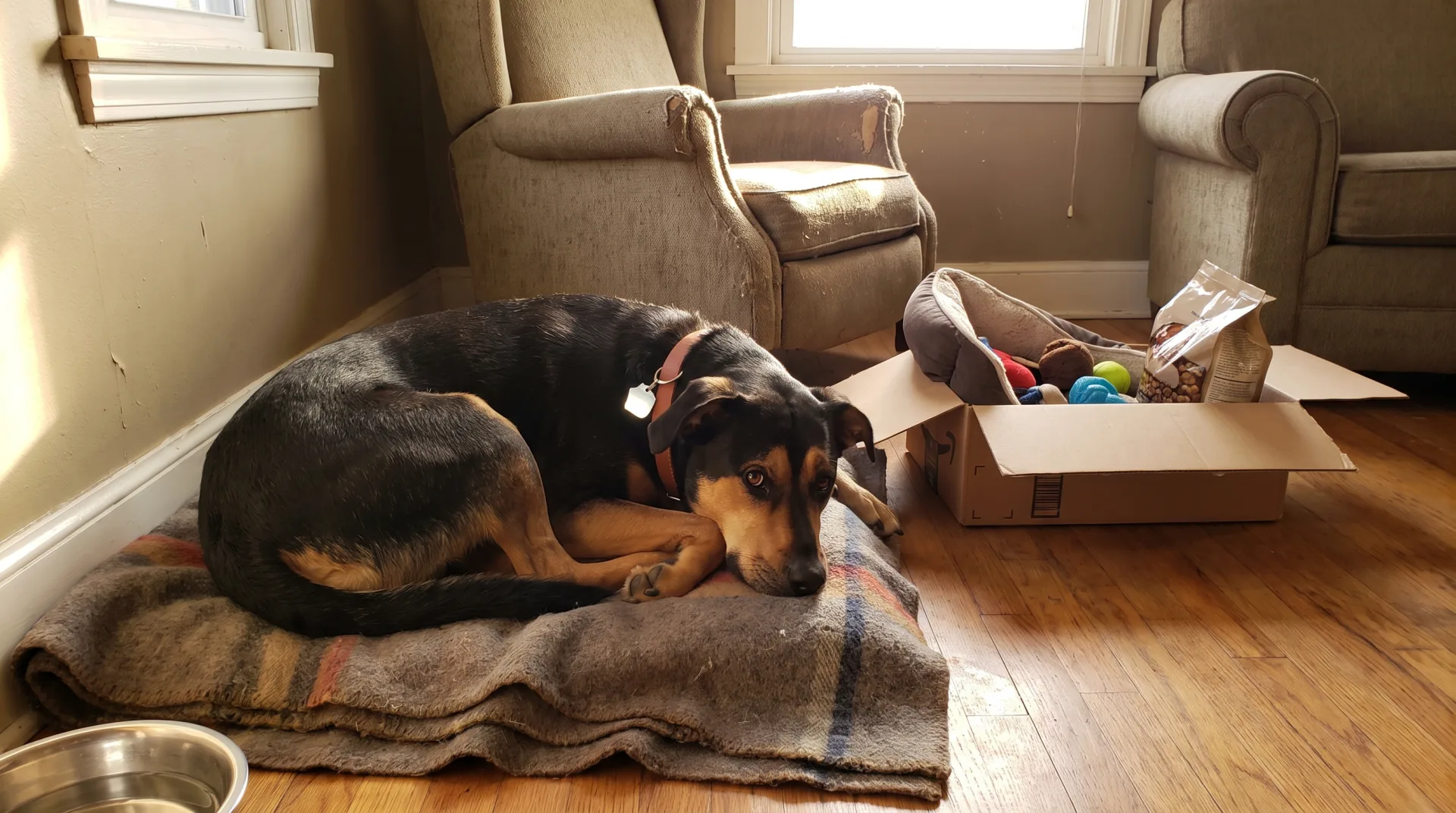
Do not skip the first vet visit. Wake County explicitly asks adopters to see a veterinarian within seven days for a health check and to continue the vaccine and deworming series started at the shelter. Book it before you bring the dog home.
If you are not ready to adopt, foster. Foster homes are the capacity release valve for every shelter in the state, and they cost you nothing but space and time. Our beginner’s guide to fostering pets in NC walks through what shelters actually provide and what you are expected to cover.
And then there is the upstream fix, which is the reason this organization exists. Every one of the 69,131 dogs in that 2025 file started as a litter somebody did not plan for. Affordable spay and neuter access is the only intervention that reduces the number at the source rather than managing it at the shelter door. If you want to work on the supply side of this problem instead of the demand side, sign the petition and tell your legislator that North Carolina should fund it properly.
Frequently Asked Questions
Sources
- NC Department of Agriculture and Consumer Services, 2025 CY Public Animal Shelter Report (Excel file, as of 7/27/2026; dog rows aggregated across 64 reporting counties)
- ASPCA, Shelter Intake and Surrender: Pet Statistics (2025 data compiled by Shelter Animals Count)
- Best Friends Animal Society, 2025 National Shelter Data Report
- Wake County Animal Services, Fees and Refund Guidelines
- Guilford County Animal Services, Adopt a Pet
- UC Davis, “Purebred dogs not always at higher risk for genetic disorders, study finds” (Bellumori, Famula, Bannasch, Belanger and Oberbauer, Journal of the American Veterinary Medical Association, June 2013)
- American Kennel Club, Signs of a Responsible Dog Breeder
- Federal Trade Commission, “Getting a pet? Avoid scams” (December 16, 2024)
- N.C.G.S. 19A-23, Definitions (Animal Welfare Act)
- ASPCA Pet Health Insurance, Cost of Care (internal claims data, January 2017 to December 2021)
- N.C.G.S. 130A-185, Vaccination of dogs, cats and ferrets required
- Humane Society of North Texas, The 3-3-3 Rule for Adopted Dogs
Ready to make a difference?
NC Pet Project needs volunteers across all 100 North Carolina counties. Sign up to get involved in your community.