Help Paying Vet Bills in NC: Assistance Programs That Actually Pay
Can't afford a vet bill in North Carolina? Here are the national funds and NC programs that still pay, who qualifies, what they cover and how to apply.
The short version: Start by telling your vet what you can afford and asking for a lower-cost treatment plan, since many problems have more than one acceptable option. Then match the help to the problem. For a one-time urgent need under $500, RedRover Relief's Urgent Care grants typically pay around $250. For emergency or specialty care, Frankie's Friends pays up to $2,000 per pet. Inside North Carolina, if your vet is a member of the NC Veterinary Medical Association, the practice can ask its Helping Hands Fund for up to $500, nonprofits in Charlotte and western NC run their own funds, and a Greensboro humane society clinic now treats sick and injured pets. Almost every fund says the same three things: apply before treatment, bring a written estimate, and expect to pay part of the bill yourself. We checked every program below on November 5, 2026.
A vet bill you didn't plan for can turn a sick pet into an impossible choice. Pay a bill you can't cover, skip the care, or give the animal up. Some families end up at that third option, and a county shelter takes in a pet whose owner loved it and simply ran out of money. This guide is meant to keep that from happening. It lists the assistance programs that still pay vet bills, the ones that only serve parts of the state, and the popular ones that have quietly closed. We read each program's own website and wrote down its actual rules, so you don't waste a night applying to a fund that can't help you.
Why Vet Costs Push Pets Into Shelters
Cost is one of the most common reasons pet owners skip care, and the numbers are recent. In a Gallup survey for PetSmart Charities of 2,498 U.S. dog and cat owners, conducted from November 2024 to January 2025, 52 percent said they had skipped or declined needed veterinary care in the past year. Among those who skipped or declined, 71 percent said cost was the key factor. Most were never offered another way: 73 percent of the people who turned down care because of cost said their vet did not offer a more affordable option, and only 23 percent of all owners said a vet had ever offered them a payment plan.
An older national survey found the same pattern. The Access to Veterinary Care Coalition at the University of Tennessee surveyed 5,652 pet owners in 2017 and found that 27.9 percent of households had run into a barrier to vet care in the previous two years. Among owners who couldn't get the care they wanted, 80 percent said they couldn't afford it, and 73.8 percent of those who couldn't get sick care said the barrier was money.
What happens next matters for shelters. In a study of 166 people surrendering dogs at a South Los Angeles city shelter in 2014, 71 percent said cost was part of the reason, often the cost of a medical problem. Most of them, 80.7 percent, didn't know about any help available. When the researchers offered information about services that might let them keep the dog, 88 percent chose to look into that help rather than go ahead with the surrender that day, and only about 1 in 10 surrendered. The study didn't follow up to see who kept their dogs. That was one community, not a national sample, but it shows how often a surrender is really a money problem with a possible fix.
A national telephone survey by ASPCA researchers, published in 2015, adds a caution. Cost was the main reason for only about 5 percent of the people who had rehomed a pet in the five years before the survey. But those who rehomed because of cost were more likely to take the pet to a shelter than to any other place, and lower-income owners most often said free or low-cost vet care would have helped them keep the pet. In other words, cost isn't the biggest reason pets lose their homes, but when it is the reason, the pet tends to land in a shelter. Our county-by-county NC shelter report shows how many dogs and cats those shelters take in and euthanize each year.
Start With Your Vet: Ask for a Plan You Can Afford
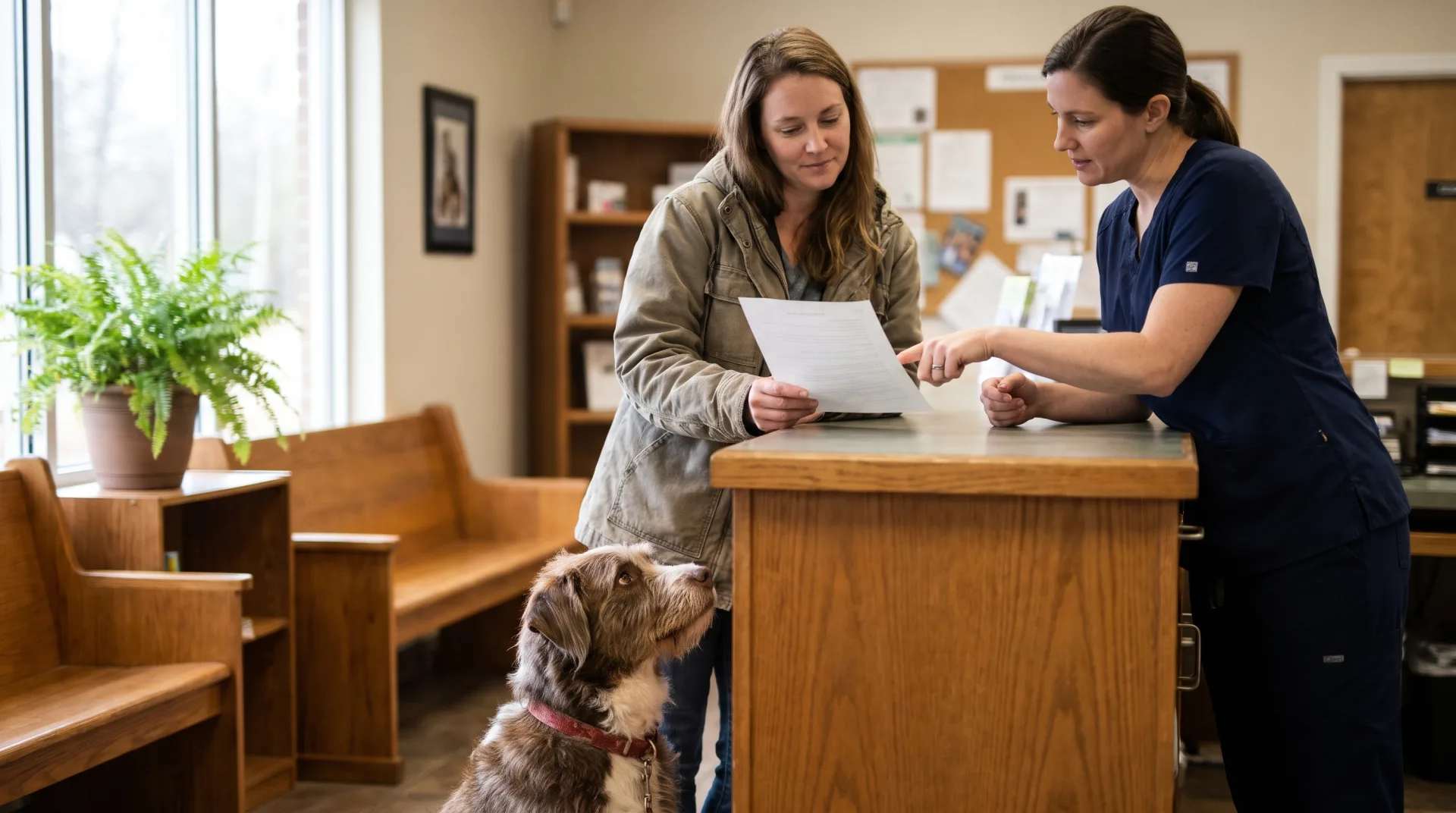
Before you apply anywhere, have one honest conversation at the clinic. The American Veterinary Medical Association tells pet owners to "talk openly with your veterinarian" about cost, because "in many cases, a range of care options is available, each of which can provide good results." Vets call this the spectrum of care. A 2021 paper in the Journal of the American Veterinary Medical Association describes it as a "continuum of acceptable care" that stays "responsive to client expectations and financial limitations." Lower-cost care is not the same as bad care. The AVMA's own example is asking whether a generic drug or a pet-safe human version is available. Depending on the case, your vet may also be able to suggest other options, and the trade-offs that come with each.
Here's what to ask, in plain words:
- "This is what I can spend today. What can we do for that amount?"
- "Is there a less expensive way to treat this, and what are the trade-offs?"
- "Which parts are urgent, and which can wait a week or two?"
- "Can I have a written estimate with a low and a high end?" (Almost every fund below asks for one.)
- "Do you offer a payment plan, and do you take CareCredit or Scratchpay?"
- "Are you an NCVMA member, and would you apply to the Helping Hands Fund for me?"
The AVMA notes that many clinics offer payment plans or financing, and that not every clinic can, "but it's always worth asking." The Gallup numbers above suggest many owners never do.
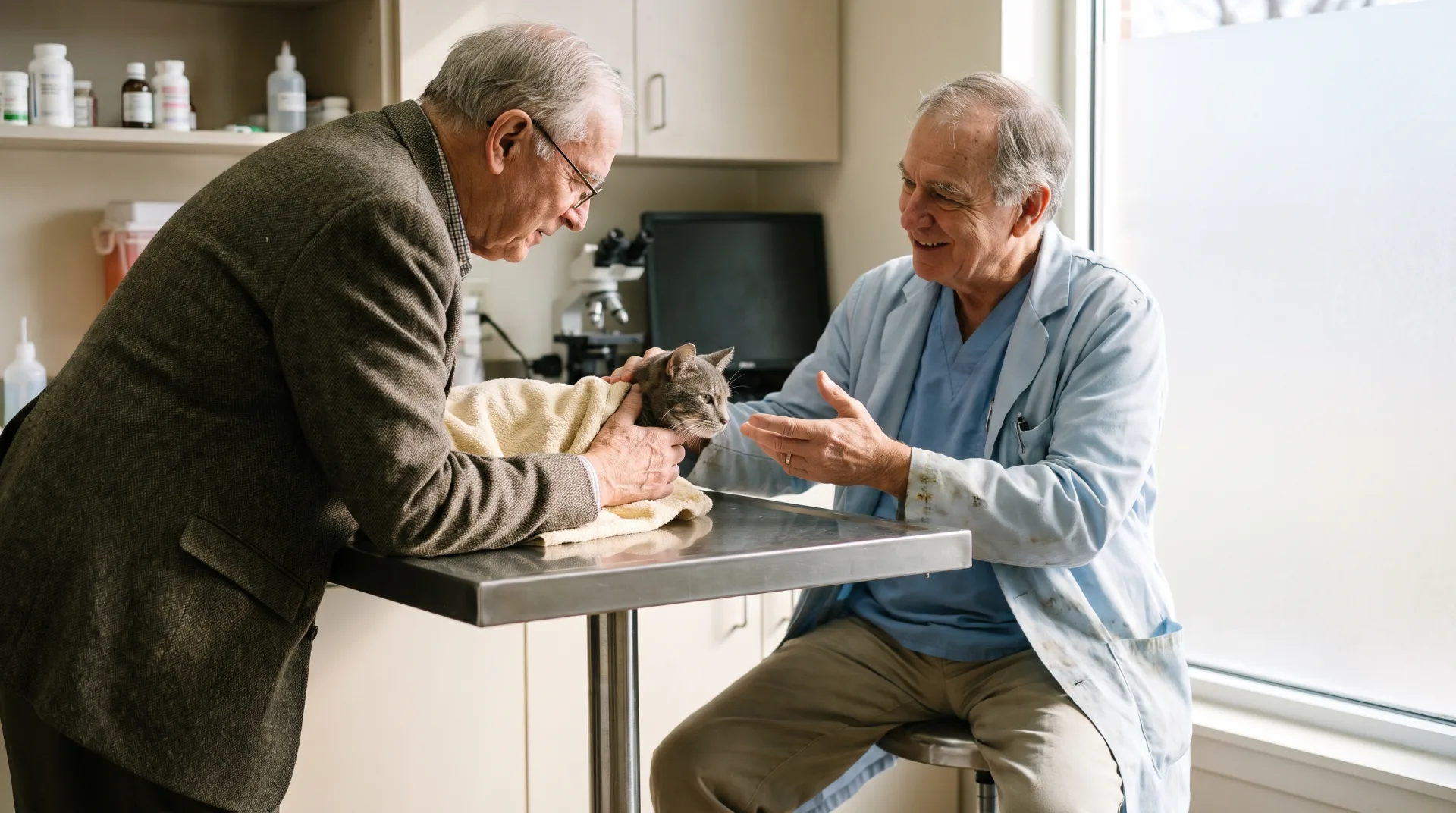
If your pet is a patient at the NC State Veterinary Hospital in Raleigh, ask for its Family and Community Services team. Its counseling is free and confidential for current hospital clients, and the hospital lists "problem-solving financial constraints" among the things they can help with. You can call the social worker at (919) 513-3901. Know the hospital's money rules before you go, too. NC State asks for payment at the time of service for outpatient visits, and for a hospital stay it asks for a deposit of at least the low end of the estimate, so a $2,000 to $4,000 estimate means a deposit of at least $2,000. It accepts CareCredit. NC State also has a VetMed Companion Pet Assistance Fund, supported by donors, but we found no public application for it, so ask your care team whether any assistance is available for your case rather than applying on your own.
Which Kind of Help Fits Your Situation?
Assistance funds are narrow on purpose. Each one is set up for a certain kind of problem, and most turn down anything outside it. Applying to the wrong fund costs you days you may not have. Before you fill out a single form, sort your situation into one of the rows below. The biggest split is between emergencies, which need an answer within hours or days, and planned care, such as a surgery that can be scheduled. Several of the best-known funds won't touch an emergency at all, and others won't touch anything routine.
Two other questions decide a lot. First, has the treatment already happened? Nearly every charity fund we checked refuses to pay a bill that is already paid or a treatment that is already done, so apply before treatment whenever you can. Second, do you have a diagnosis and a written estimate? Most funds won't pay for the first exam or the tests that find the problem. They want to see what's wrong, what it will cost to fix, and that the pet is likely to recover.
| Your situation | Where to start | Good to know |
|---|---|---|
| Urgent problem, total need under $500 | RedRover Relief Urgent Care; NCVMA Helping Hands (your vet applies) | RedRover caps household income at $60,000 and replies in 1 to 2 business days |
| Emergency or specialty care that costs more | Frankie's Friends; your vet's payment plan; CareCredit or Scratchpay | Frankie's Friends won't pay at Banfield, BluePearl or VCA hospitals |
| Planned, non-urgent surgery or treatment | The Pet Fund; The Mosby Foundation (dogs) | Neither helps in emergencies; The Pet Fund keeps a wait list and Mosby says it is overwhelmed with applications |
| Cancer | Live Like Roo Foundation | Needs medical records with the diagnosis; reviews take 3 to 4 weeks |
| Owner experiencing homelessness | Feeding Pets of the Homeless emergency vet care | A caseworker or shelter staff member must verify your situation |
| Vaccines, checkups, minor illness | NC State's mobile clinic and low-cost county or nonprofit clinics | Charity funds almost never pay for routine care |
If your pet needs care tonight and you can't pay, don't wait for a grant. Frankie's Friends tells applicants plainly, "please do not delay care for your pet while waiting for a response on your application." Ask the emergency clinic what it can do for the money you have and whether it offers a payment plan, then apply for help with the balance where the rules allow.
National Charity Funds That Still Pay (and Their Real Rules)
These national funds accept applications from North Carolina, and each was taking applications or had a live application form when we checked. None of them pays the whole bill for everyone who asks. Most give a set amount toward a larger cost, pay your vet directly rather than you, and expect you to cover the rest. Treat them as gap-fillers and apply to more than one when the rules allow it. Paws 4 A Cure actually requires you to apply to other programs as well.
RedRover Relief Urgent Care is the one most people should try first for a single urgent problem. Its grants are typically around $250, household income can't exceed $60,000 a year, and it helps only when the money still needed is under $500, so it works best when you can cover most of the bill yourself. It needs a current diagnosis, treatment plan and estimate, and it won't pay for exams, tests or ongoing conditions. The application closes every Friday at 4 p.m. Pacific time and reopens Monday morning.
Frankie's Friends runs a national fund for emergency and specialty care that pays up to $2,000 per pet, per household, straight to the vet. You need a vet's diagnosis, a good prognosis and proof of financial need. It does not pay for the first exam, the diagnostic tests, routine care or strays, and it can't help with care at hospitals that have their own assistance funds, including Banfield, BluePearl and VCA.
| Program | What it covers | Amount | Key rules |
|---|---|---|---|
| RedRover Relief Urgent Care | One urgent illness or injury, any species | Typically about $250 | Income up to $60,000; total still needed under $500; once per household |
| Frankie's Friends | Emergency and specialty care | Up to $2,000 per pet | Proof of need; not at Banfield, BluePearl or VCA; paid to the vet |
| The Pet Fund | Non-urgent, non-basic care | Up to $500 | Email first; wait list; owned 6 months or more; no emergencies |
| Paws 4 A Cure | Dog and cat illness or injury | Up to $400, one time | You must share a fundraising page they set up; apply to other funds too |
| The Mosby Foundation | Dogs, non-emergency care | Not stated | Every dog in the home must be spayed or neutered; one time only |
| Live Like Roo | Pet cancer | Not stated | Medical records with the diagnosis; replies only to people who get a grant |
| Onyx and Breezy Foundation | Medical hardship | Not stated | Must apply for CareCredit first and send the result; tax return required |
| Feeding Pets of the Homeless | Emergency care for pets of people without homes | Not stated | Living situation verified by a caseworker or shelter staff; won't pay past balances |
The Pet Fund is for care that can wait, like a planned surgery, and it says so in capital letters: if you're having an emergency, it can't help. Grants top out at $500. You have to email a description of your pet's needs first and wait to be told to apply, it keeps what it calls a "chronic wait list," and you must be able to pay the rest of the cost. The Mosby Foundation also skips emergencies. It helps dogs only, one time per family, and every dog in the household must be spayed or neutered, or scheduled for it. If that's the hurdle, our guide to low-cost spay and neuter in NC can help you clear it.
Paws 4 A Cure helps dogs and cats anywhere in the U.S. with up to $400, one time. The catch is that approved applicants must actively share a fundraising page the group creates for them, and it said in November 2026 that its donations were "currently at a critical low." It also asks applicants to use an email address other than Gmail, because Gmail has been blocking its replies. Live Like Roo helps only with cancer, and it warns that it replies only to applicants who receive a grant, after a review of three to four weeks. Onyx and Breezy requires you to apply for CareCredit first and send proof of the denial or your available balance. For any of these, gather your vet's written diagnosis, estimate and prognosis before you start. That's what slows most applications down.
| Document | Why funds ask for it |
|---|---|
| Your vet's written diagnosis | RedRover, Frankie's Friends and Paws 4 A Cure all require a diagnosis before they'll consider you |
| A written estimate | Funds pay toward a specific treatment, not an open bill |
| The prognosis | Most funds pay only for treatment likely to succeed; The Pet Fund wants a 50 percent or better chance of survival beyond 6 months |
| Proof of income or hardship | RedRover caps income at $60,000; Onyx and Breezy asks for a tax return |
| Your CareCredit result | NCVMA, Onyx and Breezy and Paws-Ability want to see that you applied |
| Your vet's agreement to work with the fund | Most funds pay the clinic directly, and Paws 4 A Cure asks you to confirm your vet will accept it |
Help Inside North Carolina, Region by Region
North Carolina's help is local and uneven. The statewide option runs through your vet. The NCVMA Helping Hands Fund lets member veterinarians of the NC Veterinary Medical Association apply for help on a client's behalf. You can't apply yourself. The award is up to $500, can't be more than half the total bill, and can be used once per client. You must also apply for CareCredit or a similar payment option, and include that application. The fund doesn't cover services already performed, except in some emergencies, and it doesn't cover pets with a poor prognosis. Since 2014, the association says, it has awarded $43,465. Each member practice can receive only one award a year, and the fund is small, so ask early.
The other statewide option comes to you. NC State's College of Veterinary Medicine runs a Community Access Program, a mobile walk-in clinic that travels to communities across the state. It offers vaccines, heartworm and other screening tests, and care for common problems like ear and skin infections, limping, vomiting and diarrhea, with lab work, X-rays and ultrasound on board. There's a suggested fee of $10 per pet and no formal charge. It doesn't do surgery that needs full anesthesia, and it doesn't post dates online, so email cvm-communityaccess@ncsu.edu or call 919-515-7425 to find the next stop near you.
| Region | Program | What it offers | Who qualifies |
|---|---|---|---|
| Statewide | NCVMA Helping Hands Fund | Up to $500, no more than half the bill | Your NCVMA-member vet applies; CareCredit application required |
| Statewide | NC State Community Access Program | Mobile walk-in wellness and minor sick care; $10 suggested fee | NC residents in need; no income rule posted |
| Charlotte | Stand For Animals | Nonprofit full-service clinic; Medical Assistance Fund; no-interest plans up to 90 days | Ask by email; no income rule posted |
| Charlotte | Humane Society of Charlotte | Financial Assistance Voucher Program for medical care, as funds allow | Mecklenburg County |
| Triad | Humane Society of the Piedmont | Clinic now treats sick and injured pets; Furry Friends fund through your vet | Fund needs proof of need and your vet's application |
| Mountains | Asheville Humane Society | Vet vouchers; mobile minor-illness care ($35 deposit, sliding scale on extra services) | Western NC residents for vouchers |
| Mountains | Blue Ridge Humane Society | Emergency vet vouchers up to $150 | Henderson County; one pet per household every 4 months |
| Mountains | Brother Wolf Stay Together | Short-term help paid directly to vets | Not for emergencies; ask about the service area |
| Coast | Paws-Ability Stella's Touch | One-time grant for illness or injury | Brunswick County; apply for CareCredit first |
Charlotte area. Stand For Animals is a nonprofit full-service clinic with locations in Charlotte, Pineville and Lake Norman. It lists office visits at $38 to $75 and runs a Medical Assistance Fund that provides "free or discounted care to pet owners in need." To ask for help, email fa@standforanimals.org with what your pet needs and how much you can put toward it. It also offers payment plans with no interest that must be paid off within 90 days. The Humane Society of Charlotte's Pet Help Center serves Mecklenburg County with a voucher program that helps with medical costs as funds allow; call 704-494-7718 or fill out its questionnaire, and expect a reply within about 72 hours, though it warns that response times may be longer right now. Its Essential Care clinic does low-cost vaccines and checkups but doesn't treat sick or injured pets.
Triad. The Humane Society of the Piedmont in Greensboro now offers full-service appointments for sick and injured pets at its clinic, along with wellness and dental care. Its Furry Friends Financial Assistance Fund works through your vet, who submits the application with proof of your financial need, and a board approves it. We couldn't confirm the fund is taking applications right now, so call 336-299-3060 and ask.
Mountains. Western NC has the most local help. Asheville Humane Society takes veterinary assistance requests from western NC residents through its Pet Helpline, and its Mobile Medical Vehicle treats minor problems like ear infections and upper respiratory infections. It asks for a $35 deposit toward the exam and offers a sliding scale on additional services for qualifying households. Blue Ridge Humane Society in Henderson County gives emergency vet vouchers of up to $150, before your visit, to county residents. Brother Wolf Animal Rescue's Stay Together program pays vets directly for short-term help to keep pets out of the shelter. It isn't for emergencies or bills you've already paid, and it usually replies within three business days.
The coast and eastern NC. This is the gap. Outside Paws-Ability's Stella's Touch grant for Brunswick County, we couldn't verify a single nonprofit vet-bill fund in the eastern half of the state on an organization's own website. If you live there, start with your vet and the NCVMA fund, ask NC State's mobile clinic about coming dates, and use the national funds above.
Low-Cost Care So Small Problems Stay Small
The cheapest vet bill is the one that never grows. A skin infection treated this week costs less than one treated next month, and a low-cost vaccine clinic can head off some illnesses before they start. Charity funds almost never pay for routine care, so the help for vaccines and checkups comes from low-cost clinics instead, and several have dates coming up this month.
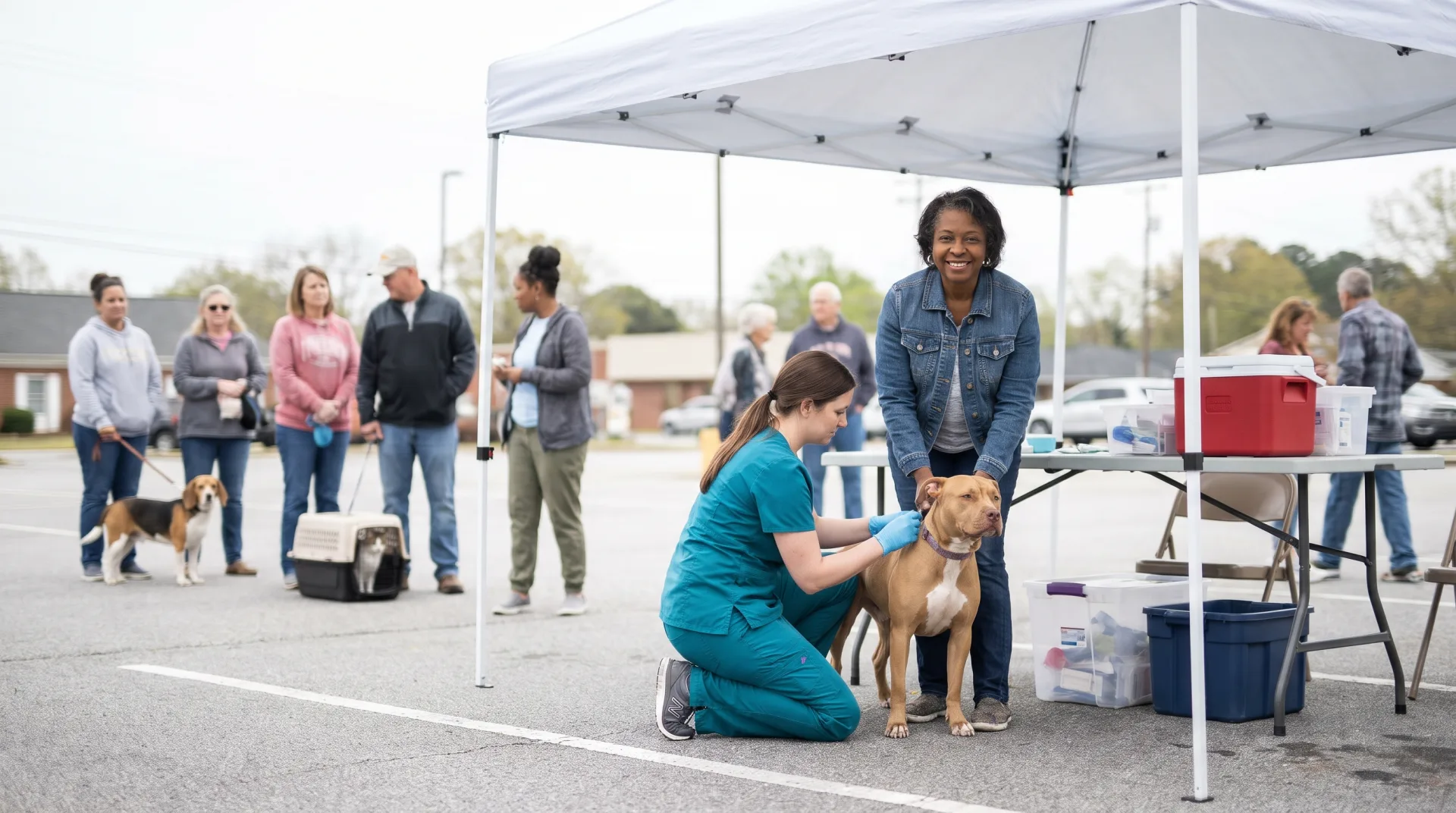
- Raleigh: the SPCA of Wake County holds a vaccine and microchip clinic on Saturday, November 21, 2026, with $5 dog and cat vaccines and a $10 one-year rabies shot, for owned pets, up to four per household. Its Pet Helpline also takes a veterinary care help form and sends back resources and referrals.
- Orange County: Orange County Animal Services holds a clinic on Saturday, November 14, 2026, in Chapel Hill with free core vaccines for cats and dogs and $10 rabies shots. You don't have to live in Orange County.
- Charlotte: Charlotte-Mecklenburg Animal Care and Control holds free drive-through rabies clinics for county residents, with dates on November 14 and December 12, 2026.
- Asheville and Henderson County: Asheville Humane lists rabies shots from $10 and other vaccines at $15, and Blue Ridge Humane gives $15 one-year rabies shots by appointment on November 16, December 10 and December 14, 2026.
- Fayetteville and Greenville: Cumberland County Animal Services gives $5 one-year rabies shots on Wednesday afternoons, and Pitt County Animal Services offers $15 rabies shots by appointment for county residents.
Spay and neuter belongs on this list too. A spayed or neutered pet can't have a surprise litter, and spaying or neutering heads off some costly problems later, as our guide to the health benefits of spay and neuter explains. Our Get Help page lists low-cost spay and neuter programs and help-paying programs by county, and our breakdown of what spay and neuter costs in NC shows what to expect.
Payment Plans, Financing and Crowdfunding
When a grant won't cover the bill, the next step is spreading the cost out. There are four common ways to do it, compared in the table below, and they are not equal. A clinic's own payment plan is usually the gentlest, because it's between you and the people treating your pet. Medical credit cards like CareCredit and loans like Scratchpay can work, but they come with interest rules you need to read before you sign. Crowdfunding costs nothing to set up but depends on how many people you can reach.
CareCredit is a credit card from Synchrony Bank, used at vet clinics in its network, and you have to be approved. Its promotional offers are "no interest if paid in full" within 6 to 24 months on purchases of $200 or more. Read that phrase closely. CareCredit's own FAQ says that if the promotional balance isn't paid in full in time, interest is charged "from the purchase date," and it listed its standard rate for new accounts as 32.99 percent as of May 30, 2024. If you use it, divide the bill by the number of promo months and pay at least that much every month, not just the minimum.
Scratchpay offers payment-plan loans through WebBank at participating clinics, from $200 to $10,000, with rates from 0 to 36 percent and a $15 down payment. Checking whether you qualify doesn't affect your credit score, it says, and interest is waived if plans are paid within six months, though that offer isn't shown to every applicant. Several charity funds, including NCVMA's Helping Hands and Paws-Ability, require you to apply for CareCredit or a similar option before they'll help, so you may need to apply even if you expect a no.
| Option | How it works | Watch out for |
|---|---|---|
| Your clinic's payment plan | The clinic lets you pay over time, sometimes with no interest | Not every clinic offers one; Stand For Animals' plans must be paid off in 90 days |
| CareCredit | Credit card for health and vet care at clinics in its network | Unpaid promo balances are charged interest from the purchase date; 32.99% standard APR (May 2024) |
| Scratchpay | Loans of $200 to $10,000 at participating clinics; $15 down | Rates up to 36%; the interest-waived plan isn't offered to everyone |
| Waggle | Nonprofit crowdfunding; donors give, Waggle pays your vet directly | Only raises what your friends and strangers give |
Waggle is a nonprofit crowdfunding site for vet bills. You set up a campaign and share it, and Waggle pays your veterinary hospital directly once it has the invoice, so donors know the money goes to care. Sharing the diagnosis and the vet's estimate can help donors see where the money goes.
Whatever you choose, get the full estimate in writing first and ask what happens if treatment costs more than expected. A plan that covers the low end of an estimate can still leave you short if the high end comes true.
Funds You'll Still See Listed That Can't Help You
Lists of vet bill help get copied from site to site, and many still name programs that have closed or never served North Carolina. When we checked each program's own site, several popular names turned out to be dead ends. Even the AVMA's own list of assistance programs, as archived in October 2026, still named the Brown Dog Foundation and the Magic Bullet Fund. If you find a program not on our lists, look for a current application on its own website and a date from this year before you spend time on it.
The NC entries matter most here, because they look local. The Sergei Foundation, which helped pay for pets' care for years, says on its own site that it helped "from 2009-2022." A Paws-Ability program for New Hanover County that still turns up in older articles is no longer on the group's site, and its old form is gone. And we couldn't load the website of Dylan's Hearts, a fund that directories say is based in Greensboro, so we couldn't confirm it is active. If you know it is, call before you count on it.
| Program | Status on its own site, November 5, 2026 |
|---|---|
| Brown Dog Foundation | Ceased operations effective November 1, 2025 |
| Magic Bullet Fund (pet cancer) | Says it is permanently closed |
| The Sergei Foundation | Closed; its site says it helped from 2009 to 2022 |
| Harley's Hope Foundation | Open, but only to Colorado residents 50 and older |
| Shakespeare Animal Fund | Open, but only in northern Nevada and Alachua County, Florida |
| Crucial Care Fund | Florida residents only (a Frankie's Friends program with the Florida Veterinary Medical Association Foundation) |
None of this is a knock on those groups. Small charities run on donations and volunteers, and many helped a lot of pets before they closed. It's a reminder that the help landscape changes year to year. It's also a reason to apply to the open programs early. Funds that are still running say demand is high: The Pet Fund says it gets hundreds of requests a day, Paws 4 A Cure says its donations are critically low, and the Mosby Foundation says it is overwhelmed with applications.
Plan Ahead: Savings, Pet Insurance and Prevention
If your pet is healthy today, this is the cheapest moment to plan for the bill you hope never comes. Gallup found that 66 percent of owners could pay $1,000 or less if their pet needed lifesaving treatment. A small automatic transfer into a separate savings account each month builds a cushion that no grant committee has to approve. Even a few hundred dollars set aside changes your options, because many of the funds above, like RedRover, are built to cover only the last part of a bill.
Pet insurance is the other way to plan. The National Association of Insurance Commissioners, the group of state insurance regulators, explains that pet insurance is technically a property and casualty policy, with exclusions, deductibles and payment limits. Most policies pay you back after you've paid the vet, so you still need a way to cover the bill up front. Most also exclude pre-existing conditions, some won't accept older pets, and many have waiting periods before coverage starts. The AVMA's advice is to start a policy while your pet is still healthy, before a condition shows up that the insurer could treat as pre-existing.

One thing North Carolina buyers should know: as of November 2026, the state has no statute written specifically for pet insurance. The NAIC published its Pet Insurance Model Act in 2022. It caps illness waiting periods at 30 days, bans waiting periods for accidents, and puts the burden on the insurer to prove a condition was pre-existing. Those rules apply only in states that adopt them. North Carolina's insurance laws, in Chapter 58 of the General Statutes, authorize "animal insurance" in G.S. 58-7-15 but contain no pet-insurance section with rules like those, so those questions come down to the policy's own terms. Pet insurers still answer to the NC Department of Insurance like other insurers. Read the waiting periods, exclusions and pre-existing condition terms before you buy, and ask how the company decides what counts as pre-existing.
Prevention is the third piece, and it's the least expensive. Keep vaccines and parasite prevention current, catch problems early at a low-cost clinic, and spay or neuter. Some funds won't pay for illness caused by skipped prevention. The Pet Fund, for example, excludes illness from neglected preventive care such as heartworm.
If You Still Can't Afford the Treatment
Sometimes, even after every call and application, the money isn't there. You still have choices besides the shelter door. Ask your vet whether a more limited treatment or comfort care at home is a reasonable option for your pet, and what it would cost. Ask whether your pet's condition can be managed over time instead of fixed all at once. If your pet came from a rescue, call the rescue; some take a pet back or help with care. And if food is part of the strain, a pantry can free up money for the vet. Our guide to pet food pantries in North Carolina lists them by region.
| Option | Who to ask |
|---|---|
| A smaller or staged treatment plan | Your vet |
| A second opinion or a lower-cost clinic | A nonprofit clinic or NC State's mobile clinic |
| Short-term help so the pet can stay home | Your local humane society's pet helpline |
| Taking the pet back or helping with care | The rescue you adopted the pet from |
| Rehoming to a screened family | Our rehoming guides, below |
If you decide you can't keep your pet, rehoming it yourself to a screened family is usually kinder than surrendering it to a crowded county shelter, and it keeps one more animal out of a kennel. Our guides on how to rehome a dog in NC and how to rehome a cat in NC walk through it step by step, including how to share your pet's medical history honestly with a new owner.
North Carolina's shelters fill up partly because help like this is hard to find and thinly funded. The state's own spay and neuter program, which counties use to cut costs for low-income families, covered only a fraction of what counties asked for in 2026, as our explainer on why NC can't seem to fix spay and neuter funding shows. If this guide helped you, you can help the next family by signing the petition for steady state funding, or by giving to one of the local funds above so it's there for the next pet.
Frequently Asked Questions
Start with your vet: ask for a lower-cost treatment plan and a payment plan, and ask whether the practice will apply to the NCVMA Helping Hands Fund, which pays up to $500 and no more than half the bill. National funds open to NC residents include RedRover Relief Urgent Care, Frankie's Friends, The Pet Fund and Paws 4 A Cure. Local nonprofits in Charlotte, Asheville, Henderson County and Brunswick County run their own funds. We checked all of them on November 5, 2026.
Usually not. Nearly every fund we checked, including RedRover, Frankie's Friends, The Pet Fund, Paws 4 A Cure and Blue Ridge Humane Society, says it won't reimburse a bill that's already paid or a treatment that's already done. Apply before treatment, with your vet's diagnosis and written estimate in hand.
Don't wait for a grant to arrive. Tell the emergency clinic what you can pay and ask what it can do for that amount and whether it offers a payment plan. Ask about CareCredit or Scratchpay. Then apply for help with the balance. RedRover Relief replies in one to two business days for urgent needs under $500, and Frankie's Friends helps with emergency and specialty care, though not at Banfield, BluePearl or VCA hospitals.
NC State's Community Access Program runs a mobile walk-in clinic that travels around the state, offering vaccines, screening tests and care for common problems for a suggested $10 per pet. Call 919-515-7425 for dates. The NC State Veterinary Hospital in Raleigh is a teaching hospital that asks for payment at the time of service and a deposit before a hospital stay, but its free counseling service can help current clients work through money limits.
As of November 2026, North Carolina has no statute written specifically for pet insurance. Its insurance statutes authorize "animal insurance" in G.S. 58-7-15, and the NC Department of Insurance regulates insurers, but the waiting-period limits and pre-existing condition rules in the national Pet Insurance Model Act don't apply here unless the state adopts them. Read each policy's waiting periods, exclusions and pre-existing condition terms before you buy.
Sources
- Gallup, 52% of U.S. Pet Owners Skipped or Declined Veterinary Care (April 15, 2025; PetSmart Charities and Gallup State of Pet Care study, 2,498 owners surveyed November 13, 2024, to January 9, 2025).
- Access to Veterinary Care Coalition, University of Tennessee, Access to Veterinary Care: Barriers, Current Practices, and Public Policy (December 2018; 5,652 pet owners surveyed in 2017).
- Dolan ED, Scotto J, Slater M, Weiss E. Risk Factors for Dog Relinquishment to a Los Angeles Municipal Animal Shelter. Animals. 2015;5(4):1311-1328.
- Weiss E, Gramann S, Spain CV, Slater M. Goodbye to a Good Friend: An Exploration of the Re-Homing of Cats and Dogs in the U.S. Open Journal of Animal Sciences. 2015;5:435-456.
- American Veterinary Medical Association, Loving your pet, managing the costs.
- Fingland RB, Stone LR, Read EK, Moore RM. Preparing veterinary students for excellence in general practice: building confidence and competence by focusing on spectrum of care. JAVMA. 2021;259(5):463-470.
- NC State Veterinary Hospital, Billing and Family and Community Services; NC State College of Veterinary Medicine, Community Access Program.
- NC Veterinary Medical Association, Helping Hands Fund.
- National Association of Insurance Commissioners, Pet Insurance and Pet Insurance Model Act (#633).
- North Carolina General Statutes, G.S. 58-7-15, Kinds of insurance authorized.
- CareCredit, FAQs; Scratchpay, home page and plan terms; Waggle, For pet caregivers.
- Program rules for every fund and clinic named above come from the program pages linked in the tables, read November 5, 2026, plus SPCA of Wake County, Orange County Animal Services, Charlotte-Mecklenburg Animal Care and Control, Asheville Humane Society clinics, Blue Ridge Humane Society clinics, Cumberland County Animal Services and Pitt County Animal Services.